Lean eCommerce branding is a strategic approach to building a strong online brand using minimal resources. Not just some logo printed on a bag—it’s how people recognize your brand without thinking. When every business looks the same, being clear and honest pulls attention quietly. A strong brand can grow without costly campaigns because smart choices matter more than money spent.
Let’s take a fresh look at lean eCommerce branding and understand its significance. Growth finds a way through smart choices, not big budgets. Think smaller moves that add up. Focus shapes results, not hype. Simple steps often go further. Your brand grows when effort matches intent.
In simple terms:
- It’s branding without waste.
- It’s clarity over complexity.
- Strategy over spending.
- Consistency over perfection.
Lean eCommerce Branding isn’t about spending more. It’s about focusing smarter.
If you’re a bootstrapped founder, solopreneur, or DTC builder with limited resources, this guide will show you exactly how to build a strong, memorable brand—without burning cash.
What Is Lean eCommerce Branding?
Small brands move step by step. Instead of spending a lot at once, try things first in a limited way. Watching people respond gives them clear clues about what works. Feedback shapes changes—slow tweaks based on experience. Saving cash happens naturally when errors are caught early.
Less gets thrown away because decisions follow evidence. Staying ready to shift keeps operations light and quick. Flexibility grows without being forced.
Lean brands work in a very practical way. Before investing in something big, test ideas on a small scale. Observe how customers react, collect real feedback, and make improvements accordingly. This approach saves money, reduces waste, and helps the business stay flexible.
In simple words, lean branding means building a strong brand in a smart, cost-effective, and customer-focused manner.
What Are the Main Characteristics of Lean eCommerce Branding?
Lean eCommerce branding has a few strong qualities that make it different from traditional branding.
➤ Efficiency
Lean brands do not waste resources. Time, cash, and energy—each gets stretched carefully. Growth matters most, so spending follows where results show. Trust grows when actions match intent, not promises. Every choice serves a clear purpose, never just motion.
➤ Agility
A lean brand moves quickly. When customers’ needs change or market trends shift, they respond fast. This ability to adapt helps them stay relevant.
➤ Customer-Focused Approach
Starting with how a website looks, choices always center on what users want. Because comfort matters, each step follows their habits. Since small details shape feelings, layouts adapt around real behavior. When opening a box feels personal, it reflects deeper attention.
Before anything launches, someone imagines using it daily. Through every change, one question stays: Does this fit life now? Their needs, expectations, and experiences come first.
➤ Innovation
Lean branding allows room for creativity. Instead of expensive solutions, brands use simple but unique ideas to stand out. Limited resources don’t block visibility when choices stay sharp.
These characteristics help businesses build a strong and memorable identity even with limited budgets.
Benefits of Lean eCommerce Branding
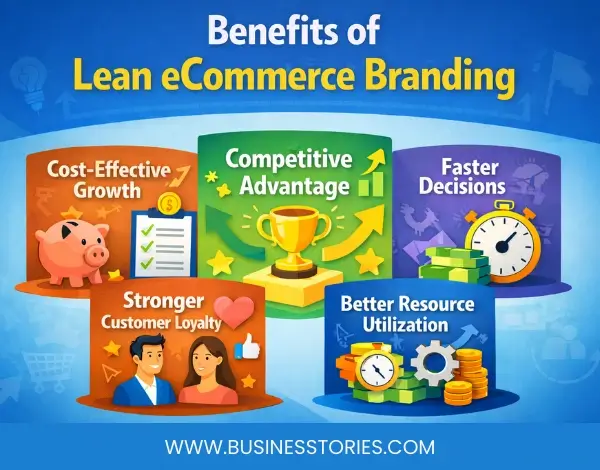
Lean eCommerce branding offers several long-term benefits:
- Cost-Effective Growth: You don’t need a huge budget to build a recognizable brand. Smart planning and efficient strategies give great results.
- Faster Decisions: Because the system is simple, brands can make decisions quickly without long approval processes or complicated planning.
- Competitive Edge: Clear communication and consistent branding help your business stand out in crowded online markets.
- Higher Customer Loyalty: When customers feel understood and valued, they become loyal supporters of your brand.
- Better Resource Utilization: Every dollar you spend is utilized effectively, ensuring your business remains stable and sustainable.
Examples of Successful Lean eCommerce Brands
Apple stands out by focusing on minimal design. Yet Tesla builds trust through clear messaging. Airbnb connects people without flashy extras. Meanwhile, Google delivers value with simplicity at its core. Some well-known brands that reflect lean branding principles include.
- Warby Parker – They looked at the eyewear industry, where people were paying hundreds for glasses. And said, “What if we just… didn’t do it that way?” They simplified everything, sold directly to customers, and built a brand around being straightforward and accessible
- Everlane – They decided to show customers exactly what things cost to make and what their markup was. Radical transparency as a brand strategy. It resonated with consumers who were tired of feeling deceived.
- Allbirds – Allbirds went all-in on sustainability and minimalism. No flashy marketing campaigns. Just comfortable shoes and an honest story about trying to do better for the planet.
- Casper – Entered a traditional market with simple messaging and smart marketing.
Each of these brands grew by focusing on clarity, customer value, and efficiency. These aren’t accidents. These are intentional choices about what matters and what doesn’t.
What Exactly Makes a Brand “Lean”?
A lean eCommerce brand focuses on using fewer resources but creating more value. Instead of maintaining huge stock levels or complicated systems, they operate practically and efficiently.
Key Traits of Lean Brands:
- Low inventory using pre-orders or small batches.
- Decisions guided by data and customer insights.
- Flexibility to change products or strategies quickly.
- Spending only on essential and high-impact activities.
- Strong customer service, personalization, and fast response times.
Such brands save time and money while still offering high-quality customer experiences.
👉 If you’re planning to build your own brand, you can also explore How to Start a Clothing Brand in India for practical, beginner-friendly steps.
Core Elements of Lean eCommerce Branding
Lean branding has four important elements that provide a strong foundation for brand building.
Before spending a dollar, build your foundation. Here’s the 4-Part Lean Brand Core Elements:
1. Clear Positioning
Ask:
- Who exactly is this for?
- What painful problem do they have?
- Why is your solution different?
Example:
Instead of: “Organic skincare for everyone.”
Try: “Organic skincare for busy moms who don’t have time for 10-step routines.”
Specific wins.
2. Emotional Promise
People don’t buy products.
They buy:
- Confidence
- Status
- Relief
- Belonging
- Simplicity
Your brand must promise transformation. Not features.
3. Simple Visual Identity (Not Expensive)
You don’t need:
- Custom illustrations
- $3,000 brand guidelines
- Complex typography systems
You need:
- 1 clean logo
- 2–3 consistent colors
- 1–2 fonts
- Clean product photography
Consistency builds recognition.
4. Brand Voice Clarity
Decide:
- Are you bold?
- Minimal?
- Playful?
- Direct?
Then never break character.
That’s how DTC branding becomes memorable.
Lean eCommerce Branding Strategies for Success
To build a strong lean brand, you can follow these strategies:
❖ Story-Driven Product Pages
Social media is one of the most powerful branding tools today. You can connect with customers, share your story, and build trust — without spending heavily.
Instead of listing features:
- Tell the origin story.
- Why did this product exist?
- People connect to struggle and intention.
❖ Founder Visibility in lean eCommerce branding
- Show your face.
- Tell your story.
- Behind-the-scenes builds trust—especially in early-stage DTC branding.
❖ Community Micro-Building
Collaborating with micro-influencers helps you reach targeted audiences. They are affordable, relatable, and trusted by followers.
You don’t need 100,000 followers. You need 100 loyal customers.
Start:
- A private Facebook group
- A Discord community
- An email list with weekly value
Small community = strong brand loyalty
❖ Lean Social Proof Strategy
Instead of chasing influencers:
- Collect micro testimonials
- Share user photos
- Highlight real customer stories
Trust beats reach.
❖ Improve User Experience (UX)
Simple navigation, fast loading pages, easy checkout, and quick support create a positive user experience. A smooth UX helps increase sales.
❖ Use Data Analytics
Data helps you understand customer behavior. You can refine your messaging, improve products, and adjust strategies based on real insights.
👉 To reach more customers effectively, make sure to check out How to Grab Customer Attention?.
Lean eCommerce vs Dropshipping: What Is the Difference?
People sometimes confuse lean eCommerce with dropshipping. They’re not the same thing, but they are very different.
Dropshipping is just a fulfillment method—you sell stuff without holding inventory. Lean eCommerce is a whole philosophy about how you build and run your business. You could use dropshipping as part of a lean strategy, but lean thinking applies to everything from your brand voice to your customer service approach.
Feature Lean eCommerce Dropshipping Inventory Small, controlled stock No stock at all Branding Strong focus Very limited Control High control over quality Low control Profit Margins Higher Lower Strategy Long-term growth Short-term focus In short, Dropshipping can be part of lean branding, but lean eCommerce is a much broader strategy.
How Can You Implement Lean eCommerce Branding Step by Step?
To build your brand using the lean method, follow these steps:
Step 1: Research Your Market and Choose a Niche
Start by identifying what customers truly need. Understand their habits, challenges, and expectations.
Before designing anything:
- Talk to 10 potential customers.
- Ask what frustrates them.
- Try to know what they’ve tried.
- Ask what they wish existed.
Branding without validation is guessing. Lean branding starts with listening.
Step 2: Launch a Minimum Viable Product (MVP)
Instead of launching many products at once, introduce a small version to test demand.
Borrowing from lean startup thinking:
- You don’t need a full brand book.
You need:
- Clear positioning statement
- Brand promise
- Simple visual kit
- 3 key messaging pillars
That’s your MVP. Launch with that. Refine later.
Step 3: Streamline Operations
Automate tasks like email marketing, inventory alerts, or customer support to save time.
Use this structure:
- We help [specific audience]
- Achieve [desired result]
- Without [common frustration].
Example:
“We help first-time pet owners reduce dog anxiety without expensive training programs.”
Simple. Powerful. Clear.
Step 4: Collect and Analyze Customer Feedback
Talk to customers, listen to reviews, and make improvements based on what they say.
Step 5: Build a Clear Brand Identity
Choose your colors, logo, tone, and messaging carefully. Keep everything consistent.
On a small budget, invest in:
- Clear product descriptions
- Fast customer service
- Smooth checkout
- Honest communication
Experience builds a brand faster than logos.
Step 6: Use Social Media for Engagement
Post regularly, share your brand story, and interact with your audience.
If the budget is tight:
Choose content.
- Educational blog posts
- Helpful social content
- Email sequences
- Short-form educational videos
Content compounds. Ads drain.
Step 7: Use Analytics to Improve Lean eCommerce Branding
Monitor performance, check which pages work, and refine your strategies.
Step 8: Keep Improving
Lean branding is a continuous journey. You must adapt and grow with your customers.
Common Mistakes to Avoid in Lean Branding
Even lean brands must avoid certain mistakes:
- Trying to appeal to everyone
- Copying competitors blindly
- Changing messaging every month
- Overdesigning early
- Ignoring customer feedback
Brand positioning for a small business must be focused.
Broad = invisible.
Specific = memorable.
Mini Real-Life Scenario: Budget vs Strategy
Two founders launch similar supplement brands.
Founder A:
- Spends $4,000 on branding
- Runs ads immediately
- Has unclear positioning
Founder B:
- Spends $500 on visuals
- Interviews with 15 target customers
- Builds content around a specific pain point
- Creates email education sequence
Six months later, Founder B has stronger retention. Why?
Brand clarity reduces customer confusion. Confused buyers don’t convert.
Why Most Small eCommerce Brands Fail at Branding
Most bootstrapped founders think branding equals:
- A fancy logo
- A premium website theme
- Instagram aesthetics
- Paid influencers
That’s not branding. That’s decoration.
Real brand building—especially startup brand building—is about:
- Clear positioning
- Emotional connection
- Consistent messaging
- Solving a specific problem better than competitors
When resources are limited, focus becomes your superpower.
Conclusion: Lean eCommerce Branding Wins Long-Term
Starting small can mean big things for an online store’s identity. It focuses on clarity, customer value, and continuous improvement. What matters most shows up when distractions fade away. Value speaks louder once the noise drops. Trust grows where simplicity lives. Meaning sticks around when effort feels real. Progress happens step by step, not all at once. Success often follows those who stay focused. A clean path lets the brand breathe.
A fresh start or years in the game—either way, building a brand without excess keeps growth steady over time.
Here’s the truth. Big brands win with money. Small brands win with focus.
Lean eCommerce Branding clarifies your message, understands your audience deeply, and builds meaningful relationships instead of flashy impressions.
When resources are limited, waste disappears and clarity increases.
If you’re building on a small budget:
- Start lean.
- Stay consistent.
- Refine based on feedback.
- Your brand doesn’t need to look big.
- It needs to feel real.
FAQs about Lean eCommerce Branding
1. What is lean eCommerce branding?
Lean eCommerce Branding is a focused branding approach that prioritizes positioning, messaging, and customer experience over expensive design and advertising to build a strong online brand with limited resources.
2. Why is branding important in eCommerce, and can it build a strong brand without a big budget?
Branding builds trust, recognition, and loyalty — all of which increase sales. Strong brands are built on clarity, consistency, and customer connection—not large marketing budgets. Many successful DTC brands started with minimal visual design and grew through storytelling and strong positioning.
3. How do I identify my target audience?
Through surveys, customer data, market research, and studying buying habits.
4. What are the key elements of lean eCommerce branding?
Lean branding has four important elements that provide a strong foundation for brand building. Clear target audience, authentic story, clean visual identity, and consistency.
5. How does analytics help in branding? How long does it take to build a recognizable eCommerce brand?
Data helps you understand customer behavior. You can refine your messaging, improve products, and adjust strategies based on real insights. It helps you understand customer behavior and refine your strategies accordingly. With focused messaging and regular content, small brands can start building recognition within 3–6 months.