The Moment That Sparked a Billion-Dollar Idea
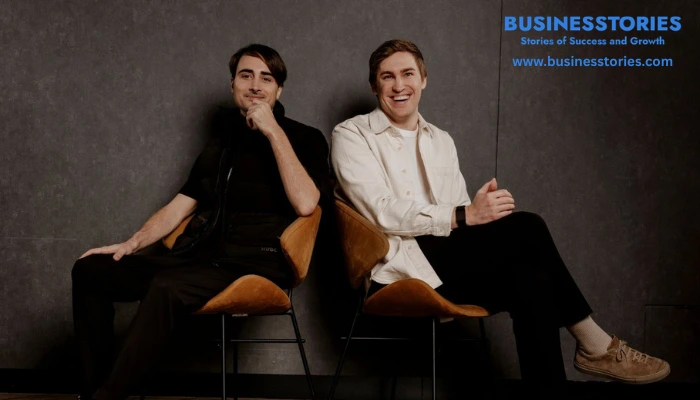
The founder of ElevenLabs, Mati Staniszewski, has a deep passion for movies. Mati Staniszewski was just a kid in Poland when he first felt it—that nagging feeling. He’d settle in to watch a film, completely ready to lose himself in another world. Not merely watching them, but truly feeling them. But something always bothered him. But then a character would open their mouth. And something would break the spell. The voices felt different, artificial, and emotionless. When movies were dubbed into other languages, something was lost.
Years later, when the technology finally caught up to the problem, artificial intelligence became sophisticated enough even to attempt what he’d been turning over in his head since childhood. That small, personal, seemingly unimportant annoyance became the seed of something extraordinary.
Years later, that frustration would give rise to ElevenLabs. It is one of the fastest-growing artificial intelligence startups in the world. But at the time, it was just a thought. A small problem nobody else seemed interested in solving.
They never arrive with loud announcements. Sometimes, they begin quietly—as a child on a couch in Poland, watching a movie that feels almost real and wondering why it isn’t.
Before ElevenLabs: The Founder’s Journey into Technology
Mati Staniszewski wasn’t born into Silicon Valley or a Rolodex full of investors. He wasn’t parachuted into the startup world with a safety net already waiting below and not surrounded by venture capitalists.
He was just curious. Genuinely, relentlessly, almost inconveniently curious. He studied mathematics and computer science. Mathematics pulled him in first—the elegance of it, the way numbers could describe the world with a precision that language sometimes couldn’t.
He wanted to understand how things worked. And more than that, he wanted to build things that hadn’t existed before. He worked at Palantir, one of the world’s most advanced technology companies. Working there was an education in what artificial intelligence could actually do when serious people pointed it at serious problems.
And what he saw was genuinely impressive. Artificial intelligence could analyze data. It could model behavior, predict outcomes, and help organizations make decisions that used to rely purely on instinct and experience.
For all of its intelligence, AI couldn’t communicate like humans. The gap between what AI could think and what it could feel—or at least convincingly express—was enormous. And once Mati Staniszewski saw that gap, he couldn’t unsee it. That gap stayed in his mind.
Discover how HealthTech startup founders are transforming rural healthcare by bringing innovative, accessible, and life-saving medical solutions to underserved communities.
The Problem: AI Could Write, But It Couldn’t Speak
By 2021, artificial intelligence had made massive progress. And what a moment it was.
You could sit down, type a few sentences, and watch a machine write a full article. Image generators were producing artwork that stopped people mid-scroll. Developers were working on AI to help them write code faster than they ever had before. The progress was real and rapid, and it was genuinely hard to keep up with.
Everyone was paying attention. Everyone was impressed. But Mati Staniszewski noticed something. Underneath all that dazzling progress, something fundamental had been left behind. Something so basic, so deeply wired into what it means to be human, that its absence was almost embarrassing once you spotted it.
The voice: Ask AI to speak, and the illusion falls apart immediately. What came out were technically functional words in the right order and sentences that made grammatical sense, but it felt like listening to someone read a grocery list.
Voice is the message: The rhythm of a sentence spoken by a person who actually lived through what they’re describing. These aren’t decorations on top of communication. They’re the core of it. Strip them away, and you don’t have communication now; you have only information.
That was the gap. For Mati, it wasn’t just a problem. It was an invitation.
The Decision: Taking the Leap into Entrepreneurship
Nobody starts a company because it’s the safe choice.
There’s no version of this story where Mati Staniszewski sat down one evening, ran the numbers, weighed the options, and concluded that launching a startup was the sensible, low-risk path forward. That’s not how it works. That’s never how it works.
What there is, instead, is a moment where the vision becomes louder than the fear. And the fear was real. It deserved to be taken seriously. Walking away from stability—from the kind of career trajectory that people spend years carefully building—means accepting that things might not work out.
That the idea burning in your head might meet reality and flinch. That you could pour everything into something and still watch it fall apart. Failure was a possibility, but the regret of never attempting something carries a weight that failure does not. Failure at least means you showed up.
So he leaped. Together with Piotr Dąbkowski, his co-founder, he built ElevenLabs from the ground up. Two people with a shared obsession and a mission that, when you strip everything else away, was almost disarmingly simple.
Make AI sound human. Not close to human. Functional was never the goal. Functional was the floor, not the ceiling.
The world already had a functional. Functional was what every robotic voice assistant had been delivering for years, while people quietly learned to lower their expectations. ElevenLabs wasn’t being built to clear that bar. It was being built to move the bar entirely.
That was the mission. Clear, ambitious, and just difficult enough that most people hadn’t seriously attempted it. Which, if you think about it, was exactly the kind of problem Mati had always been drawn to.
The Early Days: Building Something Nobody Had Built Before
Nobody talks enough about the middle part of the story. Everyone loves the origin story—the spark, the vision, the courageous leap. And everyone loves the success story—the growth, the funding, the moment the world finally pays attention. But the middle part? The long, grinding, unglamorous stretch between those two chapters? That’s where most companies quietly die, and nobody writes a LinkedIn post about it.
For ElevenLabs, the middle part was hard. Voice turned out to be one of the most deceptively complex problems in artificial intelligence. And “deceptively” is the right word, because from the outside it sounds straightforward enough. Record some audio, train a model, and play it back. Simple, right? Except it isn’t. Not even close.
Because voice isn’t just sound waves arranged in a particular order. Voice is the slight hesitation before someone says something they’re not sure about. It’s the way enthusiasm physically changes the shape of a sentence.
Voice carries personality—the specific, irreproducible texture of a human being expressing something they actually feel. Teaching a machine to replicate that isn’t an engineering problem with a clean solution waiting at the end of a logical sequence of steps. It’s something messier than that. More humbling.
What if this can’t be done? What if the human voice is too complex, too layered, and too alive to be recreated by something that has never actually lived? Those moments were real. Anyone who tells you a startup journey doesn’t have them is either lying or wasn’t paying close enough attention. But Mati and his team kept showing up.
The Breakthrough: When AI Finally Sounded Human
For ElevenLabs, this was one of those moments.
Nobody scheduled it on a calendar. There was no countdown, no ceremonial button press with a room full of people watching. It happened the way real breakthroughs usually do—quietly, almost accidentally, in the middle of an ordinary working day that suddenly became anything but ordinary.
The audio played. And the room changed. It changed in that specific, held-breath way that happens when something exceeds what you thought was possible. When the result in front of you doesn’t match the ceiling you’d unconsciously built in your head.
It didn’t sound robotic. It didn’t have that tell-tale flatness that had defined every AI voice anyone had ever heard. The pacing was right. The emotion was there; woven into the delivery, the way it’s woven into a real person’s voice when they actually mean what they’re saying.
They had built something real. Something that filled a gap that had been sitting wide open in the middle of one of the fastest-moving industries in human history. The world had been waiting for this. Now it existed. And nothing after that day would look quite the same as everything before it.
The Internet Discovery That Changed Everything
ElevenLabs released their product into the world and then waited—the way every founder waits after a launch, that specific anxious stillness where you refresh dashboards and read too much into every small signal and try not to let the uncertainty eat you alive.
But something unexpected started happening. People started talking. Not because a PR firm had orchestrated a careful rollout. Not because they’d poured money into targeted ads designed to manufacture the appearance of organic excitement.
Just people encountering something that felt different—that filled a gap they’d stopped expecting anyone to fill—and reaching for their share button almost involuntarily. ElevenLabs had spent all that time solving the hard problem.
The Explosion: From Startup to Global AI Leader
One day, you’re a startup that interesting people are quietly paying attention to. Then, almost without a clear turning point you can point to afterward, you’re simply everywhere. That’s what happened to ElevenLabs. Content creators used it to narrate videos. Videos started sounding different.
Authors discovered they could breathe life into their words in a format they’d previously had to either fund expensively or abandon entirely. The authors used it to create audiobooks.
Businesses quietly rebuilt their customer-facing voices. The cold, vaguely aggravating experience of interacting with automated support started softening at the edges. Not everywhere, not overnight—but the direction was clear.
Developers used it to build applications. That’s the power of building something meaningful—people take it to corners of the world you never knew existed. Industries were bending around this technology.
And investors—whose entire job is to recognize momentum before the world does—began to notice. Funding arrived—the kind that doesn’t just validate what a company has built but accelerates what it can build next. Resources that compress development timelines and make previously theoretical opportunities accessible.
Growth stopped being something ElevenLabs was carefully cultivating and became something it was managing.
From a frustrated kid watching dubbed movies in Poland to one of the most closely watched artificial intelligence startups on the planet—the distance between those two points is staggering when you stop to actually measure it.
Why ElevenLabs Succeeded When Others Failed
When it became clear that voice AI was a real market with real demand and real money attached to it, everyone showed up at once. Many companies tried to build voice AI, but few succeeded.
Most of the competitors built voice AI. Some of them built something decent. Almost none of them built something that actually felt human. And the reason, when you look at it honestly, isn’t complicated. It’s uncomfortable, but it isn’t complicated.
They optimized for the wrong things. ElevenLabs played that slower game. The obsession at the center of everything ElevenLabs built was deceptively simple: the voice has to feel human. Feel human—in the way that something true feels different from something constructed.
That standard is harder to hit than any technical benchmark. It’s subjective and demanding, and it shifts as people’s expectations rise. But it’s also the standard that actually matters, because it’s the one real human instinctively applies every time they listen to something.
The obsession, it turned out, was the strategy. While others rushed to be first, ElevenLabs focused on getting it right.
ElevenLabs Vision: Giving Every AI a Voice
ElevenLabs is quietly positioning itself to be exactly that for artificial intelligence. And here’s why that matters more than it might initially seem.
Your virtual assistant won’t just answer questions. It’ll have a presence. Robots won’t just perform tasks in warehouses and hospitals. They’ll communicate, explain, and respond.
Digital humans will represent brands and organizations in conversations that feel less like transactions and more like relationships. AI employees will handle work that currently requires a human on the other end of a phone call or video screen.
All of them will need a voice. Not a functional voice. A voice that carries the weight of what’s being communicated. That sounds like it belongs in the conversation rather than interrupting it.
This is the world ElevenLabs is building toward. Not a tool that helps with a specific task inside that world, but the voice layer of artificial intelligence itself—the connective tissue between everything AI can think and everything it needs to say.
Every assistant. Every robot and digital human. AI presence that the next decade will produce. ElevenLabs wants to be the voice behind it. That’s not a product roadmap. That’s a vision of what the future sounds like. And they intend to be the ones who make it speak.
The Bigger Mission: Making Information Accessible Globally
Voice has always been humanity’s most natural medium. Before writing, before printing presses, before the internet—there was the human voice. It carries stories, knowledge, and connection from one person to another. It’s so fundamental to how we function that we built entire civilizations on it before we developed any other way to share what we knew. And yet, for most of human history, that voice had walls around it. ElevenLabs is breaking away at those walls.
When voice technology works the way it’s supposed to—when it genuinely sounds human, when it carries the warmth and clarity of real communication rather than the cold efficiency of a translated document—it stops being a tech feature and starts being something closer to a bridge.
Knowledge becomes accessible to people who were never going to learn a second language fluently, but have every right to the same information as someone who did.
Learning accelerates when the explanation arrives in the voice and language that feels like home. Communication becomes possible across distances and differences that used to be genuinely insurmountable.
It is the revolution that doesn’t get celebrated at conferences but changes the actual shape of people’s lives. And it sounds, finally, like a human being speaking directly to you.
The Founder Mindset: Why Mati Staniszewski Succeeded
There’s a pattern you notice when you study founders who actually make it. Not the ones who got lucky, but those who built something real. They tend to perceive things before others do. They stay in the fight longer than is comfortable. And somewhere along the way, they will decide that fear wasn’t a good enough reason to stop.
Mati was that kind of person. He didn’t wait for the timing to be perfect or for someone else to validate his idea. He looked at where things were headed and trusted what he saw—even when most people around him weren’t seeing it yet. That’s a rare thing. Many people spot opportunities but talk themselves out of them. Mati didn’t.
And when the hard moments came—and they always come—he kept moving. Not because success was guaranteed. It wasn’t. But because stopping felt worse than the uncertainty of continuing. That’s what separates the people who build things from the people who almost did.
The Challenges Ahead
Getting to the top is one thing. Staying there is a completely different game.
The competition around ElevenLabs isn’t slowing down. If anything, more players are showing up every quarter, and the technology is moving fast enough that yesterday’s breakthrough can feel ordinary within months. That’s just the reality of the space they’re operating in.
But here’s what’s interesting about ElevenLabs: they’re not just keeping up. They got there first in ways that matter, and that kind of head start is harder to close than it looks from the outside. The product speaks for itself—people who use it tend to stay, and the roadmap suggests they’re not done pushing.
More importantly, there’s a coherence to how they operate. The vision isn’t vague. The execution has been unusually sharp for a company moving this fast. That combination—knowing where you’re going and actually being able to get there—is rarer than most people admit.
The Future: A World Where AI Speaks Like Humans
Think about what it actually means to learn from someone who never gets tired, never loses patience, and can explain the same concept seventeen different ways until it finally clicks. Think of a narrator who can bring a story to life at 2 am when no studio is open and no voice actor is available. An assistant you talk to, not type at, and it just… understands.
These aren’t far-fetched ideas anymore. They’re the direction everything is moving, and the gap between “concept” and “reality” is closing faster than most people expected even two years ago.
What ElevenLabs is building sits right at the center of that shift. Voice is how humans have always communicated most naturally—before writing, before screens, before keyboards. And the idea that AI can now speak, teach, narrate, and converse in ways that feel genuinely human changes things across industries all at once.
The future they’re working toward isn’t some abstract vision on a slide deck. It’s already starting to show up in real products, real classrooms, and real workflows. The question was never really whether this world was coming. It was always about who was going to build it.
Be My Eyes connects blind and low-vision individuals with volunteers worldwide through live video calls, enabling real-time assistance for everyday tasks.
Key Lessons for Entrepreneurs
If you look beyond the funding and media attention, the real lesson from ElevenLabs is simple but not easy: they focused on solving a genuine problem people truly faced, not just chasing trends. They prioritized quality, understanding that the product itself was their strongest proof, and they had the patience to build for the long term rather than rushing for quick wins.
Beneath it all was real risk—the kind where success wasn’t guaranteed and walking away would have been easier. That’s the hidden truth of every founder’s journey: Knowing the right path is one thing, but having the courage to follow it makes the difference.
ElevenLabs: From Frustration to Global Innovation
Nobody sets out to change the world. Usually, it starts with something much smaller—an annoyance, a gap, a moment where you think, “It shouldn’t be this hard.” That’s how ElevenLabs began. Not with a grand mission statement or a perfectly polished pitch deck. Just a frustration that refused to go away.
But somewhere between that first irritation and the thing it eventually became, something shifted. The idea stopped being just an idea. It started pulling people in—developers, creators, and dreamers who’d been waiting for exactly that without knowing they were waiting at all.
Most companies build products. ElevenLabs built something people actually felt. There’s a difference, even if it’s hard to put into words. Every week, someone somewhere is using their technology to do something that wasn’t possible before, in a language they grew up speaking, in a voice that sounds like home. That’s not a product launch. That’s a movement finding its footing.
The future they’re building isn’t some abstract concept locked behind a roadmap. It’s already here, in pieces—and the rest of it is coming faster than most people expect. They didn’t just arrive at this moment. They earned it. And they’re just getting started.