Introduction
Do you dream of your beauty brand? Then you’ve picked a good time. India’s beauty and personal care market was worth about US$28 billion in 2024. In fact, experts expect it to reach about US$48 billion by 2033. So there is room for new names. However, this market is not simple. The rules are strict, and buyers are smart. This listicle provides a step-by-step approach to how to start a cosmetic business.
- First, you will see why the market is worth it.
- Next, you will pick a niche and a model.
- Then, you will learn about the licenses, label rules, costs, and launch plan.
Along the way, we will look at real brands like Mamaearth and Minimalist. So grab a notebook, and let’s begin.
Key Numbers at a Glance
| Metric | Figure | Source |
| India beauty & personal care market (2024) | ≈ US$28 billion | IMARC / India Briefing |
| Projected market size (2033) | ≈ US$48 billion | IMARC / India Briefing |
| Typical private-label minimum order | 500–1,000 pieces | RegisterKaro |
| Minimalist valuation in HUL deal (Jan 2025) | ₹2,955 crore | Entrepreneur India |
| Minimalist ad spend vs. revenue (FY25) | ₹154 cr of ₹514.8 cr | Storyboard 18 |
1. Why the Indian Beauty Market Is Worth Entering
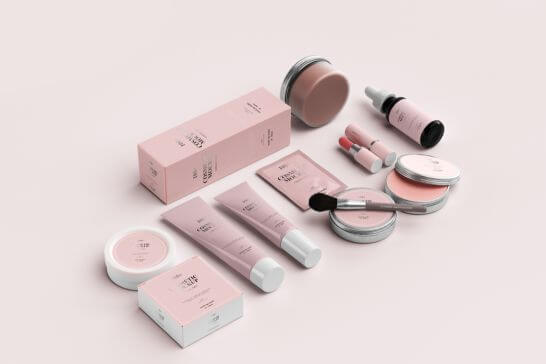
Before you spend a rupee, you should know the size of the prize. So here are the numbers. According to IMARC Group, the Indian beauty and personal care market hit about US$31.2 billion in 2025. Furthermore, most estimates now put it at US$28 to 31 billion, with a path to nearly US$48 billion by the mid-2030s.
What Is Driving Growth?
Three big forces push this market up.
- First, more people now live in cities.
- The middle class has more disposable income to spend, which is the second factor.
- Third, buyers care more about health and safe ingredients.
As a result, skincare and sun care lead demand today.
Meanwhile, the way people shop has changed too. For example, beauty is now one of the top categories on 10- to 20-minute delivery apps. Online beauty sales are also growing much faster than store sales. So a new brand no longer needs a big store network to reach buyers.
At the same time, the top end is rising fast. In fact, by 2028, premium beauty may reach about US$3 billion, potentially doubling its current size. Even so, luxury beauty is still only around 4% of the cosmetics market. In other words, most buyers still shop in the mid-price range.
Where the Real Gap Lies
Here’s an insight that many listicles miss. Big companies are excellent at mass products. However, they are slow to make small batches for narrow needs. For instance, think of a sunscreen for oily skin in humid coastal towns. Or think of a hair oil for hard water in North India. Large brands rarely build products this specific.
That is your opening. A small skincare business can move faster, test faster, and talk to buyers directly. So don’t try to beat giants at their game. Instead, play a game they can’t play well. In short, the beauty industry in India rewards speed and focus more than size.
Also Read: What is the Best Ecommerce Platform for Small Business?
2. Pick Your Niche and Business Model
Now that you know the market, it is time to choose your spot in it. This step shapes every choice that follows. So take your time here.
Find a Problem Worth Solving
The best brands start with a real problem. Take Mamaearth, for example. Varun and Ghazal Alagh became parents and could not find safe baby products in India.
So they began buying them from abroad. Soon, they saw that other parents faced the same struggle. As a result, they launched Mamaearth in 2016 with just six products.
Interestingly, the road was not smooth. Ghazal has shared that factory owners told her Indians would never pay for toxin-free products. Still, the couple kept going.
Later, buyers asked for safe products for adults too. So the brand grew from baby care into full personal care. In 2023, the stock market even listed its parent firm, Honasa Consumer.
So ask yourself a simple question. What problem do you face that no product currently addresses well? Then talk to at least 30 people who share it. If they would pay for a fix, you have a niche.
Choose How You Will Make and Sell
Next, pick your business model. Here are the four common paths:
- Own manufacturing: You build a factory. This gives you full control. However, it needs the most money.
- Third-party or private label: A licensed maker produces your formula under your brand. Most new brands start here.
- Retail store: You sell other brands in a shop or online store.
- Reselling or dropshipping: You sell stock that others hold and ship.
For most beginners, private label cosmetics in India are the smartest way to start a cosmetic brand with low investment. Typically, minimum orders start at around 500 to 1,000 pieces. So you can test the market without a factory.
EDITOR’S INSIGHT
Here is a practical tip. Don’t build a factory until one product sells well for six months. After all, a factory is a cost that never stops. Instead, prove demand first, and then invest in machines.
3. How to Start a Cosmetic Business Legally: Licenses and Registrations
Once you know what you will sell, you need to make it legal. In India, the Drugs and Cosmetics Act, 1940 and the Cosmetics Rules, 2020 govern this industry. So let’s break the rules into simple steps.
Register Your Company First
First, pick a business structure. You can start as a sole owner, a partnership, an LLP, or a private limited company. If you plan to raise money, a private limited company is often the best choice. Then, get your PAN and open a bank account in the company’s name.
Next, register for GST. This is a must if you sell online or across states. Furthermore, consider Udyam (MSME) registration and Startup India recognition. In fact, Startup India may bring tax benefits and lighter compliance in the early years.
Finally, file for a trademark on your brand name. Do this before you print any packaging. Otherwise, you may have to reprint everything later.
Get the Cosmetic Manufacturing License
If you make products yourself, you need a cosmetic manufacturing license in India. You apply using Form COS-5 on your state licensing authority’s online portal. Along with it, you file Form COS-7, a self-declaration that you follow Good Manufacturing Practices.
Your unit must also meet the rules for premises, plant, and equipment in the Seventh Schedule. Besides, you need qualified technical staff, such as a person with a pharmacy diploma or a degree in cosmetic technology. After an inspection, the authority grants the license in Form COS-8.
On the other hand, if you use a third-party maker, you can apply for a loan license in Form COS-6. In that case, the license comes in Form COS-9. Good news, too: both licenses stay valid for life. However, you must pay a retention fee every five years.
Importing or Using New Ingredients?
If you plan to import products, the route is different. You apply on the SUGAM portal in Form COS-1. Then the central authority, CDSCO, grants registration in Form COS-2. Similarly, a “new cosmetic” with a novel ingredient needs prior approval from the central authority before any state license.
4. Build Safe Products and Get the Label Right
With your licenses in progress, you can turn to the product itself. Remember, a great formula is not enough. It must also be safe, tested, and labelled the right way.
Formulate and Test Your Products
First, work with a qualified cosmetic chemist. Share your target buyer, skin type, and price point. Then ask for a few sample batches. Next, run stability tests to check that the product stays effective over time. Furthermore, run patch tests on real users before you scale.
Moreover, many products must meet Indian standards set by BIS. In fact, the Ninth Schedule of the rules lists standards for 37 cosmetic products, such as shampoos, hair oils, nail polish, and lipstick. So check if your product type is on that list early.
Follow the Label Rules
Next comes the label. Under the Cosmetics Rules, your label must show the product name, the maker’s name and address, the batch number, and the “use before” or expiry date.
In addition, it must show the manufacturing license number. Furthermore, the outer label must state the net contents. If you import, you must also add the import registration number.
EDITOR’S INSIGHT
Here’s a tip that most listicles skip. Design your label at the same time as your formula, not after. Why? Because label space is tight, and small packs still need key details. If you plan late, you may have to change the pack size or the box.
Watch Your Claims
Furthermore, be careful with words. A cosmetic can clean, beautify, or improve looks. However, if you claim your cream “cures acne” or “treats eczema,” it may count as a drug. That brings a whole new set of rules. So keep claims honest and simple.
Keep Batch Records
Finally, keep clean records. Under the Cosmetics (Amendment) Rules, 2025, makers must keep records of each batch and its raw materials. They must hold them for three years, or six months past the batch expiry, whichever is later.
Think of these records as insurance. If a complaint comes, you can trace the problem fast.
5. Plan Your Budget, Launch, and Grow
Now let’s talk money and sales. This is where most new brands either take off or stall.
Plan Your Cosmetic Business Investment
Your costs depend on your model. For a private label brand, your main costs are formula work, the first order, packaging, licenses, a website, and marketing. On the other hand, a mid-sized retail store can need ₹15 to 50 lakh, based on location and stock.
However, here is the cost most founders forget: marketing. Look at Minimalist. In FY25, the brand earned about ₹514.8 crore in revenue. Yet it spent around ₹154 crore on ads. That is close to 30% of sales. So plan your marketing budget as seriously as your product budget.
For funding, start with your savings if you can. Then explore MUDRA or Stand-Up India loans. Later, once you have sales, you can pitch to angel investors.
Choose Your Sales Channels
Next, decide where to sell. Most new brands use a mix of these:
- Your own website for better margins and direct buyer data
- Marketplaces like Nykaa, Amazon, and Flipkart for reach
- Quick commerce apps for fast, repeat buys
- Local stores and salons for trust and trial
Market Smart, Then Scale
Then, build trust online. Share how your product works and what is inside it. Furthermore, work with small creators whose followers match your buyer. Above all, collect reviews from day one.
Finally, grow step by step. Minimalism is a prime example. It was founded in Jaipur in October 2020. It focused on clear labels and science-backed skincare.
Then, in January 2025, Hindustan Unilever agreed to buy a 90.5% stake at a valuation of about ₹2,955 crore. So a focused brand can grow massive, very fast.
EDITOR’S INSIGHT
Our insight? Launch with two or three hero products, not twenty. Fewer products mean less stock, fewer license entries, and sharper marketing. Then add new items only when buyers ask for them.
Conclusion
Starting a beauty brand in India is a real chance to build something big. The market is large, and it keeps growing. However, success depends on smart choices, not just good looks.
So let’s recap how to start a cosmetic business in India.
- First, study the market and find a gap the big brands ignore.
- Next, choose a niche that addresses a real problem, just like Mamaearth did.
- Then, choose a business model.
- For most beginners, private label is the safest way in.
- Thereafter, register your company, get GST, and secure the right license under the Cosmetics Rules, 2020.
- Furthermore, build safe products, test them well, and get your label right from day one.
- Finally, plan a strong marketing budget and launch with only a few hero products.
Above all, remember one thing. Compliance is not a hurdle. Instead, it is the base of buyer trust. In fact, brands like Minimalist won by being clear and honest about what goes into each bottle.
Frequently Asked Questions
1. How to start a cosmetic business in India, and how much does it cost?
It depends on your model. A private label brand can begin with a small order volume. However, a mid-sized retail store may need ₹15 to 50 lakh. In addition, you should allocate a significant portion for marketing.
2. Which license is needed to make cosmetic products in India legally?
You need a manufacturing license from your state licensing authority. First, apply using Form COS-5. Then, after an inspection, you receive Form COS-8. Furthermore, third-party brands can apply for a loan license instead.
3. Can I start a cosmetic business from home in India at a low cost?
Yes, you can start a home-based cosmetic brand by using a licensed third-party maker. That way, you avoid factory costs. However, you still need GST, a trademark, and a proper license before you sell.
4. What details must appear on a cosmetic product label sold in India?
Your label must show the product name, maker’s address, batch number, and expiry date. Also, it must list the license number and net contents. So please plan these details while designing the pack.
5. Which online channels work best for a new cosmetic brand in India?
Most new brands sell through their own websites and marketplaces like Nykaa and Amazon. In addition, quick commerce apps are growing fast for beauty. So a mix of channels usually works best.

Tabassum Shaik is an Author, Researcher, and SEO Specialist with over 8 years of experience creating informative content on business, startups, entrepreneurship, marketing, technology, and digital trends. She specializes in researching industry trends and transforming complex topics into practical, easy-to-understand insights. Her goal is to help readers stay informed, learn new ideas, and make better business decisions.