
Introduction: A New Oil Rush Has Begun
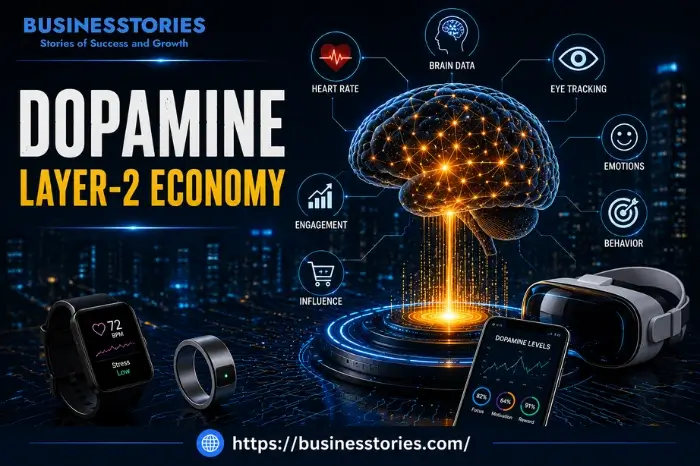
Oil fueled the last century. Data powers this one. But now a new resource has caught the attention of the world’s biggest companies: your attention, your emotions, and your brain chemistry itself. Welcome to the Dopamine Layer-2 Economy. In short, this new economy treats your brain as something to mine, refine, and sell. And just like oil, the companies that extract it fastest will profit most.
For years, social media platforms have fought for your screen time. However, the game has changed. With wearable devices that track your heart rate, sleep, and even blood sugar, companies now have a real-time map of your body. In addition, headsets like the Apple Vision Pro track your eye movements and pupil dilation. So they no longer guess how you feel. Instead, they know. As a result, they can serve you content at the exact moment you are most vulnerable to it.
Therefore, this article explains what the Dopamine Layer-2 Economy is, why it matters to you, and how it will reshape industries from marketing to healthcare. Above all, it gives you a clear plan to protect your most valuable asset: your mind. Because once your brain becomes an oil field, someone else will always want to drill.
What Is the Dopamine Layer-2 Economy? Breaking Down the Buzzwords
Think of the regular attention economy as Layer 1. In this layer, companies compete for your time. They measure success by clicks, views, and minutes spent scrolling. Meanwhile, the dopamine Layer 2 economy sits on top of that fight. It trades something far more valuable: the chemical states of your brain.
In technical terms, “Layer 2” is a blockchain concept. It means a system built on top of a base layer that makes it faster and more powerful. Here, I borrow that idea. The base layer is the old attention economy. Layer 2 is a new economy that reads and responds to your brain signals in real time. So it is not about getting you to click. Instead, it is about getting you to feel.
Why Dopamine?
Dopamine is the brain chemical linked to motivation, reward, and craving. More importantly, it is the chemical that makes you check your phone again and again. According to Stanford research, variable-reward systems—the same mechanism used in slot machines and social media notifications—trigger powerful dopamine loops.
In fact, your phone buzzes, and you feel a spike of anticipation. That is dopamine at work. And now, companies can measure when that spike happens.
What Makes It an “Economy”?
An economy needs buyers, sellers, and a traded commodity. Here, the sellers are the device makers and app companies that gather your biometric data. The buyers are advertisers, content platforms, and even employers who want to influence your behavior. The commodity being traded is your emotional and cognitive state, measured, packaged, and sold. So yes, it is a true economy. And most people do not even know they are part of it.
According to Allied Market Research, the global neurotechnology market will hit $45 billion by 2032. However, the fastest-growing segment is not medical devices. On the contrary, it is consumer wellness and tracking. Your smartwatch, your sleep ring, and even your earbuds now feed data into this system. Consequently, the dopamine layer-2 economy is not coming. It is already here.
The Machines That Read Your Mind: Tools Powering the Dopamine Layer-2 Economy
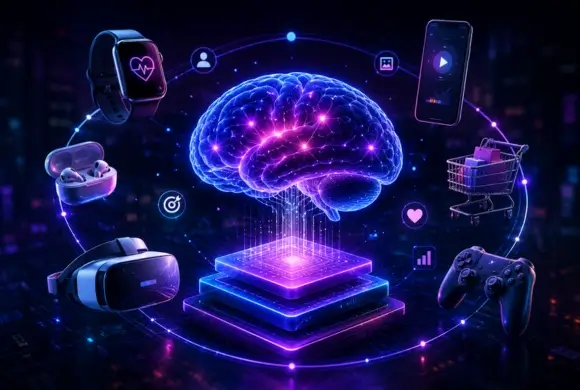
You cannot have an oil rush without drilling equipment. Likewise, you cannot have a brain economy without sensors. Three types of devices now power this new frontier.
Wearables: Your Body’s 24/7 Data Leak
The Apple Watch Series 10, Oura Ring, and Whoop band now track more than steps. They measure heart rate variability, skin temperature, blood oxygen, and even glucose levels. Together, these data points paint a clear picture of your emotional state. For example, a spike in heart rate plus a drop in skin temperature often signals stress. So your device knows you are anxious before you do.
In addition, a 2025 study from Duke University indicated that wearable data can predict mood changes with 87% accuracy. In other words, the machine knows when you feel cheerful, sad, or bored. And that information is incredibly valuable to advertisers who want to reach you at your weakest moment.
Mixed Reality Headsets: Windows to the Soul
Apple Vision Pro and Meta Quest 4 now include eye-tracking cameras. These cameras measure pupil dilation, blink rate, and gaze direction. Pupil dilation, for instance, is a well-known marker of emotional arousal and interest. As a result, your headset can tell which products make your eyes light up — literally.
Meta has already filed patents for serving ads based on eye-tracking data. Therefore, the headset you buy for gaming or work may soon become the most effective advertising machine ever built. It will not just show you ads. On the contrary, it will show you ads when your pupils say you are ready to buy.
Brain-Computer Interfaces: The Final Frontier
Neuralink began human trials in 2024. While the current goal is medical — helping paralyzed patients control computers — the consumer path is also clear. A non-invasive version could read basic brain states. So instead of just knowing you are anxious, a future device could know exactly which thought made you anxious. Consequently, the dopamine layer-2 economy would gain direct access to your inner world.
Chile, notably, became the first country to add neuro-rights to its constitution in 2021. Similarly, UNESCO has called for global neuro-data protection standards. But regulation moves slowly. Meanwhile, the tools move fast. And every month, they collect more data about you.
Who Profits First? Industries the Dopamine Layer-2 Economy Will Reshape
Every new economy creates winners. So who gains from reading your brain signals? Here are the industries that will change first.
Advertising: From Demographics to Dopamine Targeting
Old advertising asked, ‘Who are you?’ (age, gender, location). Then digital ads asked, ‘What do you click?’ (behavioral targeting). Now the dopamine layer-2 economy asks, ‘How do you feel right now?’
For example, a food delivery app could serve you a pizza ad at the exact moment your glucose monitor shows low blood sugar and your mood tracker detects irritability. That is not just targeted advertising. Instead, it is emotional sniping.
According to McKinsey, companies that use emotional AI in marketing see up to 25% higher conversion rates. So the business case is clear. As a result, neurometric advertising, ads triggered by your biometric state, will become standard within five years.
Gaming and Social Media: The Engagement Death Spiral
Social media already uses dopamine loops. TikTok’s algorithm, for instance, is famous for learning what keeps you watching. However, today’s algorithms only guess based on behavior. Tomorrow will read your body.
For example, a game could slow down precisely when your heart rate indicates frustration. A video feed could serve the perfect type of content when your dopamine receptors are most sensitive. In short, engagement becomes biologically optimized.
The risk, of course, is addiction. A 2025 Stanford Addiction Medicine study linked variable-reward algorithms to measurable dopamine dysfunction patterns in heavy users. Therefore, the very tools that make platforms profitable may also make users sick. And the dopamine layer-2 economy makes this problem far worse.
Healthcare and Insurance: Your Mood Is a Risk Factor
On the positive side, this technology could transform mental health care. For instance, closed-loop systems could detect depression early and recommend treatment. However, the same data could also harm you. An insurer might raise your premiums if your biometric data shows chronic stress. An employer might skip your promotion if your mood patterns suggest burnout risk.
Therefore, the dopamine layer-2 economy creates a double-edged sword. The same sensor that saves your life could also cost you your job. And right now, there are no clear rules about who owns your brain data.
The Dangerous Gap: Why Lawmakers Cannot Protect You Yet
When oil drilling began, there were no environmental laws. Spills were common. Workers died. It took decades to build basic protections. Similarly, the dopamine layer-2 economy operates in a near-complete regulatory vacuum today.
The EU’s GDPR protects personal data. But it was written before wearables could read your emotions. The Digital Services Act governs platform behavior. However, it does not address neurometric dark patterns, interfaces that exploit your biology. The FTC has no established rules for mood-aware algorithms. In short, the law is lagging while companies move ahead.
Chile stands as the only country with explicit neuro-rights, which it added to its constitution in 2021. These rights state that your brain data belongs to you, not to any company or government. Meanwhile, UNESCO has urged all nations to adopt similar protections by 2028. But adoption has been slow. As a result, most of the world’s population has zero legal protection against brain data mining.
Furthermore, even if laws pass, enforcement is challenging. How do you prove a company used your pupil dilation data to sell you something? These algorithms are black boxes. So the dopamine layer-2 economy thrives in the shadows, measurable, profitable, and almost entirely unregulated.
Protect Your Mind: A Practical Action Plan for the Dopamine Layer-2 Economy
You cannot opt out entirely. But you can reduce your exposure and take back control. Here are concrete, actionable steps.
Audit Your Wearables
First, open the settings on every wearable device you own. Turn off any data sharing you do not need. Disable background heart rate sharing with third-party apps. Ask yourself: Does this device need to know my blood oxygen level to tell me the time? If the answer is no, turn that feature off. Also, make it a habit to check the privacy dashboard every week. Companies often reset permissions after software updates.
Create Screen-Free Zones
Second, build physical and temporal barriers against the dopamine layer-2 economy. For example, keep your phone outside your bedroom at night. Set one hour each morning as screen-free. Eat meals without any device nearby. These small acts break the feedback loop. They also remind your brain that it belongs to you, not to an algorithm.
Support Neuro-Rights Legislation
Third, the most powerful action is collective. Look up whether your country has proposed neuro-rights laws. Support organizations that push for brain data protection. In Chile, citizen pressure made neuro-rights a constitutional reality. Similarly, public demand can force lawmakers elsewhere to act. After all, if your brain data is the new oil, then you deserve the mineral rights.
Practice Intentional Consumption
Fourth, before you open any app, pause and ask: ‘What do I actually want right now?’ If the answer is unclear, consider putting the device down. This simple question interrupts the automatic dopamine loop. Over time, it rewires your brain to respond to your own intentions — not to algorithmic nudges. In the Dopamine Layer-2 Economy, clarity of intention is your best shield.
The Other Side: How the Dopamine Layer-2 Economy Can Actually Help You
Every technology cuts both ways. So let us be fair. The same tools that mine your brain can also improve it.
For example, personalized mental health apps could detect the early signs of depression and nudge you toward help before you even notice a problem. In fact, researchers at Harvard are testing closed-loop systems that monitor mood and deliver micro-interventions—small, helpful prompts—exactly when they are most effective.
Similarly, focus-enhancing wearables could tell you when your attention drifts and suggest a break. These are genuine, positive uses of neuro-adaptive technology.
However, the distinction between help and harm hinges on one question: Who controls the data? If you own your brain data and choose to share it with a therapist or a wellness app, that can be empowering. But if a company collects it without your clear consent, that is exploitation.
Therefore, the future of the dopamine layer-2 economy depends entirely on whether we build it around consent and transparency or around extraction and secrecy.
In other words, this economy is not inherently evil. It is powerful. And power, as always, depends on who wields it and under what rules. The question is whether you will be a passive oil field or an active owner of your resources.
Conclusion: Your Brain, Your Choice
The dopamine layer-2 economy is real. It is growing fast, and it already touches your life every day. Your smartwatch, your social feeds, and soon your VR headset all feed a system designed to extract value from your emotional states. In short, your attention was the first gold rush. Your brain chemistry is the second.
But you are not helpless.
- First, understand what is happening, and you now do.
- Second, audit your devices and cut unnecessary data streams.
- Third, build habits that break the dopamine loop.
- Finally, support laws that protect brain data as the most personal property you own.
Above all, remember that the most powerful player in the dopamine layer-2 economy is not Apple, Google, or Meta. It is you, if you choose it to be. So here is your call to action. Take one step today. Turn off one data permission today. Create one screen-free hour. Look up one neuro-rights bill. Because your brain is indeed the next oil field. And the drill is already spinning.
Frequently Asked Questions About Dopamine Layer-2 Economy
1. What exactly is the Dopamine Layer-2 Economy in simple terms?
It is a new system where companies use data from wearables and devices to track your emotions and brain states in real time. Then, they use that data to influence your behavior, usually to make you buy, click, or watch more.
2. How do wearables like smartwatches feed the dopamine layer-2 economy?
Wearables track heart rate, sleep, blood oxygen, and more. Together, these signals reveal your mood and stress level. Companies can then target ads or content at your most vulnerable moments.
3. Can the Dopamine Layer-2 Economy affect my mental health negatively?
Yes. When algorithms exploit your biology for profit, addiction and anxiety can worsen. Research from Stanford already links variable-reward systems to measurable dopamine dysfunction in heavy users of social platforms.
4. Are there any laws today that protect my brain data from exploitation?
Very few. Chile added neuro-rights to its constitution in 2021. UNESCO urges global action. But in most countries, no specific law protects your brain data from companies that mine and sell it.
5. What practical steps can I take to guard against neurometric dark patterns?
Audit your device data-sharing settings, create daily screen-free zones, ask yourself what you want before opening any app, and support neuro-rights legislation in your country.

Tabassum Shaik is an Author, Researcher, and SEO Specialist with over 8 years of experience creating informative content on business, startups, entrepreneurship, marketing, technology, and digital trends. She specializes in researching industry trends and transforming complex topics into practical, easy-to-understand insights. Her goal is to help readers stay informed, learn new ideas, and make better business decisions.


