
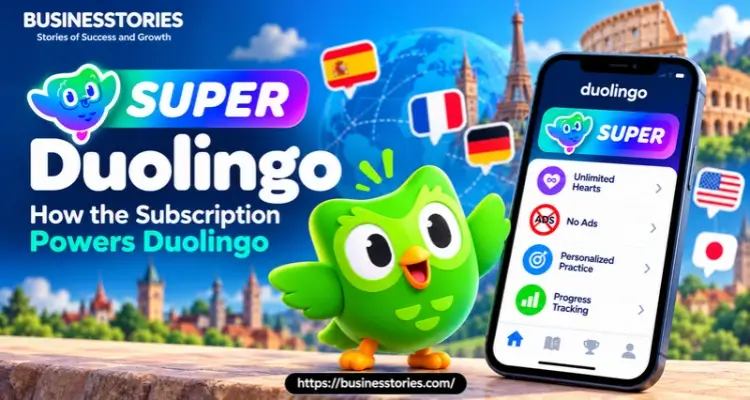
Duolingo looks free. In fact, almost every lesson costs you nothing. So who pays the bills? The answer is Super Duolingo, the paid plan that a small group of learners buys each month.
That small group has a significant impact. In the second quarter of 2026, Duolingo made $298.5 million in revenue. Of that, $258 million came from subscriptions. That is about 86 cents of every dollar. Meanwhile, ads brought in only $21.1 million.
In this listicle, you will see five ways the Super Duolingo subscription keeps the whole app running. Along the way, we answer the questions people search most: how much is Super Duolingo, can you get Super Duolingo free, and which Super Duolingo competitor is worth a look? Let’s get into it.
Super Duolingo Pays for the Free App Everyone Uses
Here is the core idea. Duolingo runs a freemium model. Most people learn for free, but a few pay. Then the payers fund the free lessons for everyone else.
The 9% That Carries the App
Let’s look at the numbers. At the end of June 2026, Duolingo had 140.6 million monthly users. However, only 12.7 million of them paid. So roughly 9% of monthly users fund the experience for the other 91%.
Still, that 9% is growing. Paid subscribers rose 17% from a year earlier. In addition, daily users jumped 23% to 58.7 million. That is the real engine. More daily learners create more chances to sell Super Duolingo.
Why Duolingo Chose Slower Money
Now here is the part most articles miss. In early 2026, Duolingo made a bold choice. Management said it could have pushed bookings up about 20% this year. Instead, it guided to roughly 11%.
Why? Squeezing free users harder would have negatively impacted the free app’s performance. So the company put growth first and sales second. As a result, the free plan stays generous, and Super Duolingo has to earn its sale.
Wall Street did not love it at first. In fact, the stock fell about 11% after the Q2 report. Paid growth also slowed: subscribers rose from 12.5 million to 12.7 million between March and June. Even so, Duolingo still raised its profit outlook for the year.
What This Data Means for You
If you use the free app, Super subscribers are paying for your lessons. That is the deal. And if you pay, you are buying comfort plus a stake in the mission. Duolingo has said from the start that Super helps keep education free for millions.
For founders, the lesson is simple. A free product can scale only if the paid tier is clearly worth it. Therefore, Duolingo must continue to improve Super, rather than simply reducing the quality of the free version.
Super Duolingo Sells Comfort, Not Extra Lessons
Many people think Super unlocks secret courses. It does not. In fact, free and paid users get the same lesson content. So what are you actually buying?
What Super Duolingo Adds
- First, Super removes ads. Free users see an ad after many lessons, and that adds up fast.
- Second, Super removes the limit on how much you can practice. Today, most free accounts run on Energy. It works like a phone battery. When it runs out, you wait, watch an ad, or spend gems. Some older accounts still use Hearts, which you lose for mistakes.
- Third, Super adds tools that help you stick with it. For example, you get Streak Repair, mistake reviews, and offline lessons. Plus, a family plan lets up to six people share one account.
The Video Call Upgrade
Here is the biggest recent change. Video Call is an AI chat partner that talks with you out loud. Until recently, it sat in the pricier Max tier. Now, most new Super subscribers get it. Existing Super users should get it later in 2026.
Why the move? Because the cost collapsed. On the Q2 call, management said each call first cost about 30 cents. Now it costs under one cent, mainly thanks to open-source AI models.
The Smart Insight
So here is a fresh way to see it. Duolingo designs the friction that Super removes. Energy limits and ads are not bugs. Rather, they are the reason to upgrade. But Duolingo must balance them with care. Too much friction pushes free users away. Too little provides a reason to withhold payment.
That is why video calls matter so much. It is the first big feature that adds new value, not just less friction. In other words, Super is slowly shifting from “pay to remove annoyances” to “pay to get speaking practice.” That shift could make the Super Duolingo subscription far easier to sell.
The Super Duolingo Price Ladder Keeps Everyone Paying Something
So, how much is Super Duolingo? The honest answer is that it depends. The Super Duolingo price changes by country, by device, and even by account. Duolingo runs constant price tests.
Current Super Duolingo Price in the US
As of October 2026, here is what US learners tend to see:
The Family Plan Math
Now look at the family plan. At about $119.99 a year split six ways, each person pays roughly $20 a year. That is the cheapest official way to get Super. Furthermore, it spreads the habit. One payer can pull five people into daily use.
The Tiers Are Shifting
Next, watch the top and bottom of the ladder. On top, Max may not last. On the Q2 call, management said it is weighing two options. It could retire Max. Or it could offer super-limited calls and keep Max as the only unlimited option. It plans to decide within one or two quarters.
At the bottom, Duolingo is testing Super Light. It costs about half of Super in some markets. However, it keeps ads and only doubles your Energy. Currently, only a small group sees it.
This change is relevant for the business. A cheaper tier could win buyers who find Super too pricey. Yet it also risks pulling some full Super buyers down to a lower price. So Duolingo is testing slowly before it commits.
Actionable Steps to Pay Less
Want the best deal? Try these steps:
- Start with the trial. Never pay before testing Super.
- Pick yearly over monthly. Yearly plans cut the monthly cost sharply.
- Share a family plan. Split the cost with family or friends.
- Watch for sales. Duolingo often runs discounts around the New Year.
- Be sure to check the web price. Prices on the website can differ from app stores.
Free Trials Turn Habits Into Super Duolingo Subscriptions
Can you get Super Duolingo for free? Yes, for a while. Every new subscriber starts with a trial. And this trial is quietly becoming Duolingo’s best sales tool.
From 7 Days to One Month
For years, the standard trial was seven days. The App Store listing has also shown 14 days. Now, however, Duolingo is moving most trials to one full month. Management said longer trials gave positive early results for both revenue and daily use.
Why would a longer free period earn more money? Because of habits. A week is too short to build a routine. A month, on the other hand, is long enough to make Duolingo part of your day. So when the bill arrives, cancelling feels like breaking a habit.
Streaks Do the Selling
Streaks are the glue here. Duolingo counts how many days in a row you study. For example, in June 2026 it ran a Streak Revival campaign. It brought back streaks for 15.4 million learners. Nearly 8 million of them had no active streak before.
Meanwhile, Duolingo reported a record retention rate of 84%. In plain terms, most returning users keep coming back. And a user who keeps coming back is the easiest person to sell Super Duolingo to.
How to Use the Free Trial Wisely
So here is how to get real value from your trial:
- Set a reminder two days before it ends.
- Test the features you would pay for, like no ads and unlimited practice.
- Try video calls if your account has them.
- Track your streak. If you studied most days, Super may be worth it.
- To cancel, go through the same store where you signed up.
The Unique Angle
Most guides treat the trial as a gift. In reality, it is a habit-building engine. Duolingo is betting that a month of daily lessons beats any ad. That said, the payoff can lag. Users often convert weeks later, so the full effect will show up slowly in future quarters.
Super Duolingo Competitor Pressure Keeps the Price in Check
Finally, Super does not live in a vacuum. Every Super Duolingo competitor pushes Duolingo to keep its price low and its features sharp.
How Rivals Compare
Here is how major rivals priced their plans in late 2026:
- Babbel: about $17.99/month or $89.99/year for one language. It teaches grammar rules clearly.
- Busuu: roughly $70 to $139/year. Native speakers correct your answers.
- Speak: about $17.99/month or $83.99/year. It focuses on speaking with AI from day one.
- Rosetta Stone: about $19.99/month or $159/year. It uses full immersion.
- Memrise: about $61.99/year, with native-speaker video clips.
Clearly, Super Duolingo sits at the cheaper end, especially on a yearly or family plan. Plus, Duolingo covers more languages than most rivals.
Why AI Raises the Stakes
However, AI is changing the fight. Apps like Speak sell AI conversation as their main feature. This is precisely why Duolingo transitioned the Video Call feature into the Super plan. Otherwise, rivals could pull away serious learners who want to speak.
Here is the twist that few people notice. Duolingo’s huge free base gives it a cost edge. Because it runs at such a scale, cheap open-source AI lets it add speaking practice at a low cost. Smaller rivals pay more per user. So Duolingo can bundle AI into Super without raising prices significantly.
In fact, on the Q2 call, management said video calls are a major driver of paid sign-ups. So keeping it inside Super works as both a shield against rivals and a sales tool.
Which One Should You Pick?
So how do you choose? Use this quick test:
- Want a fun daily habit? Pick Super Duolingo.
- Want clear grammar? Try Babbel.
- Want human feedback? Look at Busuu.
- Want to speak fast? Test Speak.
In short, compare free trials first. Then pay only for the app you actually open every day.
Conclusion
So, how does Super Duolingo power Duolingo? In summary, it covers nearly all expenses. Subscriptions brought in about 86% of revenue in Q2 2026. Meanwhile, just 12.7 million paying users fund lessons for well over 140 million monthly learners.
To recap, Super works in five ways.
- First, it funds the free app.
- Second, it sells comfort and, now, AI speaking practice.
- Third, its price ladder offers a plan for nearly every budget.
- Fourth, longer free trials help turn daily habits into paying users.
- Finally, competitor pressure keeps the price fair and the features fresh.
The bigger lesson is clear. Duolingo chose slower sales today for a bigger, happier user base tomorrow. That bet only works if Super keeps getting better. And with Video Call costs near zero, Super finally has a feature that adds real value rather than just removing ads.
So what should you do next? If you study most days, start a free trial and test Super for yourself. Then compare it with one rival before you pay. If you only learn now and then, the free app is still excellent. After all, Super subscribers are already paying for it.
FAQs
1. How much is Super Duolingo per month for learners in the US in 2026?
In the US, the Super Duolingo price is about $12.99 per month. Yearly plans run from $79.99 to $119.99. Prices vary by account and region, so always check the app before you subscribe.
2. Can I get Super Duolingo free before I pay for a full subscription?
Yes. New users can try Super Duolingo free through a trial. Duolingo is moving most trials from seven days to one month. Set a reminder so you can cancel before the first charge.
3. Does the Super Duolingo subscription unlock lessons free users lack?
No. Free and paid users get the same lesson content. Instead, the Super Duolingo subscription removes ads and energy limits, adds offline lessons and Streak Repair, and now includes Video Call for most new subscribers.
4. How does Super Duolingo revenue keep the free Duolingo app running?
Subscriptions constituted about 86% of Duolingo’s Q2 2026 revenue. In short, roughly 12.7 million paying users fund free lessons for over 140 million monthly learners, while ads add only a small share.
5. Which Super Duolingo competitor is best for speaking practice online?
Speak is the strongest Super Duolingo competitor for speaking, as it builds lessons around AI conversations. However, Super now offers video calls too, so test both free trials before choosing one.

System Architect & Web Designer with 15+ years of cross-industry experience delivering scalable IT and innovative digital solutions.