

Picture this: You scroll through LinkedIn and see five different people you know announcing new digital marketing roles. Meanwhile, your inbox has an ad for a digital marketing course promising six-figure salaries in six months. It sounds tempting. But is it real?
In 2026, the global digital marketing industry will surpass $780 billion. Companies now spend over 55% of their total marketing budgets on digital channels. As a result, demand for skilled digital marketers has never been higher. The U.S. Bureau of Labor Statistics projects a 10% growth in marketing roles through 2031. So naturally, many people ask, “Should I invest in a digital marketing course?”
However, not all courses deliver equal value. Some provide hands-on experience and industry-recognized certifications. Others leave you with little more than a playlist of outdated YouTube-style videos. So how do you separate the worthwhile investments from the time-wasters?
This article gives you an honest, data-backed breakdown. We analyze real costs, real salaries, and real results. By the time you finish reading, you will know exactly whether a digital marketing course is worth it for you in 2026. Let us dive in.
1. What Does a Digital Marketing Course Actually Cover in 2026?
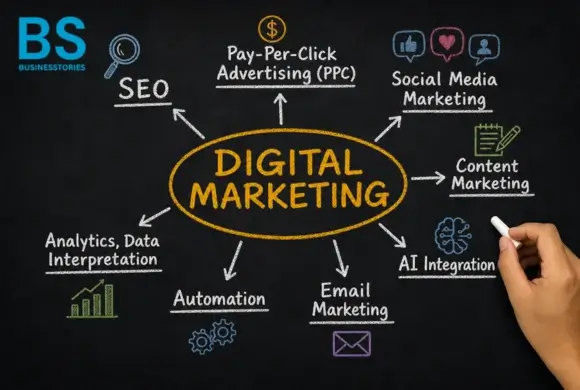
Before you can determine the value of a digital marketing course, you need to understand what it entails. A modern digital marketing course is not just about “posting on social media.” The curriculum has evolved significantly since 2020. Here is what top courses now include.
Core Modules You Should Expect
- Search Engine Optimization (SEO): Technical SEO, on-page optimization, link building, and AI-driven keyword research using tools like Semrush and Ahrefs.
- Pay-Per-Click Advertising (PPC): Google Ads, Meta Ads Manager, TikTok Ads, and programmatic advertising with real budget allocation exercises.
- Social Media Marketing: Platform-specific strategies for Instagram, LinkedIn, TikTok, and YouTube Shorts — including influencer collaboration frameworks.
- Content Marketing & AI Integration: How to use ChatGPT, Claude, and Midjourney for content creation while maintaining brand voice and E-E-A-T signals.
- Email Marketing & Automation: Building funnels with tools like Mailchimp, Klaviyo, and HubSpot. Includes A/B testing and lifecycle email strategy.
- Analytics & Data Interpretation: Google Analytics 4 (GA4), Looker Studio, and attribution modeling. You learn to read data, not just collect it.
The best programs now include AI marketing modules and hands-on practice with real tools. According to LinkedIn’s 2026 Jobs Report, AI proficiency in marketing grew by 340% as a required skill. Additionally, many employers want candidates who understand marketing automation tools. In 2026, a course that lacks AI training will already put you behind the curve.
Niche Specializations Worth Noting
Beyond the core curriculum, progressive courses now offer specialization tracks such as e-commerce marketing (Shopify, Amazon), B2B demand generation, SaaS growth marketing, and local SEO for small businesses. A niche specialization combined with broad digital skills often delivers the highest ROI on course investment.
2. The Real ROI: How Much Do Digital Marketing Skills Pay in 2026?
| Role | Average Salary (US $) | Avg. Salary (India ₹) | Avg. Salary (UK £) |
| Digital Marketing Specialist | 55,000 | 600,000 | 32,000 |
| SEO Manager | 72,000 | 850,000 | 42,000 |
| PPC Specialist | 60,000 | 700,000 | 36,000 |
| Social Media Manager | 58,000 | 650,000 | 34,000 |
| Digital Marketing Manager | 85,000 | 1,200,000 | 50,000 |
| Head of Digital Marketing | 120,000 | 2,500,000 | 75,000 |
The Math: Course Cost vs. First-Year Earnings
A quality digital marketing course costs between $500 and $3,000. A university certificate program can run $5,000 to $15,000. Meanwhile, a specialist-level salary starts at $55,000 in the US. So even if you take a $3,000 course, that is only 5.4% of your first-year income. In other words, you recover your investment within the first month of employment.
Compare the course to a four-year marketing degree, which costs $40,000 to $120,000. A certification in digital marketing delivers a faster ROI — often 10x within 12 months. This is why more career-switchers now choose focused certifications over traditional degrees.
Real Example: From 0 to Employed
Take Rahul, a 2024 commerce graduate from Pune. He completed a six-month digital marketing certification that included live projects. Within two months of finishing, he landed a digital marketing specialist role at a SaaS startup, earning ₹6.5 LPA. His course cost ₹45,000. His first-year return? Over 14x. Stories like Rahul’s are not exceptions — they are becoming the norm when you choose the right program and apply yourself consistently.
Also Read: The Ultimate Guide to Free Tech Courses & Certifications in 2025
3. Self-Taught vs. Structured Digital Marketing Course: Which Path Wins?
This is perhaps the biggest debate in the industry. Can you learn everything for free on YouTube? Technically, yes. But here is what the data and experience actually show.
The Hidden Costs of the Self-Taught Route
- No structured curriculum means you jump from topic to topic without a logical sequence.
- You spend 8-12 months piecing together free resources versus 3-6 months in a structured program.
- Zero accountability. Without deadlines, 92% of self-learners never complete their learning goals (MIT study).
- No mentorship. When your Google Ads campaign has a problem, YouTube comments cannot help you.
- You miss networking opportunities, peer learning, and placement support that structured courses provide.
What a Good Course Adds (Beyond Videos)
A worthwhile digital marketing course gives you four things that self-study rarely provides:
- First, a structured roadmap that prevents overwhelm.
- Second, hands-on experience with real campaigns and real budgets — not simulations.
- Third, the curriculum bundles industry-recognized certifications from Google, Meta, and HubSpot.
- Fourth, placement assistance, resume workshops, and access to hiring partner networks.
These four elements often make the difference between “I know digital marketing” and “I got hired.”
Think of it this way: You could learn to swim by watching YouTube videos. But at some point, you need to get in the water with a coach. A digital marketing course serves as both your coach and your pool for learning.
4. How to Identify a Digital Marketing Course Worth Your Money
Some courses are better than others. Here is a practical, step-by-step framework to evaluate any program before you pay.
The 5-Point Evaluation Checklist
- Curriculum Freshness: The syllabus must mention AI marketing tools, GA4 (not Universal Analytics), short-form video strategy, and marketing automation. If the course material references 2019 tools, skip it.
- Instructor Credibility: Look up instructors on LinkedIn. Do they have real industry experience? Have they managed actual campaigns? A fancy certificate means nothing if your teacher has never spent a dollar on ads.
- Hands-On Projects: The course must include live projects — real Google Ads campaigns, real SEO audits for live websites, and real social media content calendars. Avoid any course that consists entirely of theory.
- Certification Stack: The course should prepare you for, or include, Google Ads Certification, Meta Blueprint, HubSpot Content Marketing Certification, and Semrush SEO Certification. These are the industry standards.
- Placement & Alumni Data: Ask for verifiable placement statistics. How many graduates got jobs within 6 months? What companies hired them? If the course provider hesitates to share this data, that is a red flag.
Questions to Ask Before Enrolling
- “Can I see the latest batch’s placement report?”
- “Will I work on live campaigns, or only simulations?”
- “Which AI tools does the curriculum cover?”
- “Who exactly are my instructors—can I see their LinkedIn profiles?”
- “Do you offer EMI options, and is there a money-back guarantee?”
A trustworthy course provider answers these questions confidently. A sketchy one deflects. Trust your instincts; if something seems overly sales-oriented, it likely is.
Also Read: High-Demand Jobs Reshaping the Future of Work
5. Who Should (and Should Not) Take a Digital Marketing Course in 2026?
A digital marketing course is not for everyone. Let us identify the profiles that benefit most and those who should consider alternatives.
Ideal Candidates
- Fresh graduates who want to enter the job market quickly with practical, in-demand skills.
- Career changers transitioning from non-tech roles who need a structured entry path into marketing.
- Small business owners and entrepreneurs who want to grow their brand without hiring an expensive agency.
- Freelancers looking to add digital marketing services to their existing offerings (content writers, graphic designers, and web developers).
- Marketing generalists seeking to upskill and specialize in digital channels for better career progression.
Who Might Not Benefit
- Experienced digital marketers with 5+ years of hands-on campaign management. You would benefit more from an advanced specialization, not a general course.
- People expecting overnight success. Digital marketing is a real skill requiring consistent effort over months — not a get-rich-quick scheme.
- Those unwilling to work with data. If you dislike numbers, analytics, and constant learning, this field will frustrate you.
Be honest with yourself. The course opens the door. But you must walk through it.
6. The 2026 Job Market: Where Digital Marketing Courses Create the Most Value
The digital marketing job market in 2026 has specific hiring patterns. Understanding these helps you align your course choice with real demand.
High-Demand Specializations
- Performance Marketing & PPC: Companies need ROI-focused marketers who can manage $10,000+ monthly ad budgets. This is the highest-paying entry-level specialization.
- SEO & Content Strategy: With AI-generated content flooding the web, companies desperately need marketers who understand Google’s E-E-A-T guidelines and can create material that actually ranks.
- Marketing Analytics: Data-literate marketers who can use GA4, create Looker Studio dashboards, and translate numbers into business insights are in critically short supply.
- E-Commerce Growth Marketing: D2C brands and online retailers need marketers skilled in Shopify marketing, Amazon PPC, email automation, and conversion rate optimization.
The Remote Work Advantage
Digital marketing roles are among the most remote-friendly positions available. LinkedIn data shows that 42% of marketing job postings in 2026 offer remote or hybrid arrangements. This means your location does not limit your opportunities. A marketer in Bangalore can manage campaigns for a company in New York. This global accessibility is a massive advantage that few other fields offer at the entry level.
7. The Future-Proofing Factor: Why 2026 Is the Right Time
Timing matters. Here is why enrolling in a digital marketing course right now is strategically smart.
- First, AI has not replaced marketers — it has transformed the role. Companies now need marketers who can leverage AI tools to multiply their output. A course that teaches AI-native marketing workflows future-proofs your career.
- Second, digital ad spending continues to grow at an annual rate of 12-15%. More ad spend means more jobs managing those budgets.
- Third, the barrier between “traditional marketing” and “digital marketing” has collapsed. Almost all marketing is now digital. A digital marketing certification has essentially become a marketing certification.
In addition, micro-credentials and stackable certifications are replacing traditional degrees. Employers increasingly value demonstrated skills over pedigree. A strong portfolio built during your course now outweighs a generic BBA or B.Com degree in hiring decisions.
Conclusion: So, Is a Digital Marketing Course Worth It in 2026?
The short answer: Yes—if you choose wisely and commit fully.
A high-quality digital marketing course can deliver a 10x or higher return on investment within your first year. It provides the structure, mentorship, hands-on practice, and certifications that employers actually look for. Moreover, it compresses what would take 12 to 18 months of self-study into just 3 to 6 focused months. In a job market that rewards specialized digital skills with salaries ranging from $55,000 to $120,000, a $500-$3,000 investment makes clear financial sense.
However, the course itself is only half the equation. Your commitment, your willingness to work on real projects, and your ability to stay current with new tools and platforms determine the outcome. The course is a launchpad, but you still need to fly the rocket.
FAQs About Digital Marketing Course
Q1: How much does a reputable digital marketing course cost in 2026?
A quality course ranges from $500 to $3,000. Premium university-backed programs can reach $15,000. However, many excellent options with live projects and certifications cost under $1,000, especially in India and Asia.
Q2: Can I get a job after completing a digital marketing course?
Yes—78% of graduates from organized courses secure marketing positions within six months (Coursera 2026 data). Your success depends on choosing a course with hands-on projects, industry certifications, and placement support.
Q3: How long does it take to complete a digital marketing certification?
Most comprehensive programs take three to six months. Accelerated boot camps can be completed in 8 to 12 weeks. Part-time, self-paced options typically require 4-8 months of consistent weekly effort.
Q4: Is digital marketing still a viable career in 2026 with AI tools?
Absolutely. AI has increased the demand for skilled marketers who can leverage AI tools effectively. Companies now need AI-literate digital strategists more than ever — AI automates tasks but cannot replace marketing judgment.
Q5: Which digital marketing course specialization pays the most in 2026?
Performance marketing and PPC specializations currently pay the highest, with specialists earning between $60,000 and $90,000. SEO managers and marketing analytics roles also command premium compensation packages.

Tabassum Shaik is an Author, Researcher, and SEO Specialist with over 8 years of experience creating informative content on business, startups, entrepreneurship, marketing, technology, and digital trends. She specializes in researching industry trends and transforming complex topics into practical, easy-to-understand insights. Her goal is to help readers stay informed, learn new ideas, and make better business decisions.