
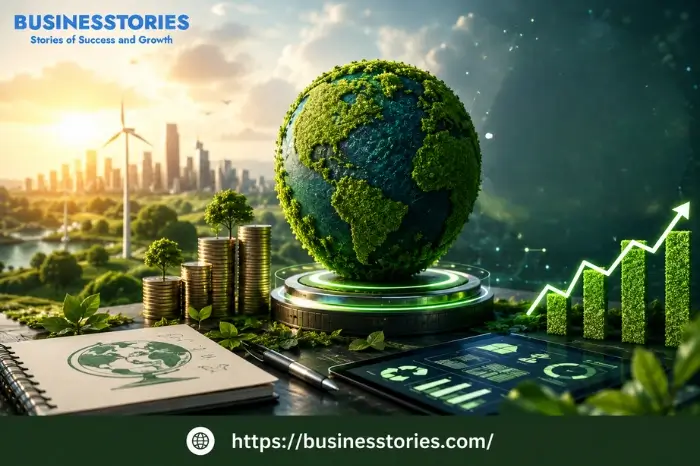
Money used to hide in buildings and machines. Today, it conceals itself within trust. It also hides in reputation. And it hides in climate promises. So, this shift now has a name. Experts call it the Climate Intangible Economy. In short, it is a hidden $10 trillion layer of value. It quietly resides atop the world’s balance sheets. Yet, most business leaders never mention it.
You may already know about goodwill. It is the extra price a buyer pays for a brand or loyal customers. Now, a new cousin has joined the family. In fact, some experts call it “greenwill.” It is the value a firm earns for real climate action. Or, it is the value a firm loses for climate failure. So, this guide breaks down what the climate intangible economy really means.
You will learn why it is worth trillions. You will also learn why so few people talk about it. Plus, you get clear steps to protect this hidden asset in your own business.
What Is the Climate Intangible Economy?
Let’s start simple. An intangible asset is something valuable you cannot touch. For example, a patent is one type. A trademark is another. But goodwill is the most famous intangible of all. It shows up when one firm buys another. Often, the buyer pays more than the assets are worth on paper. So, that extra amount becomes goodwill.
The Climate Intangible Economy builds on that idea. It covers the hidden value tied to a firm’s climate record. This means its carbon plan, its supply-chain honesty, and its public climate promises. It also means the risk a firm holds when those promises turn out false.
Here is why the issue matters right now.
Global corporate intangible assets hit close to $100 trillion in 2025. That is according to WIPO and Brand Finance. In fact, this figure equals about two-thirds of global GDP. So, a growing slice of that total now links to climate trust. Meanwhile, the wider green economy hit a record $10 trillion in market value in 2026.
That data comes from the London Stock Exchange Group. And this number is not a guess. It already happened. So, the climate intangible economy is not one single made-up number. It sits at the intersection of two giant trends.
- First, intangible assets continue to grow in value.
- Second, climate risk continues to grow as a money issue.
So, investors price this mix into their choices, even when accountants cannot list it as one clean line.
Think of it this way. A chair factory’s tables and chairs are tangible. However, the factory’s reputation for using safe, sustainable wood is intangible. So, if that story turns out false, buyers walk away fast. This phenomenon happens even though the chairs never changed at all. In short, that gap is where the climate intangible economy lives.
Here is one useful term to remember: climate-linked brand equity. This phrase means the slice of brand value tied directly to climate trust. Today, it is becoming a normal part of company valuations. Still, most firms do not track it in a clear, steady way yet.
From Goodwill to Greenwill: How Climate Value Entered the Balance Sheet
Accountants have always found it difficult to count things they cannot touch. So, goodwill itself was messy for decades. In time, standard-setters gave it clear rules. Currently, climate value is experiencing a similar challenging journey.
Goodwill only appears after a company sale. Then, a buyer pays more than the target firm’s net assets. So, that extra amount is recorded as goodwill on the books. Climate value, or “greenwill,” works in a different way. Instead, it builds up slowly. It grows deal by deal and promise by promise. A firm earns it through steady, honest action. But it can lose that goodwill in a single scandal.
Research backs these findings up. One widely cited study links a firm’s climate record to its goodwill value. Generally, strong climate choices tend to protect a brand’s name. But poor climate choices tend to damage it, often very suddenly.
Real cases prove this pattern. Fast-fashion brand Shein faced repeat greenwashing fines. Researchers say such behavior puts brand value at real risk, even before any court fine gets paid. In short, the market punishes broken climate promises fast, often before books even change.
Good climate action can lift value too. A 2025 study looked at ESG scores and firm value. It found that strong scores boost value mostly through stronger brand equity. This is not just theory, either. In fact, it shows up in real company valuations.
So, what pushes a firm from goodwill to greenwill? Three things matter most:
- Clear reporting: Steady, honest climate reports build trust.
- Matching action claims: Promises must match real, proven results.
- Outside checks: Independent audits carry more weight than self-made claims.
As a result, firms that master these three steps build strong, lasting greenwill. But firms that skip them build a weak version that can vanish overnight.
The $10 Trillion Question: Sizing the Climate Intangible Economy
Numbers make this topic real. Take a closer look. Let’s look closely at the data. A 2026 report placed the global green economy at $10 trillion. This covers listed firms that earn revenue from climate solutions. That revenue hit $5.5 trillion last year. In fact, it grew at its fastest pace since 2022.
That $10 trillion figure shows clear, revenue-linked green value. But it does not fully cover the intangible layer on top, and that layer is what makes this economy so interesting. Now, add in the wider intangible asset world, worth close to $100 trillion. You start to see how much firm value rests on trust, not on machines.
The investor angle matters too. Firms earning over 20 percent of income from green work have beaten the wider market. In fact, this trend has held for the past decade, per LSEG data. So, investors are not just betting on clean tech here. They are instead factoring in confidence that companies will uphold their climate commitments.
Regulators are also quickly adapting to the situation. Nearly 84 percent of S&P 500 firms now call climate change a real money risk. That is a sharp jump from 67 percent just a few years back. So, this shift matters a lot. As a result, risk disclosures shape how analysts model future cash flow. That, in turn, also shapes intangible value.
Here is a fresh point often missed elsewhere:
This $10 trillion figure likely misses most private firms. After all, private firms rarely share climate-linked brand data in public. So, their climate reputation risk stays hidden until a crisis hits, such as a lawsuit or supply-chain scandal. Once you count private markets, the true size of this economy could be far larger.
Small firms should take note too. You do not need to be a giant company to hold climate-related intangible value. A local maker with a real, honest climate story can gain better loan terms and stronger customer loyalty. That is because trust compounds over time, even at a small scale.
Why No One Is Talking About the Climate Intangible Economy
If this economy is worth trillions, why does it stay so quiet? Actually, a few clear reasons explain the silence.
- First, old accounting rules were not built for the current economy. Standard reports were made for physical assets and clean ownership deals. Climate reputation does not transfer that way in a sale, and it is usually included with other intangible assets. As a result, most finance teams never track it, even when they manage it in daily practice.
- Second, the term itself is still new. Experts use many words for the same idea, such as “climate goodwill” or “green intangibles.” Without one shared name, the topic struggles to gain real attention.
- Third, fear of greenwashing keeps leaders quiet. Many worry that talking about climate value invites blame. Consequently, this situation creates a greenwashing risk gap. Here, real climate leaders under-share their progress out of fear. Meanwhile, weak firms over-share to hide their real problems.
- Fourth, short-term profit goals push out long-term thinking. So, quarterly reports reward quick gains, not slow trust. A climate name built over five years can look small on one earnings call. Yet, it quietly protects sales during the next crisis.
Here is a point worth real thought. Silence around the climate intangible economy is not neutral. In fact, it helps firms that use vague, unmeasured claims, since unmeasured value is much harder to challenge in court or in the press. Clear measurement would help honest firms far more than dishonest ones, since it would let real climate leaders finally prove their edge with concrete numbers.
The Greenwashing Risk: When Climate Intangibles Turn Toxic
Every hidden asset comes with its set of risks. Climate value is no different. When greenwill turns hazardous, it becomes a real threat to firm value.
Greenwashing sits at the center of this risk. It happens when a firm’s climate claims do not match reality. And investor patience for this behavior has clearly dropped. Today, about 85 percent of investors call greenwashing a bigger worry than five years ago. That is a sharp shift in mood. So, it directly shapes how analysts value climate-linked reputation.
Solid research backs these findings up. One peer-reviewed study found that bad news hits stock prices harder than good news helps them. Here, reputation ranks among a firm’s most vital intangible assets, and once damaged, it does not bounce back fast, even after the root problem gets resolved.
The pattern works like a slow chain reaction.
- First, a greenwashing scandal breaks.
- Second, media coverage spreads fast across platforms.
- Third, investor trust drops, often before any lawsuit lands.
- Fourth, brand value weakens on paper, which can trigger a formal write-down under standard accounting rules.
Each link makes the next one worse, and the damage often lasts for years after the first headline.
Rules are also getting tighter. Today, over 7,000 climate laws exist worldwide, so rules on climate claims keep growing. New frameworks now demand real proof behind climate claims, not just ad copy.
Here is a strategy few firms actually use. Treat your climate claims like financial statements, not like plain ads. After all, financial statements go through audits before release, while climate claims usually skip that whole process. So, firms that add this same rigor will likely dodge the next wave of lawsuits.
For owners, watch for three warning signs:
- Vague words like “eco-friendly,” with no clear proof behind them.
- Certificates from unknown or unverified groups.
- Climate promises that are never publicly updated.
So, any of these signs can quietly drain your climate value.
How Businesses Can Build Real Climate Intangible Value
Understanding this economy only helps if you act on it. So, here are clear, useful steps for any business.
- First, start with tracking. After all, you cannot manage what you never measure. So, build a simple system to log your carbon output, supply-chain habits, and public climate promises. Even a basic spreadsheet beats having no data at all.
- Next, pick verified badges over vague labels. Outside audits are more credible than self-made claims, so this single step can enhance your climate-linked brand equity over time.
- Then, match your marketing words to your real data. Every claim on your site should trace back to real proof. As a result, this habit protects you from the greenwashing risk gap and builds far sturdier, long-term trust.
- Thereafter, share your progress often, not just your wins. Share setbacks too, with honesty. Buyers now reward honesty over fake perfection, since perfection often hints at a hidden problem.
- Finally, treat climate reputation as a board-level task, not a marketing-only job. Assign clear ownership and specific goals, and regularly review progress, just as you would with sales or costs.
As a result, firms that make climate reputation a formal process protect their goodwill far better than those who leave it loose.
Small firms can use a lighter version of this same plan. Therefore, start with one honest, provable climate promise. State it in plain, clear words. Then, ensure you fully deliver on it before adding a second promise. In the end, this slow, steady path builds real climate intangible value, one proven claim at a time.
Conclusion: Why the Climate Intangible Economy Deserves Your Attention
The Climate Intangible Economy is not a general idea. It is a real, $10 trillion force shaping company value today. It sits quietly beside goodwill on the balance sheet, yet it often lacks a clear name in boardroom talk. As shown here, Greenwill builds slowly through honest climate work. But it can vanish fast after one broken promise.
So, what should you take away from all of this story?
- First, climate reputation is now real financial value, not soft marketing talk.
- Second, clear measurement and honest reporting protect that value far better than vague claims ever could.
- Third, this shift applies to firms of every size, not just global giants.
Now is the right time to act. Start tracking your climate record today, even with a plain spreadsheet. Pick real, verified badges over vague labels. Match every public claim to real, proven data. These small steps build lasting Climate Intangible Economy value in your brand, one honest claim at a time.
Frequently Asked Questions
What exactly does the term Climate Intangible Economy mean?
It is the hidden value tied to a firm’s climate record. This means its carbon plan, its promises, and its supply-chain honesty. It sits next to brand value and goodwill.
How does greenwill differ from traditional corporate goodwill?
Goodwill only forms after a sale closes. Greenwill instead grows slowly through steady, honest climate work. But it can fall fast after one serious scandal.
Why does this Climate Intangible economy stay so under-reported?
Old rules for money reports were never built for climate trust. The term “climate intangible economy” is both new and ambiguous. So, many leaders avoid the topic to dodge blame.
Is it possible for small businesses to also create climate intangible value?
Yes. A small firm with one honest, verified promise can win better loan terms. It can also win stronger customer loyalty over time.
What warning signs point to weak climate intangible value today?
Vague eco-friendly words, badges from unknown groups, and climate promises with no public updates all point to weak, risky climate value.

Author & Researcher with 8 years of experience across IT and non-IT industries, delivering insightful and data-driven content.