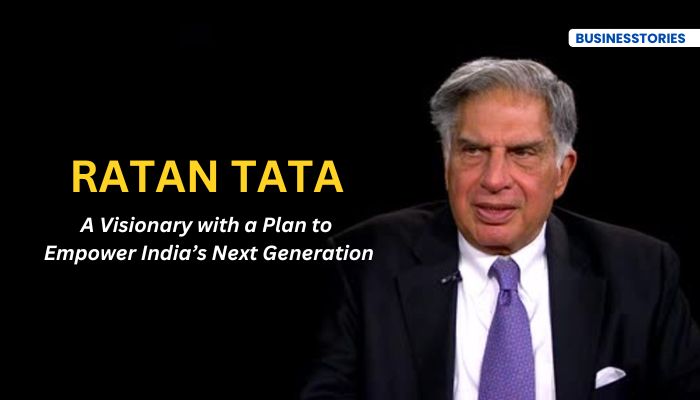
Ratan Tata was never one to seek publicity. Yet, his name continues to hold significant influence in India today. He led the Tata Group for over twenty years. But his real gift to India sits somewhere else. It sits in classrooms, startup offices, and small towns. That is where young Indians now build bold new ideas.
Ratan Tata held a singular belief above all others. He believed India’s future rests on its youth. So, he spent his life building tools to help young people rise. He funded scholarships and backed young founders. He pushed for better cars and better health care. In short, he built a real plan, not just a legacy.
This article provides a detailed, step-by-step guide to that plan. You will see how Ratan Tata used education, mentorship, and bold ideas to help young Indians grow. You will also find simple, useful tips you can use today. This principle holds whether you are a student, a founder, or just someone who wants to lead with purpose. Let’s dive in.
Who Was Ratan Tata? A Quick Introduction
Ratan Naval Tata was born on December 28, 1937, in Mumbai. His parents split up early in his life. So, his grandmother, Lady Navajbai Tata, raised him. This early life gave him a quiet and steady nature. He studied architecture at Cornell University in the United States. Later, he also took a management course at Harvard.
Tata joined the family firm, Tata Group, in 1962. He began his first job at Tata Steel. He shoveled limestone on the shop floor with other workers. This simple start taught him humility early on. He became chairman of Tata Sons in 1991.
Under his leadership, the group grew from a local player into a true global name. For example, Tata Group bought Jaguar Land Rover, Tetley Tea, and Corus Steel during this time.
However, growth was never his only goal. In fact, Tata’s charitable trusts held most of the shares in Tata Sons the whole time. This setup meant that most profits flowed back into meaningful causes. As a result, education, health, and rural projects got steady funds for decades. Tata stepped down as chairman in 2012.
However, he returned briefly in 2016 to help the group navigate a challenging period. He passed away on October 9, 2024. He left behind a legacy that touches almost every part of Indian life. His story is relevant here for one clear reason: his business empire always served a bigger goal. That goal was lifting the next generation.
Also Read: How Entrepreneurship as a Career Can Transform Your Life
Ratan Tata’s Vision for India’s Youth
Ratan Tata often said education is the strongest tool for changing lives. So, he treated youth support as a long-term plan, not a quick gift. His plan consisted of three distinct components: providing access to education, offering hands-on mentorship, and supporting innovative ideas.
First, Tata believed talent lives everywhere in India, even in tiny villages. Thus, he built systems to identify that talent and fund it. Second, he believed young people learn best by doing real work. That is why he mentored founders in person, not just with checks.
Third, he believed India needed home-grown ideas, not copied ones. This is why he backed products built for Indian problems, like cheap cars and low-cost homes.
This vision also holds a fresh angle that many other articles miss. Tata treated failure as part of the plan itself. He once said his startup bets felt like a “learning experience,” not a sure win. In other words, he expected some bets to fail. Yet he still made them, because he valued the attempt itself.
This mindset gave young founders room to try new things without fear. Many first-time founders in India still lack this kind of patient support. Thus, Tata’s choice to accept risk was itself a gift to the next generation.
Tata also employed his reputation as a weapon. A small confirmation from him told other investors, “This idea has real value.” As a result, many startups landed bigger funding rounds simply because Tata believed in them first.
This ripple effect helped whole teams of young workers, not just the founders. In short, his vision reached far past any single firm.
Education as the Foundation of Empowerment
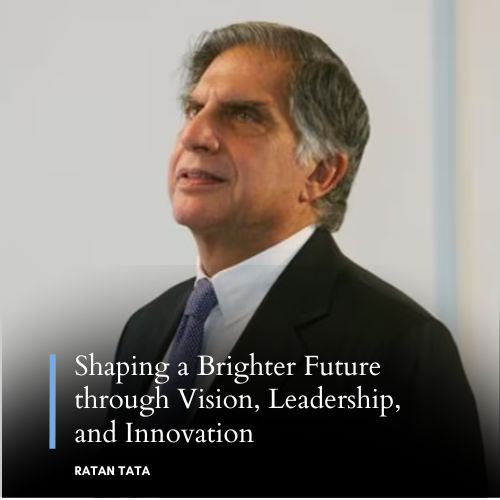
Ratan Tata’s love for education began long before he led Tata Sons. The J.N. Tata Endowment started in 1892, set up by his ancestor Jamsetji Tata. It has given loan scholarships to over 5,800 Indian students for study abroad. Tata kept this legacy alive and grew it further during his life. The fund backs master’s, PhD, and postdoctoral studies in any field. It picks students based only on merit.
Beyond this fund, Tata built a strong bond with Cornell University, his alma mater. In 2008, the Tata Education and Development Trust gave $50 million to Cornell. Half of this gift built the Tata-Cornell effort in farming and food, aimed at rural India. The other half funds Tata Scholarships, which still cover tuition costs today. This gift remains one of the largest ever given to Cornell by anyone abroad.
Tata also gave direct support to Indian schools. He backed research at the Indian Institute of Science (IISc). He also helped fund science projects across the country. Furthermore, Tata Trusts built skill programs for students who could not reach a normal college. These programs teach real job skills. Thus, graduates could secure work fast, instead of waiting years for a degree to pay off.
Here is a fresh insight:
Tata’s plan for education always paired merit with movement. He usually funded programs that helped bright students study away from home. Instead, he pushed them toward top schools abroad.
He then brought that new knowledge back to India through collaborative research. This two-way flow, sending students out and pulling ideas back in, quietly built India’s talent base. This phenomenon took place long before anyone widely used the term “brain gain.”
Want to follow this path? Here are three simple steps.
- First, look into merit-based grants like the J.N. Tata Endowment if you plan to study abroad.
- Second, check out skill-based courses if a four-year degree feels out of reach.
- Third, apply early. Many of these programs review candidates months before classes start.
Mentoring India’s Startup Ecosystem
After he stepped back from daily work at Tata Sons, Ratan Tata turned toward India’s growing startup world. This shift surprised many people at first. After all, a steel-and-mining leader seemed like an odd fit for young tech founders. Yet Tata took on this role with true joy.
Over the next decade, Tata put money into more than 40 startups. He used his firm, RNT Associates, to do so. His list of bets included Paytm, Ola, Ola Electric, Lenskart, Snapdeal, and Urban Company.
Ola Electric’s founder, Bhavish Aggarwal, has said in public that Tata’s early love for electric cars sparked his EV dream. Tata once invited Aggarwal to see his EV project, built on a Tata Nano frame, well before Ola Electric even existed.
Urban Company co-founder Abhiraj Singh Bahl shared a memory that shows Tata’s style well. During their first talk in 2015, Tata told him, “India needs what you are building; keep the quality high, and the rest will follow.” Bahl later said these words became a guide for his whole firm. Likewise, Snapdeal’s Kunal Bahl called Tata a true statesman, whose calm and kind nature left a mark on all who met him.
This pattern shows something most people skip.
Tata’s checks usually allowed flexibility and autonomy. Instead, he gave advice and trust, then stepped back to let founders lead. This style stands apart from many venture firms, which often push for rapid growth above all else.
Founders who worked with Tata often speak of a calmer, values-first bond instead. As a result, many of his startups built strong teams early on. This likely helped them survive rough funding years later.
If you plan to build a startup, take three key lessons from this section.
- First, build things that resolve real problems for real people, since Tata backed founders who did just that.
- Second, look for mentors who offer wisdom, not just cash.
- Third, guard your team’s values early, since it grows much harder to fix later.
Championing Innovation for the Common Person
Ratan Tata’s most famous project remains the Tata Nano, launched in 2008 as the world’s most affordable car. He built it after he saw families squeeze onto one bike in the rain. Tata wanted every Indian family to own a safe, four-wheel ride.
The Nano did not sell as well as hoped. Still, the project proved something big: large firms can build for poor families too, not just rich ones.
This same idea shaped his work in health care and housing. Tata Trusts backed low-cost cancer care projects. These efforts brought cheap treatment to towns far from big cities. Meanwhile, other Tata firms explored low-cost housing plans for middle- and lower-income buyers. In each case, the goal stayed the same: build at scale and build for all, not just a few.
Tata Group’s return of Air India in 2022 shows another key point. Initially, this deal appeared to be a straightforward business transaction. Yet it also meant something deep to many young Indians. It indicated that Indian firms can win back and rebuild big brands with patience and long-term thinking.
For a generation raised on stories of foreign buyouts, the event felt personal. Many young workers pointed to it as proof that big home-grown wins remain possible today.
Here is a point worth noting: Tata’s plan for new ideas always aimed at dignity, not just low cost. Cheap goods rarely change lives if they feel poor or shameful to own. Tata pushed his teams to build things people could feel proud of, even at a low price.
This point matters a lot in a place where pride shapes what people choose to buy. Young founders who build for India’s mass market can learn from this rule: low-cost solutions that lack pride rarely win in the end.
Ratan Tata’s Leadership Lessons for the Next Generation
Beyond funds and startups, Ratan Tata left behind a style of leadership worth studying. His style mixed humble ways, patience, and a firm sense of right and wrong, even in challenging times.
Consider his strength during the 2016 crisis at Tata Sons. The board removed then-chairman Cyrus Mistry. Tata came back for a short time to steady the group. This period tested how well he could handle conflict while he guarded the firm’s good name.
Young workers can learn from how he dealt with this shift: calm, without public fights, and always with the group’s long-term health in mind.
Tata also showed quiet care for others. During the 2008 Mumbai terror attacks, gunmen struck the Taj Mahal Palace Hotel, owned by Tata Group. Tata went in person to meet the families of the victims. He also made sure the hotel paid for staff children’s schooling, no matter their job role. This act showed that true leaders carry feelings, not just plans and cash.
Here is a view rarely shared: Tata mostly avoided social media and big ad drives to build his own name. Yet he became one of India’s most trusted public figures. This tells us that steady, value-led acts build more lasting trust than loud self-promotion ever could.
For young leaders who grew up online, this lesson is especially important. Trust built slowly, through honest acts, tends to last longer than fame built fast through noise alone.
Here are three simple steps you can use.
- First, put steady, honest work ahead of loud self-promotion.
- Second, treat setbacks as tests of your character, not reasons to react in anger.
- Third, remember that care shown in a crisis often defines a leader more than success shown in calm times.
Also Read: Redefining Elder Care and Companionship – Story of Papa.com
Conclusion: Carrying Ratan Tata’s Vision Forward
Ratan Tata dedicated his life to demonstrating that business success and social responsibility can coexist. He funded schools so bright students could reach their full potential. Guided young founders so India’s startup world could grow with strong values.
He backed fresh ideas that honored pride, not just low cost. And he led with calm and humble grace in both good times and hard times.
His plan to lift India’s next generation was never about big, loud news. Instead, it grew quietly, through scholarships, startup talks, and steady work over time. This is precisely why his mark still feels personal to so many young Indians today.
So, what can you take from his story? If you are a student, look into merit-based grants and skill courses, rather than assume college is your only path. As a founder, you should seek mentors who care about your goal, not just quick returns. And if his story simply moves you, think about how you might use his patience and humble spirit in your life this year.
Ratan Tata’s legacy will continue to grow as long as young Indians keep building. Take one small step today. You could apply for a grant, contact a mentor, or read more about his work through Tata Trusts. Ultimately, his plan only works if the next generation takes it on and carries it forward.
Frequently Asked Questions
1. What did Ratan Tata do to empower India’s youth?
Ratan Tata funded scholarships, mentored startup founders, and backed bold ideas like cheap cars. This gave young Indians real access to schools, funds, and hands-on guidance.
2. How many startups did Ratan Tata invest in himself?
Ratan Tata put money into more than 40 Indian startups, including Paytm, Ola, Ola Electric, and Urban Company. He often gave advice too, not just cash.
3. What is the J.N. Tata Endowment scholarship program?
Started in 1892, this loan fund pays for master’s, PhD, and post-doctoral study abroad for gifted Indian students. It has helped more than 5,800 scholars so far.
4. Why is the Tata Nano part of his youth vision?
The Tata Nano aimed to give normal Indian families a safe, low-cost ride. This shows Ratan Tata’s belief that new ideas should serve everyday folks, not just the rich.
5. How did Ratan Tata support Indian schools abroad?
He gave $50 million to Cornell University. This gift funded farm research and grants for Indian students, and it grew strong ties between Indian talent and top schools worldwide.

Tabassum Shaik is an Author, Researcher, and SEO Specialist with over 8 years of experience creating informative content on business, startups, entrepreneurship, marketing, technology, and digital trends. She specializes in researching industry trends and transforming complex topics into practical, easy-to-understand insights. Her goal is to help readers stay informed, learn new ideas, and make better business decisions.