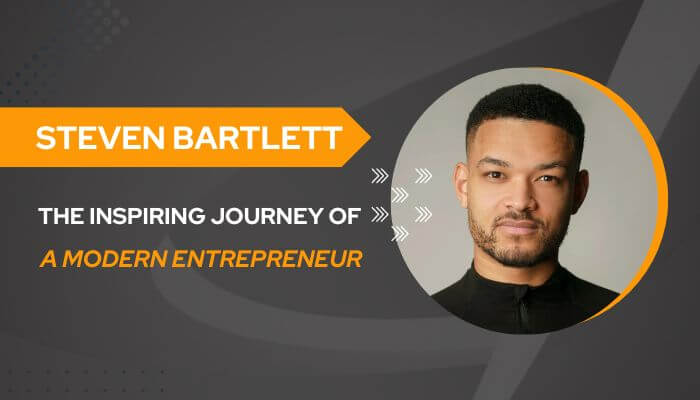
Some founders build one big company and stop. Steven Bartlett kept going. First, he dropped out of university after one lecture. Then, he built a social media agency that later went public. After that, he launched The Diary of a CEO, now one of the biggest podcasts on Earth. Today, his holding company is worth about $425 million.
So, how did a broke teenager from Plymouth pull off such a feat? And more importantly, what can you learn from it?
In this listicle, we walk through the key stages of his life. Along the way, you will see the big wins, the honest setbacks, and the habits behind his growth. Finally, we turn his story into five simple steps you can use in your own work. Let’s dive in.
1. Early Life: Humble Beginnings in Botswana and Plymouth
Every success story has a starting point. For Steven Bartlett, that point was far from glamorous.
Born in Botswana, raised in England
Steven Cliff Bartlett was born on 26 August 1992 in Gaborone, Botswana. His mother is Nigerian, and his father is English. Then, when he was two, the family moved to Plymouth in southwest England.
However, life in Plymouth was not simple. The family faced money problems. In fact, Bartlett has often said he grew up poor in a mostly white, middle-class area. As a result, he often felt like an outsider. Still, that feeling pushed him to find his own path.
A Restless Student
At school, Bartlett did not fit the usual mold. For example, he organized school trips and parties to make a profit. Yet his teachers did not reward that drive. In the end, he was expelled from sixth form.
Next, he enrolled in a business course at Manchester Metropolitan University. But he only lasted one lecture. He looked around the room and felt it would not take him where he wanted to go. So, he walked out and never came back.
The Hard Years
After he quit, things got worse before they got better. He lived in a run-down house in a rough part of Manchester. At times, he even stole food to eat. Meanwhile, he wrote a bold goal in his diary. He wanted to be a “happy sexy millionaire” by age 25. Years later, that phrase became the title of his first book.
Our Take: Struggle as Fuel
Most profiles treat his early life as a sad backstory. However, we see it differently. His early struggle gave him two rare tools: hunger and empathy. Hunger drove him to work long hours.
Meanwhile, empathy later helped him ask raw, human questions on his podcast. In other words, his past did not just shape his drive. It also shaped his product.
Also Read: Tricog Health: Revolutionizing Cardiac Care with AI
2. Dropping Out and Building Social Chain
Leaving university was a risky choice. However, it paved the way for his first genuine business venture.
From Wallpark to Social Chain
First, Bartlett tried a student platform called Wallpark in 2013. It failed to gain traction. Even so, it taught him how online communities grow. Then, in 2014, he co-founded Social Chain with Dominic McGregor. They started it from a bedroom in Manchester.
Their idea was simple. Young people spent hours on social media. So, brands needed to reach them there. To achieve this, Social Chain built giant networks of social pages. Soon, it reached well over two billion views a month. Big names such as Amazon, Apple Beats, and Coca-Cola became clients.
Going Public
In 2019, Social Chain merged with a German online retailer called Lumaland. Together, they formed The Social Chain AG and listed on stock exchanges in Germany.
At its peak, the wider group reached a value of around $600 million. Then, in 2020, Bartlett stepped down as CEO to chase new projects.
The Honest Picture
Not everyone accepts the official story, though. In 2023, The Times ran an investigation into his business claims. It argued that much of the group’s value came from the retail side, not from Bartlett’s agency.
Later that year, Social Chain itself bought Brave Bison, which had previously purchased Social Chain for an upfront fee of £7.7 million.
Our Take: Know Your Real Win
So, what is the real lesson here? In our view, Social Chain’s true value was not the share price. Instead, it was the skill set Bartlett built. He learned how attention works online. He also learned how to grow an audience fast.
Later, he used both skills to build something far bigger. So don’t worry if your first business doesn’t turn into a giant success. The skills you gain may matter more than the exit.
3. The Diary of a CEO: How Steven Bartlett Built a Podcast Empire

If Social Chain made Bartlett known in marketing, his podcast made him famous worldwide.
A Humble Start
Bartlett launched The Diary of a CEO in 2017. At first, it was a small audio show with business guests. Over time, though, he widened the scope. Now he speaks with doctors, athletes, authors, and thinkers about health, love, money, and purpose.
Growth by the Numbers
The results are clear. For example:
- In 2024, the show passed one billion views and listens across Apple, Spotify, and YouTube. It was the first UK podcast to do so.
- Apple named it the UK’s top podcast for three years in a row.
- In 2024, it ranked in the top five global podcasts on Spotify.
- By late 2025, it had overtaken Joe Rogan as Britain’s most popular show on Spotify.
- Today, its YouTube channel has over 18 million subscribers.
Why It Works
So, why does this podcast win?
- First, the episodes are long and deep. Many run for two hours.
- Second, Bartlett asks personal questions that make guests open up.
- Third, the team treats each episode like a product.
They test titles and thumbnails to find what people click.
Our Take: The Podcast Is a Data Engine
Here is an angle most listicles miss. Bartlett does not just host a show. Instead, he runs a live research lab. Every episode tells his team what people care about right now.
As a result, he spots trends early. Then he uses that data for his brands and investments. In short, his podcast works like a customer research tool that also earns money.
Of course, this giant reach also brings risk. In 2024, a BBC report claimed some guests made harmful health claims on the show. Bartlett’s team replied that the show provides space for many views. Either way, it reminds us that big influence comes with big responsibility.
Next Story: Reshma Saujani: Champion for Girls in Technology
4. He is an investor, author, and builder of the creator economy.
After Social Chain, Bartlett did not slow down. Instead, he branched out into books, TV, and investing.
Dragons’ Den and Best-Selling Books
In 2021, he joined BBC’s Dragons’ Den and became the youngest dragon in the show’s history. He later stepped away from the panel in 2023. Meanwhile, he also wrote two books.
His first, Happy Sexy Millionaire, made the Sunday Times bestseller list. His second, The Diary of a CEO: The 33 Laws of Business and Life, became a global hit in 2023.
Flight Story and Smart Bets
- Next, he co-founded Flight Story, a marketing and media company.
- Then, in 2023, he launched a $100 million venture fund to back early-stage startups.
- He co-founded Thirdweb, a Web3 software platform.
- He has also invested in brands like Huel and PerfectTed.
However, he has since stepped back from many board roles. For example, he left the Huel board in early 2025. Today, he still invests, but he spends less time on boardroom duties.
Steven.com: The “Disney of the Creator Economy”
His boldest move came in October 2025. His holding company, Steven.com, raised an eight-figure round at a $425 million valuation. Slow Ventures and Apeiron Investment Group led the deal. Even better, Bartlett kept over 90% of the company.
Steven.com brings all his work under one roof. It holds his media studio, his podcast tech, and his venture fund. Today, it has more than 100 full-time staff across London, Manchester, Los Angeles, and New York.
Our Take: Own the Stack
Here is the key insight. Most creators rent their audiences from platforms. However, Bartlett is trying to own the full stack. He owns the content, the production team, the tech, and the capital.
Therefore, if one platform changes its rules, Bartlett’s business can remain viable. For any creator or founder, that is a smart model to study. You can still replicate the concept, even if you’re tiny. Start by owning your email list, your website, and your best content.
5. Five Lessons from Steven Bartlett You Can Use Today
Stories are lovely. But steps are better. So, here are five practical lessons drawn from his journey.
Step 1: Write Down a Bold Goal
Bartlett wrote his “Happy Sexy Millionaire” goal at 18. Likewise, you should write one clear goal for the next five years. Then put it where you will see it every day. For example, stick it on your desk or set it as your phone screen. This way, you will think about it each morning.
Step 2: Start Before You Feel Ready
He launched Wallpark with almost no money. It failed, but it taught him a lot. So, start small this week. For instance, test your idea with ten real customers before you build anything big.
Step 3: Build Skills, Not Just Profits
His first company taught him how attention works. Similarly, ask yourself one question: What skill am I building right now? Then pick projects that grow that skill. Over time, these skills will accumulate. Soon, these skills will unlock opportunities that money alone cannot provide.
Step 4: Treat Your Audience Like Data
He uses his podcast to learn what people want. In the same way, track what your customers click, buy, and ask about. Next, review those notes every week. Thereafter, adjust your offer. Even a simple notebook works well at first.
Step 5: Own What You Build
Finally, avoid depending on one platform. For example, collect email addresses, not just followers. Furthermore, keep a large share of your company if you can. That way, you stay in control.
Our Take: Balance Ambition with Honesty
One more thing. His story also shows that critics will check your claims. Therefore, ensure your numbers are clear. Ultimately, trust is the one asset that cannot be bought.
Conclusion: What Steven Bartlett’s Journey Teaches Us
Steven Bartlett demonstrates that a difficult beginning does not determine your future.
He began as a broke, restless student in Plymouth.
- Then he quit university, built Social Chain, and learned how attention works online.
- Thereafter, he turned The Diary of a CEO into one of the world’s top podcasts.
- Today, he runs a creator company valued at $425 million.
Still, his path was not perfect. He faced failed ideas, tough press, and fair questions about his claims. Yet he kept learning and moving forward. That, in the end, is the real lesson.
So, what should you take away?
- First, set a bold goal and write it down.
- Start by taking small steps and learning quickly.
- Third, focus on the skills you are building, not just the money.
- Fourth, listen closely to your audience.
- Finally, take ownership of as much of your work as you can.
You do not need a famous podcast to apply these ideas. Instead, you only need to take one step today. Pick one lesson from this list. Then act on it before the week ends.
Explore more founder stories and startup stories on Businesstories.com, and let these real-world lessons guide your next big move.
Frequently Asked Questions About Steven Bartlett
1. How did Steven Bartlett start his entrepreneurial journey at a young age?
He dropped out of Manchester Metropolitan University after one lecture. Then he tried a student platform called Wallpark. In 2014, he co-founded Social Chain, a social media agency, from his Manchester bedroom.
2. What topics does Steven Bartlett’s Diary of a CEO podcast cover today?
The Diary of a CEO features long, honest interviews with business leaders, doctors, athletes, and thinkers. It covers success, health, money, and mental well-being. Today, it ranks among the most popular podcasts in the world.
3. What is Steven Bartlett’s company, Steven.com, and what does it do?
Steven.com is his creator’s holding company. It includes his media studio, podcast technology, and venture fund. In 2025, it raised an eight-figure round at a $425 million valuation, and Bartlett still owns over 90%.
4. Why did Steven Bartlett drop out of university after one lecture?
He felt the lecture would not lead him to the success he wanted. Therefore, he left to build businesses instead. He has said traditional education was simply not the right path for his goals.
5. What business lessons can new founders learn from Steven Bartlett?
Founders can learn to set bold goals, start small, and build useful skills. They should also study audience data closely and own their platforms. Above all, staying honest about results builds lasting trust.

Tabassum Shaik is an Author, Researcher, and SEO Specialist with over 8 years of experience creating informative content on business, startups, entrepreneurship, marketing, technology, and digital trends. She specializes in researching industry trends and transforming complex topics into practical, easy-to-understand insights. Her goal is to help readers stay informed, learn new ideas, and make better business decisions.