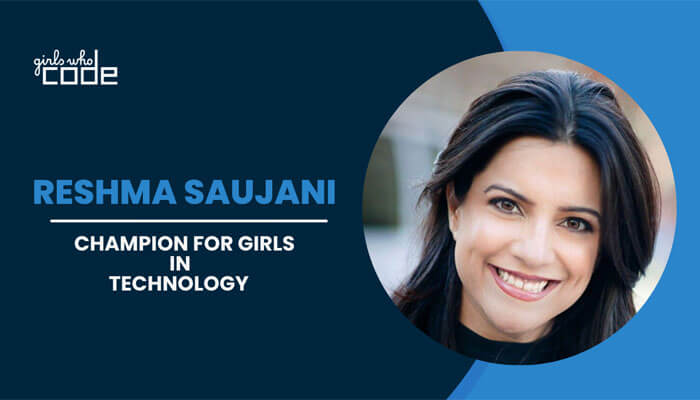
Introduction:
What do you do after you lose big? Most of us hide. Reshma Saujani did the opposite. In 2010, she lost a race for Congress. Yet two years later, she taught 20 girls to code in a borrowed office. Today, that small class has grown into Girls Who Code, a global nonprofit that has served 860,000 students.
In this founder story, you will see how she spotted the gender gap in tech. You will also learn how she built a movement without writing any code. Finally, you will get clear steps you can borrow for your mission.
Who Is Reshma Saujani? The Early Years of a Daughter of Refugees
Reshma Saujani was born in Chicago on November 18, 1975. Her parents were Indian refugees. They were forced out of Uganda in the 1970s.
As a result, Saujani grew up with a strong sense of duty. She has often said that America saved her parents’ lives. She wanted to repay the country that had saved her parents’ lives. Even as a child, she was drawn to activism.
A Path Built on “No”
She studied political science at the University of Illinois. Thereafter, she went to Harvard’s Kennedy School of Government. Then she earned her law degree at Yale Law School.
However, her background is the aspect that most profiles tend to overlook. She applied to Yale Law School three times before she got in. She learned that “no” often means “not yet.”
A Career She Did Not Love
After completing law school, Saujani chose a secure career path. She worked as a corporate lawyer in finance. Right before her run for Congress, she was a deputy general counsel at Fortress Investment Group.
However, she felt stuck. She later told a Stanford audience that she was in a job she hated and a life she didn’t want.
Our Take: Her Outsider Status Was an Asset
Reshma Saujani had no tech degree. She had never built software. Yet that gap helped her. Because she was not a coder, she did not see the gender gap as a technical problem. Instead, she saw it as a political and cultural problem.
And those are precisely the problems a lawyer and organizer knows how to fight. On a 2025 podcast with Meghan, Duchess of Sussex, she admitted that she would not have landed the CEO job at her nonprofit.
The reason? She didn’t code. Passion for a problem matters more than a perfect résumé.

The Lost Election That Sparked Girls Who Code
In 2010, Reshma Saujani quit her finance job. Then she ran for the U.S. House of Representatives in New York. She challenged Carolyn Maloney, a long-serving Democrat. Saujani became the first Indian American woman to run for Congress.
The race was a challenging endeavor. In fact, an early poll showed her trailing by more than 68 points. Still, she drew support from big tech names, such as Jack Dorsey and Facebook co-founder Chris Hughes.
What She Saw in the Classrooms
During the race, she visited many public schools in New York City. The computer labs were full of boys. The girls, meanwhile, were missing.
Soon, she found concrete data. In 1995, women made up 37% of computer scientists. Today, they make up only 24%. Moreover, the most significant drop-off in girls’ interest happens between ages 13 and 17.
Losing, Then Learning
In the end, she lost the race badly. Yet she could not stop thinking about those empty seats in the computer labs. So she asked a simple question: Why was no one talking about the issue?
As she later told the Yale Law Report, she pulled together some funding and a small team. Then they taught 20 girls to code in borrowed office space. That was the summer of 2012. And that was the birth of Girls Who Code.
Our Take: A Campaign Is Customer Research
Most people see her election as a failure. However, look closer. A campaign forces you to visit schools, shake hands, and listen. In startup terms, that is customer discovery. She spent months in the field meeting her future “users” before she ever had a product.
She turned the loss into an opportunity. In fact, it was her best market research. For founders, the lesson is clear. Get out of the office and watch real people.
How Reshma Saujani Built Girls Who Code Into a Global Movement
Let’s look at how the Girls Who Code nonprofit grew from one class into a worldwide force for women in tech.
From 20 Girls to Nearly a Million
The growth curve tells the story:
|
Year |
Students Served |
|
2012 |
20 girls in one pilot class |
|
2018 |
About 90,000 girls |
|
2019 |
300,000 girls in the U.S., U.K., Canada, and India |
|
2022 |
580,000 students |
|
2024 |
760,000 students |
|
2025 |
860,000 students |
Additionally, its 2019 campaigns reached 500 million people. That same year, Fast Company named it the Most Innovative Nonprofit.
The Programs That Made It Work
Girls Who Code did not rely on one program. Instead, it built a ladder.
- First came after-school clubs for younger girls.
- Next came summer programs for teens.
- Later, College Loops helped students stay in computer science through college.
Furthermore, Saujani used her network well. She partnered with companies like Twitter, Facebook, Microsoft, IBM, Pixar, and Disney. Some of them even hosted classrooms inside their offices. As a result, girls could see real engineers at work.
Proof That It Works
The results are striking. According to the 2024 annual report, alumni earn computer science and related degrees at 5X the national average. In addition, over half of the students come from groups that are often left out of tech.
Today, the group is aiming to reach 5 million girls, women, and nonbinary people.
Our Take: It Targeted the Leakiest Part of the Pipe
Here is what sets this coding program for girls apart. Many groups work with adults who already chose tech. Saujani, by contrast, aimed at the 13 to 17 age range, where girls drop out the most. In other words, she fixed the leak at its source.
That is a smart strategy for any mission. Find the exact point where people quit and build from there.
Brave, Not Perfect: The Big Idea Behind Her Mission
Teaching code was only part of the challenge. Soon, Saujani saw a deeper problem. Girls were not just missing skills. They were missing courage.
The TED Talk That Went Global
In February 2016, she gave a TED Talk called “Teach girls bravery, not perfection.” Today, it has more than 6.5 million views on TED’s site alone. It clearly resonated with many.
Her main point was simple. We raise girls to be perfect. Meanwhile, we raise boys to be brave. As a result, many women avoid risk at work and in life. She called the phenomenon the “bravery deficit.”
A Story Every Teacher Knew
In the talk, she shared a story that her teachers kept telling her. When boys get stuck on code, they say something is wrong with their code. Girls, on the other hand, say, “There’s something wrong with me.”
That one line explains a lot. Girls often blame themselves when things break. Yet in coding, things break all the time. So girls need support to keep trying.
From Talk to Books
Next, she turned the idea into books. Her bestseller Brave, Not Perfect helped women take bold steps. She also wrote Pay Up, which looks at women and work. Plus, the Girls Who Code book series became a 13-book New York Times bestseller for young readers.
Our Take: Code Is a Bravery Machine
Coding does not just need bravery. It actually builds bravery. Every program fails at first. You see an error. You correct it. Then you try again.
In other words, the subject itself trains the habit she wanted to teach. That is why her two big ideas fit so well. Learning to code is practice in failing safely. If you want to become more courageous, choose a skill where mistakes are quick, minor, and easily fixed.
Life After Girls Who Code: Moms First and a New Fight
After about nine years, Reshma Saujani stepped down as CEO. She handed the role to Dr. Tarika Barrett. Then, when COVID-19 hit, she spotted a new crisis.
The Pandemic Wake-Up Call
During the pandemic, schools closed. As a result, millions of mothers left their jobs to care for kids. Saujani saw that women’s gains at work could vanish fast.
So in January 2021, she launched the Marshall Plan for Moms. In 2023, it became Moms First. Today, it is a movement of more than one million mothers and supporters.
Real Policy Wins
Moms First fights for affordable child care and paid family leave. And it has seen results. For example, it helped drive $16 billion in federal child care funding. It also backed state-level programs, including New York’s move toward universal care for kids under five.
Because of this work, TIME named her one of its 2026 Women of the Year. Later, in May 2026, she sat down with NBC’s Meet the Press to talk about American motherhood.
A Record-Breaking Film
Next came a film. In June 2026, Moms First released No Country for Mothers, a documentary on the culture wars around motherhood. Interestingly, it set a world record for the most producers credited on a film. Thousands of moms joined as associate producers.
Our Take: Same Pipeline, Next Stage
Many see Moms First as a career switch. However, it is really the same mission. Girls Who Code fixed the leak at age 13. Moms First fixes the leak at age 33. After all, a girl who learns to code may later become a mom. If work does not support her, then the tech gender gap reopens.
So her two nonprofits are not separate stories. Together, they form one long fight for women’s economic power.
👉 To explore more platforms that support women’s leadership and growth, you can also read Leap.club: Networking for Women Entrepreneurs.
6 Lessons Founders Can Learn From Reshma Saujani
Her path offers simple, proven moves for any founder. Here is how you can apply them today, step by step.
1. Turn Your Setback Into Research
First, list what you learned from your last failure. Saujani’s lost race revealed a gap in her understanding. Likewise, your setback may hold your next big idea. So write down three things you saw that others missed. Then, pick the one that keeps bugging you the most.
2. Start Tiny and Test Fast
Next, skip the grand launch. She began with just 20 girls. Similarly, run one small pilot this month. Then measure what works before you scale. For example, track sign-ups, repeat visits, and honest feedback.
3. Lead With the Problem, Not Your Skills
Furthermore, stop waiting until you feel “qualified.” She did not code, yet she built a coding nonprofit. Therefore, hire experts for what you lack. Instead, direct your energy toward the mission and the story.
4. Back Your Cause With Data
Then, find one striking number. For her, it was 37% in 1995 versus 24% today. A clear stat makes people care fast. As a result, funders and partners lean in. So put your best number in every pitch, post, and page.
5. Practice Brave Over Perfect
Furthermore, ship work before it feels ready. Each week, take one small risk. For instance, pitch an idea, send a cold email, or share a draft. Over time, small risks build real courage.
6. Build a Movement, Not Just a Program
Finally, give people a real role to play in your work. She turned students, parents, and teachers into allies. In the same way, invite your audience to join your cause, not just buy from you. After all, people stay loyal to causes they help shape.
Conclusion: Why Reshma Saujani Still Matters
Reshma Saujani proves that a loss can be a launch pad. She lost a race for Congress. Yet she walked away with a mission. She saw empty seats in computer labs. Then she filled them with girls.
Along the way, she built Girls Who Code from 20 students into a nonprofit that has served 860,000. Its alumni now earn computer science degrees at five times the national average. Moreover, she sparked a global talk about the bravery deficit. Her TED Talk and books pushed millions of girls to take risks.
Then she spotted the next leak in the pipeline. Through Moms First, she now fights for child care and paid leave. That work earned her a place on TIME’s 2026 Women of the Year list.
The key lesson is simple. You do not need to be perfect to make a difference. You need to be brave. She did not know how to code. Still, she changed who gets to code.
So what is your next brave step? Maybe you can mentor a girl who loves tech. Or you could support a local coding club. You might even start your own small pilot, just like those first 20 girls.
Start small. Start now. Let your setbacks guide you.
Frequently Asked Questions About Reshma Saujani
1. Why did Reshma Saujani start Girls Who Code after losing in 2010?
While running for Congress in 2010, she visited New York schools and saw computer labs full of boys. That gender gap in tech inspired her to launch Girls Who Code in 2012.
2. How many students has the Girls Who Code nonprofit taught so far?
As of its 2025 annual report, Girls Who Code has served 860,000 girls, women, and nonbinary students worldwide. It now aims to reach 5 million learners in the coming years.
3. What is the main message of Reshma Saujani’s famous 2016 TED Talk?
Her 2016 TED Talk says we raise girls to be perfect and boys to be brave. She argues that this bravery deficit holds women back in tech, business, and leadership.
4. Is Reshma Saujani still the CEO of the Girls Who Code nonprofit today?
No. She stepped down after nine years, and Dr. Tarika Barrett now leads Girls Who Code. Today, Saujani serves as founder and CEO of Moms First, a nonprofit for mothers.
5. What books has Reshma Saujani written about women, work, and bravery?
She wrote Brave, Not Perfect, and Pay Up, which explore courage and women at work. She also created the Girls Who Code book series, a New York Times bestseller for kids.

Tabassum Shaik is an Author, Researcher, and SEO Specialist with over 8 years of experience creating informative content on business, startups, entrepreneurship, marketing, technology, and digital trends. She specializes in researching industry trends and transforming complex topics into practical, easy-to-understand insights. Her goal is to help readers stay informed, learn new ideas, and make better business decisions.