How Waste Management Startups Are Bringing Sustainable Change?
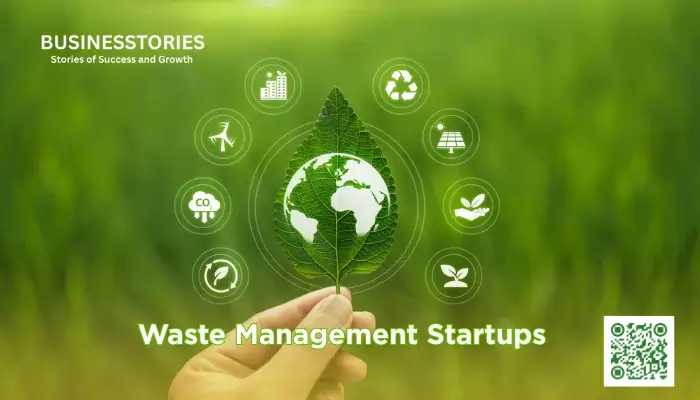
Every minute, truckloads of plastic are dumped into oceans and streets, especially in fast-growing cities. As garbage piles up, waste collectors are often forced to work without protection. Waste management startups are creating hope by transforming plastic into useful products like construction materials and shoes. In addition, digital tools are being developed to help communities manage waste better. These entrepreneurs believe waste can become the start of something valuable.
The Scope of the Waste Problem
Plastic waste has become one of the world’s fastest-growing environmental problems. Moreover, developing countries, which often lack proper waste collection and recycling systems, are facing the greatest impact. As a result, growing amounts of waste are being handled through informal networks that cannot manage the rising volume effectively.
Furthermore, serious health and environmental risks are being created by unmanaged waste. Water supplies are being contaminated, while large cleanup costs are being faced by governments with limited resources. Consequently, local economies are being weakened, and the development of proper waste management systems is being delayed even further.
CleanHub (Germany)
This is one of the waste management startups, founded in 2020. The founder, Joel Taschen and his co-founders, Bosse Rothe and Florin Dinga, noticed something that wasn’t quite right. Plastic waste was being collected from coastlines and communities by large brands, who were congratulating themselves on their efforts. Here’s the thing: nobody could actually prove that the waste was handled properly once it had disappeared from view.
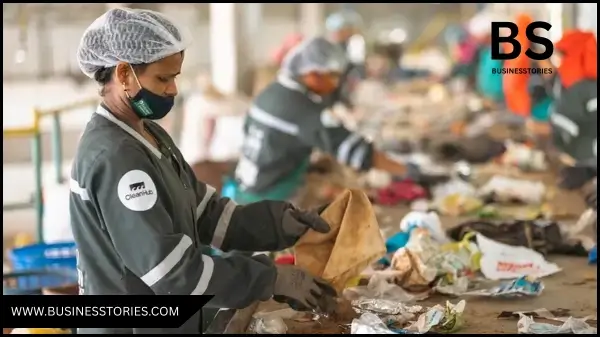
CleanHub was born out of this idea. They’ve built a system that connects around the world with local waste collectors’ brands, but with a crucial difference: everything gets tracked.
We are speaking of GPS data, photo verification, and everything in between. Each kilogram of plastic collected can be traced to ensure that it is actually being processed and is not simply being moved from one problem area to another.
“We saw that even when brands pay for plastic collection, there was no transparency in whether the waste was really processed,” Joel explains.
“CleanHub’s mission is to make every kilo count.”
Impact:
- Since they started, they have managed to keep thousands of tons of plastic out of our oceans through partnerships spanning Asia, Africa, and Central America.
- However, it hasn’t been a smooth journey. Establishing a consistent collection in remote areas is tough.
Challenges:
- Post-consumer plastic doesn’t fetch much value on the market, which makes the economics tricky. Still, they keep pushing forward.
Kubik (Kenya, East Africa)
This is one of the waste management startups, which was founded in 2021 by Kidus Asfaw and Penda Marre (Chief of Country Operations).
Over in Kenya, the team at Kubik looked at mountains of hard-to-recycle plastics—the polyethylene bags, polypropylene packaging, all the stuff that typically ends up in landfills forever, and saw building materials.
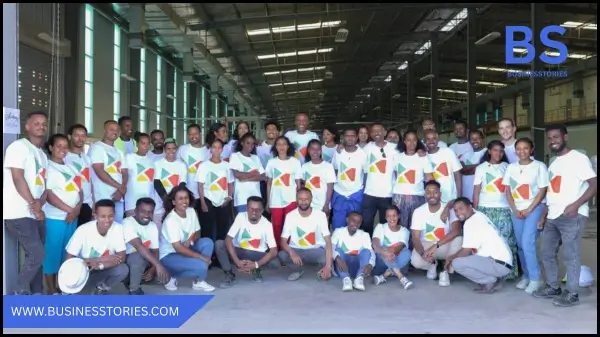
They weren’t just being poetic. They actually turn this plastic waste into interlocking bricks, support columns, and beams that work for real construction. And here’s what’s really compelling: their materials reportedly cost about 40% less than traditional building supplies.
They also provide better insulation. So Kubik is tackling two massive problems at once: the plastic waste crisis and the desperate shortage of affordable housing across East Africa.
“Building Houses from What Others Throw Away”
Impact:
- Every single day, they’re pulling tens of thousands of kilograms of plastic out of landfills and giving it a second life as someone’s home, school, or community centre.
- Of course, it’s not without headaches. Finding a steady supply of the right kinds of plastic takes constant work.
- Getting their materials certified to meet building codes requires patience and persistence.
Challenges:
There’s the biggest challenge of all: convincing builders and government regulators to trust something new, to believe that structures made from recycled plastic can be just as safe and durable as conventional buildings.
Takataka Plastics (Uganda)
Takataka Plastics was founded in 2020 by Peter Okwoko and Paige Balcom in Gulu, Uganda. It has taken a different approach. They’re not just processing waste—they’re turning it into things people actually want in their homes. Colourful tiles, stylish lamps, chairs, and decorative pieces. All are made from single-use plastics that would otherwise be clogging up the streets.
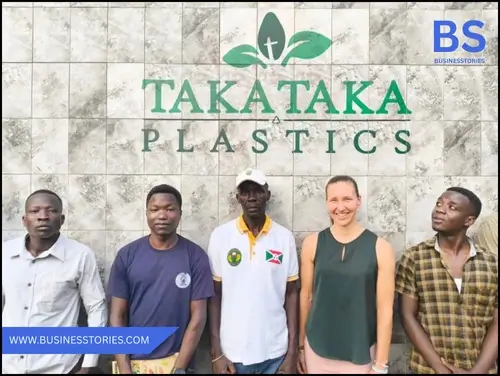
What really sets them apart is their commitment to doing things locally. They don’t just import expensive recycling equipment and call it a day. They build much of their own machinery right there in Uganda, which means they can maintain it, adapt it, and understand every piece of how it works.
Impact:
The impact goes way beyond keeping plastic out of landfills.
They’ve created around 40 full-time jobs and work with over 300 part-time waste collectors.
That’s 300 people earning income, supporting families, contributing to their community’s economy.
“We want to show our community that even plastics thrown away can be transformed into something useful—something beautiful.” – Peter Okwoko
Challenges:
And that might be the most important message of all. These aren’t just environmental projects. They’re proof that waste can become opportunity, that local solutions can work, and that creativity and determination can turn our biggest problems into something genuinely hopeful.
What These Founders Have in Common
| Common Theme | How They Execute It |
| Solving tightly local problems | Waste accumulation, plastic in low-income neighbourhoods, lack of building materials. |
| Resourcefulness | Using plastic otherwise considered “non-recyclable,” local manufacturing, and making gear locally. |
| Dual impact | Environmental + social: jobs, health, aesthetics, climate benefits. |
| Trust & transparency | They often have to convince partners/buyers/regulators that recycled/upcycled items are safe, durable, and reliable. |
The Future of WasteTech: Turning Trash into Treasure
People might not realize it yet, but a shift toward trash and reuse has already begun. Excitement’s building, not because of hype, but because fresh ideas keep showing up.
Innovation in materials:
People have started mixing different kinds of plastic to make stronger stuff than the old-style ones ever were. Some lab work now focuses on plant-based plastics that vanish faster when discarded. Entire buildings are being planned using trash turned into usable parts. Recycling is only part of it these days. The real shift is seeing waste not as garbage but as something waiting to be remade.
Digital platforms and traceability:
Technology is playing a giant role; it isn’t just background noise. Tools driven by artificial intelligence, along with mobile apps, help follow trash right from pickup to breakdown. This kind of transparency matters. This transparency fosters greater trust among individuals, as they gain insight into the behind-the-scenes processes. Responsibility spreads wider when each hand in the process shows up clearly. A few platforms go further: they give points or credits to those who handle disposal the right way.
Policy and regulation:
Governments are slowly catching up as well. Rules require companies to manage the disposal of their own products after consumers discard them. These EPR policies are gaining ground worldwide. Banning plastic items shows up more often now. Some nations begin offering financial perks to startups turning waste materials into new things.
Design & branding:
The funny thing is that the products born of this wave actually look good. These are not the dull products that shout, “Look at me, I’m eco-friendly!” Instead, designers are creating fashion pieces, artwork, and home decor that people buy because they actually want them, not just because they feel guilty about the planet. Want matters more than duty now.
Barriers: What Founders Wish Were Different
But let’s be real, these waste management startups face some serious obstacles.
Money is always issue number one. Scaling up means buying processing equipment, building facilities, and hiring people. Traditional investors often see waste businesses as risky or unproven, which makes raising capital incredibly difficult.
Then there’s the regulatory maze. Getting new materials certified for construction or other uses can take years. Building codes written decades ago don’t account for innovation. Every country, sometimes every region, has different rules to navigate.
Finding a steady supply chain can be messy work. Getting plastic waste on time means relying on something unpredictable. What ends up in bins depends on too many habits, choices, and mistakes. Not every scrap works either; only certain kinds, washed and separated right, fit the process. Relying on what others discard makes planning feel like guessing most days.
Of course, infrastructure plays a role. When reliable collection systems fail, and transport breaks down, recycling technology, no matter how advanced, stalls before it starts.
Conclusion
What connects these waste management startups goes beyond their mission. It reflects a fundamental shift in perspective. Consider CleanHub, Kubik, and Takataka Plastics, along with other global initiatives. Garbage? They don’t see it as the end. Instead, it transforms into feedstock, and a new opportunity arises. This mindset is integral to their identity.
Every startup story has a quiet yet profound impact. They encourage readers to reconsider their everyday perceptions. Instead of solely focusing on what’s broken, they start to reveal hidden opportunities. Under this perspective, old trash becomes treasure. Each narrative serves as a subtle adjustment of the lens, shifting viewpoints without making a loud statement.
If a plastic bag can be transformed into a brick for someone’s home, if discarded bottles can become a beautiful lamp, and if waste can generate jobs and build communities, then why rush to dismiss the next idea before giving it a chance?
Are you a founder turning waste into opportunity?
Are you working on something in this industry? Maybe you’re running a venture that transforms waste into products, or you’re developing technology to make recycling more efficient, or you’ve figured out a way to mobilize communities around waste management?
We genuinely want to hear from you. Businesstories exists to shine a light on founders who are tackling big problems with creative solutions. Your story could be the one that inspires someone else to take action, to start their own venture, or to see their trash differently.
Because of this movement, this shift from seeing waste as worthless to recognizing it as valuable. Needs more voices, more stories, more proof that another way is possible. After all, one person’s trash really can become everyone’s treasure.

Tabassum Shaik is an Author, Researcher, and SEO Specialist with over 8 years of experience creating informative content on business, startups, entrepreneurship, marketing, technology, and digital trends. She specializes in researching industry trends and transforming complex topics into practical, easy-to-understand insights. Her goal is to help readers stay informed, learn new ideas, and make better business decisions.