
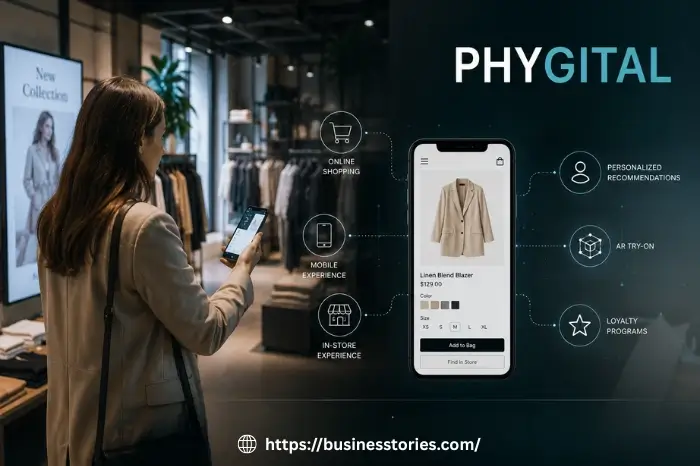
The way we shop, learn, and connect has changed. Today, people move freely between online and real-world spaces. They browse on a phone, try a product in a store, then buy through an app. This shift has created a new idea: phygital.
Phygital joins the best of the physical and digital worlds. So instead of picking one, customers get both. It is not just a trend. It is now a core way that smart brands serve their people.
In this guide, you will learn what phygital means and why it matters. We will also examine real brand stories, essential tools, and straightforward steps to kickstart your journey.
What Is Phygital? Understanding the Core Concept
Phygital comes from two words: physical and digital. It means blending real-world and online spaces into one smooth journey. The goal is simple. Cut out friction and give people an easy, joined-up experience at every step.
Here is a clear example. You order a coffee on the Starbucks app. Then you walk in and pick it up. No queue, no wait. That is phygital. Or think about scanning a QR code on a shelf to read product reviews. Both are daily phygital moments that make life easier.
The term started in 2013 from an Australian agency called Momentum. Since then, it has grown fast. In fact, the Global Phygital Solutions Market was worth around USD 25 billion in 2023. Moreover, it is on track to hit USD 52.5 billion by 2030, growing at 11.2% per year. So clearly, brands across the world are taking this idea very seriously.
Now, you might ask, how is phygital different from omnichannel? Omnichannel means being on many channels. But phygital goes further. It joins those channels so the switch between them feels smooth and natural. Instead of two separate paths, it becomes one linked journey.
At its core, phygital builds on three key ideas:
- Immediacy — Digital tools respond right away.
- Immersion — The experience feels fun and personal.
- Interaction — Customers take an active role, not just a passive one.
Together, these three things create moments that feel quick, easy, and worth coming back to.
Why Phygital Experiences Matter More Than Ever
Customer habits have changed a great deal. Today’s shoppers do not stick to one channel. They look up products online, but they also love to touch and test things in a store. They want digital speed, but they also want a human touch. So brands need to offer both.
The data backs this up clearly. A 2024 Brand Nexus Studios report found that 80% of people want brands that offer a joined-up experience across all platforms. Furthermore, more than 51% of voice search users look up products online before visiting a store. These facts show just how much digital habits now shape in-store shopping.
So why should your brand care? Well, there are three strong reasons.
First, you get better data. When you link online and in-store actions, you see the full picture of what your customers want. Second, you build stronger loyalty. Customers who use a brand both online and in-store buy more and stay longer. Sephora is a wonderful case. Customers who use the app and the store spend more than those who use only one.
Third, phygital cuts friction. When a customer checks stock online before driving to your store, they save time. When they return an online purchase in-store with no hassle, they leave happy. And happy customers come back again and again.
Furthermore, the race is on. 70% of retailers now use phygital tools to improve the customer experience. So if your rivals are already ahead, the gap will only grow wider over time.
Key Technologies Powering the Phygital World

Achieving good phygital results requires deliberate effort. They rely on smart tools that work well together. So let us look at the key tech that makes it all possible.
Augmented Reality (AR) and Virtual Reality (VR)
AR adds a digital layer to the real world. For example, Sephora’s Virtual Artist lets you try on lip colour through your phone camera. IKEA’s AR app lets you see how a sofa looks in your room before you buy it. So you no longer have to guess. These tools solve the biggest problem in online shopping. Not knowing how something will look or fit.
Internet of Things (IoT)
IoT links real objects to the internet. This lets data flow between them in real time. For example, smart shelves in a store can spot low stock and alert staff right away. Furthermore, health wearables track vital signs and send data to doctors at once. So IoT turns normal spaces into smart, live environments.
QR Codes and NFC Technology
QR codes have experienced a significant resurgence. Juniper Research predicts that over 2.2 billion people will scan QR codes by 2025. In stores, QR codes link products to digital content, reviews, how-to videos, or loyalty points. They cost very little to set up. So even small brands can use them well.
Artificial Intelligence (AI)
AI uses data to spot what customers want and tailor their journey. For example, KFC in China uses AI to guess orders before customers even reach the counter. It then shows a custom menu based on past choices. As a result, each visit feels more personal and less routine.
Mobile Apps
Apps hold the phygital world together. They link online browsing with in-store actions. A good app can offer location-based deals, mobile checkout, loyalty points, and product tips. All in one place. So when a customer walks into your store, the app already knows what they like.
Real-World Phygital Examples That Inspire
The best way to grasp phygital is to look at brands already doing it well. So here are four stories worth knowing.
Nike’s House of Innovation
Nike opened its House of Innovation in New York as a full phygital store. Customers can scan QR codes on mannequins to ask staff to bring a set size or colour. Furthermore, they can design custom shoes on a touchscreen and pick them up in just 90 minutes. After shopping, the Nike app handles checkout, with no queue at all. As a result, the whole visit feels fun, fast, and personal.
Amazon Go
Amazon Go takes phygital very far. Customers walk in, scan their app at the door, pick up items, and walk out. Sensors and cameras track what they take. Then the app charges their account on its own. So there are no queues, no cashiers, and no delays. It is one of the smoothest shopping trips in the world right now.
Starbucks and Amazon Partnership
Starbucks and Amazon joined forces to open a shared store in New York. Customers order ahead on the Starbucks app. Then they walk in and grab their drinks using Amazon’s Just Walk Out tech. So there is no waiting and no friction at all. This shows how two phygital systems can come together and work as one.
Sephora’s Beauty Ecosystem
Sephora smartly links its store and app. The app offers AR try-on tools, product tips, and loyalty point tracking. In-store, beauty advisors use tablets to check a customer’s past purchases. So every visit feels personal, and every tip is on point. As a result, customers feel truly known, and that creates real, lasting loyalty.
How to Build a Phygital Strategy: Step-by-Step
You do not need a big budget to go phygital. But you do need a clear plan. So here are five simple steps to help you get started.
Step 1: Map the Customer Journey
First, list every point where your customer meets your brand, from first seeing it to post-purchase support. Then mark which points are digital, which are in-person, and which could be blended. Furthermore, look for pain points. These are your best chances to add a phygital fix.
Step 2: Pick the Right Tools
Not every brand needs VR or AI right away. Instead, align the tool with the specific problem. A small shop might start with QR codes and a loyalty app. A bigger brand might add IoT sensors or AI chat. So always start where your customers feel the most pain.
Step 3: Work Across Teams
Phygital is not just an IT task. It also needs input from marketing, ops, customer service, and store staff. When all teams work together, the experience stays consistent. And consistency builds trust with customers.
Step 4: Test and Learn
Before rolling out widely, start with a small pilot. Get real feedback from customers. Then track results, looking at engagement, sales, and satisfaction scores. Thereafter, improve based on what you find. Phygital gets better with every round of learning.
Step 5: Make It Personal
Use the data you collect to tailor each point of contact. For example, send a deal alert when a customer walks near your store. Or show product tips based on past in-store browsing. Even small personal touches make customers feel seen and valued.
Phygital Across Industries: Beyond Retail
Retail leads the way. But phygital is now changing many other fields too. So let us look at a few key sectors.
Healthcare
Phygital health blends face-to-face care with digital tools. For example, wearable devices track patient data between visits and send it to doctors at once. Remote Patient Monitoring (RPM) has also shown strong results. Research shows RPM can cut hospital stays in half for some long-term health issues. Also, a large study found that 93.58% of RPM users were happy with the programme. So phygital in health is not just handy. It can also save lives.
Education
Hybrid learning mixes class time with digital tools. Students can watch lessons, take quizzes, and join group activities from anywhere. Meanwhile, in-person sessions focus on hands-on practice and real talk. Together, these two modes create a richer learning journey. So both access and outcomes get better at the same time.
Sports and Entertainment
Taylor Swift’s 2024 Eras Tour became a strong phygital case. It joined live concert energy with digital fan tools, AR effects, and social moments. Furthermore, Netflix has announced house venues—real-world spaces based on hit shows like Squid Game. So brands are now building physical places that bring their digital worlds to life.
Challenges of Going Phygital (And How to Overcome Them)
Phygital brings enormous rewards. But it also comes with real challenges. Therefore, it is beneficial to understand the challenges associated with Phygital before you start.
Data privacy is a top concern. When you collect data from both online and in-store points, you must handle it with care. Be open with customers about what you collect and why. Furthermore, follow all data laws and invest in safe systems from the start.
Tech linking can be tricky. Old store systems often do not connect well with new digital tools. So plan for this early. Take a step-by-step approach instead of trying to change all things at once.
Staff training matters more than many people think. Your team needs to feel confident using new phygital tools. So train them well, bring them in early, and keep talking as you build.
Customer comfort also varies. Some people love self-service kiosks. Others prefer to talk to a real person. So the best phygital plan gives customers a choice. Let them pick the experience that feels right for them.
Conclusion: Embracing the Phygital Future
Phygital is no longer a buzzword. It is now the new bar for exceptional customer experience. Today’s customers move between screens and stores with ease. So the brands they love must move with them.
The results speak for themselves. Brands like Nike, Amazon, Sephora, and Starbucks are seeing more loyalty, more sales, and deeper ties with customers. And they earn these rewards by making every step feel linked, easy, and personal.
The positive aspect is that you can begin with small steps. First, map your customer journey. Then find one or two pain points. Next, try a simple phygital fix and learn from real feedback. Thereafter, build on what works. You do not need to do all things at once.
The brands that win in the next ten years will treat digital and physical not as two worlds, but as one. When you blend the ease of tech with the warmth of real human contact, you create something truly worth having.
So take that first step today. Your phygital journey starts right now.
Frequently Asked Questions (FAQs)
1. What does phygital mean in simple terms?
Phygital joins physical and digital experiences into one smooth journey, blending real-world touchpoints with digital tools for greater ease and speed.
2. How does phygital differ from an omnichannel strategy?
Omnichannel uses many separate channels. But phygital joins them, so the shift between channels feels smooth and natural for the customer.
3. Which technologies are essential for phygital retail?
Key tools include AR, IoT sensors, QR codes, AI, and mobile apps. Together, they link in-store and online experiences into one fluid journey.
4. Can small businesses use a phygital approach?
Yes. Small brands can start with low-cost tools like QR codes, click-and-collect, or a basic loyalty app. Small steps add up fast.
5. How does phygital improve the customer experience?
Phygital cuts friction, adds personal touches, and gives customers more choice. So each visit feels faster, easier, and more relevant to them.

Senior Business Analyst / Prduct Owner with 12+ years of experience driving data-driven insights, optimizing business processes, and delivering strategic IT solutions.