Introduction
You have probably seen the name CentralBins ChatGPT pop up in search results. Many pages call it a next-gen AI assistant. They promise smart chats, custom training, and premium features for free. At first, that sounds wonderful. However, very few of those pages explain what CentralBins actually is.
So we dug deeper. We read the top-ranking pages, checked the original listicles, and compared the claims with what OpenAI says. But the real story is quite different from the hype. In fact, CentralBins is not an AI company at all. Instead, it is linked to shared ChatGPT login cookies.
This listicle explains what CentralBins ChatGPT is, how it works, and why it can compromise your data. Then we will show you safer ways to get the same AI power, often for free.
1. What Is CentralBins ChatGPT, Really?

Let’s start with the basic question. What is this tool? The answer depends on which page you read.
The “Next-Gen AI Assistant” Story
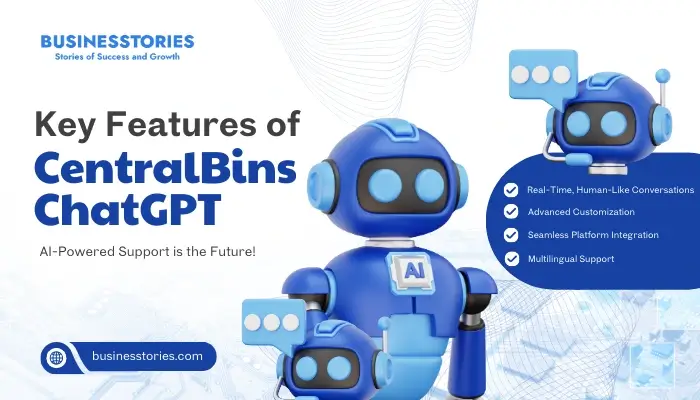
Most top-ranking articles describe CentralBins ChatGPT as a branded AI-powered virtual assistant. For example, some say it runs on OpenAI’s GPT models with extra “proprietary” features. Others say it offers voice tools, industry training, and strong privacy. A few even mention a paid “CentralBins ChatGPT Plus” plan.
However, none of these pages link to a company website. Furthermore, none of them show a pricing page, a privacy policy, or a team. Yet that is unusual for any real software product.
What the Evidence Actually Shows
Now, let’s examine the older sources. A widely shared video guide from 2024 told viewers to search “Central bins” on Google. Then they clicked a “GPT4” button, copied session cookies, and pasted them into ChatGPT with a cookie editor. As a result, they got logged into someone else’s ChatGPT Plus account.
Similarly, forum posts describe “CentralBins ChatGPT cookies” as online collections of shared ChatGPT cookies. Even some newer guides admit it. One 2026 article says CentralBins provides access through shared sessions and cookie-based methods.
So here is the honest summary. CentralBins ChatGPT is not a separate AI assistant. Instead, it is a way to borrow a paid ChatGPT account through shared cookies. The “next-gen” label came later, mostly from SEO content.
Why This Matters to You
This difference is important. After all, a real AI assistant has rules, support, and security. In contrast, a shared account has none of these. If you treat CentralBins like a trusted product, you may share private data in a space that is not private at all.
Here is a unique point most listicles miss. ChatGPT is huge. In fact, it had about 900 million weekly users by February 2026, yet only about 5% of them pay. That gap creates a big market for “free premium” shortcuts.
Because of that demand, names like CentralBins spread fast, even when the facts behind them are thin.
Also Read: Why Is Ghibli Art Safety Important in ChatGPT?
2. How the CentralBins Cookie Method Works
To understand the risks, you first need to understand cookies. Don’t worry. The idea is simple.
What a Session Cookie Does
When you log in to a website, it saves a small file in your browser. This file is called a session cookie. It tells the site, “This person already logged in.” So you don’t have to type your password on every page.
Now think about what happens if someone copies that file. In that case, they can open the same account in their browser. They don’t need the password. Often, they don’t even need the two-factor code.
How CentralBins Used the Method
The CentralBins method followed this idea.
- First, one person logged in to a paid ChatGPT account.
- Next, the site shared that account’s cookies with the public.
- Then, visitors imported the cookies with a browser extension.
- Finally, they refreshed ChatGPT and landed inside the paid account.
Because many people used the same cookies, the sessions often broke. Consequently, users kept asking for “updated cookies” in comment sections. You can still see these requests under old CentralBins posts today.
The Shared-Account Problem
Here is the key thing to remember. Everyone using those cookies shares one account. So every chat you type can show up in the sidebar for strangers. Likewise, you can see their chats too.
For instance, imagine you paste your resume into the shared account. Later, a stranger opens the same session. They can now read your name, phone number, and work history. That is a serious privacy leak.
Where the Cookies Come From
Here is another question few articles ask. Where do these cookies come from? Occasionally, a person shares their account on purpose. But security researchers also find ChatGPT logins inside stolen data logs.
You might be using an account that a real victim lost. In other words, the “free” access may come at someone else’s loss.
3. Five Real Risks of Using CentralBins ChatGPT
Now that you know how it works, let’s look at the dangers. Real security research backs these risks.
Risk 1: Your Chats Are Not Private
As we noted, a shared session means shared history. Therefore, anything you type is visible to others. Never enter passwords, bank details, client data, or health information in a shared account.
In addition, a stranger could copy your ideas, drafts, or client notes and reuse them. So, treat every shared session like a public notice board that anyone can read.
Risk 2: Fake Extensions and Malware
To use shared cookies, you need a cookie-import extension. Unfortunately, criminals love this setup. In 2023, researchers at Guardio found a fake “ChatGPT for Google” extension.
It stole Facebook session cookies and was downloaded over 9,000 times before Google removed it. So when you install unknown extensions, your other accounts can be at risk too.
Risk 3: Stolen Account Data
Security firm Group-IB found 101,134 infected devices with saved ChatGPT logins for sale on the dark web. Notably, India topped the list with over 12,600 stolen logins.
Furthermore, experts warn that stolen session cookies can bypass two-factor protection. That is precisely how CentralBins-style access works.
Risk 4: Breaking OpenAI’s Terms
OpenAI’s Terms of Use are clear. You may not share your login or let anyone else use your account. Furthermore, the account owner is responsible for everything done with it.
As a result, OpenAI can suspend or close accounts that break these rules. So access can disappear at any moment.
Risk 5: Unreliable Access
Even if nothing disastrous happens, the service is shaky.
- First, cookies expire.
- Next, accounts get locked.
- Then, sessions log out mid-task.
- Even worse, there is no support team to help you recover lost chats.
As a result, you may lose your work at the most critical moment.
4. Why the “Next-Gen” CentralBins ChatGPT Claims Don’t Add Up
Many pages still describe CentralBins ChatGPT as an advanced AI platform. So how can you tell fact from fiction? Let’s check the claims one by one.
Red Flags in Top-Ranking Articles
- First, look at the basic facts. One popular Medium post says ChatGPT comes from Anthropic. But that is wrong. In fact, OpenAI makes ChatGPT.
- Next, another page calls CentralBins a tool for waste management, likely because of the word “bins.” These errors show that many writers never tested the tool.
- Second, notice what is missing. There is no official website, no support email, and no published pricing. Meanwhile, every real AI product has these basics.
- Third, the feature lists look copied. Many articles repeat the same lines about “real-time responses,” “custom training,” and “privacy first.”
However, none of them show screenshots, test results, or user data.
A Simple 5-Step Check for Any AI Tool
Here is a quick checklist you can use before trusting any new AI assistant. It works for CentralBins and for any other tool you find online.
- Find the official website: A real product has its own domain, not just blog posts about it.
- Read the privacy policy: Check who stores your data and for how long.
- Look for a real company: Search for founders, an address, or business records.
- Check how you log in: If it asks you to paste cookies, you should walk away.
- Search for independent reviews: Look for tech news sites, not only SEO blogs.
Our Take
Here is the insight that most competing listicles skip. The keyword “CentralBins ChatGPT” grew because of search demand, not because of a product launch. People searched for free GPT-4.
Then, bloggers filled the gap with generic AI content. Over time, the cookie story got buried under “next-gen assistant” language. So, when a tool’s best evidence is other blogs, be careful. Real AI products have a clear trail.
5. Safer Ways to Get the Same AI Power for Free or Cheap
Good news! You don’t need shared cookies to use strong AI. In fact, the official options are better and safer than ever.
Option 1: ChatGPT Free Plan
OpenAI offers a free plan with limited messages. It is a solid choice for everyday tasks like writing emails or summarizing notes. However, in some countries, the free plan now shows ads.
Option 2: ChatGPT Go ($8/month)
ChatGPT Go launched worldwide in January 2026 after first launching in India. It costs about $8 per month. It gives you more usage than the free plan at a low price. Still, it may also include ads.
Option 3: ChatGPT Plus ($20/month)
ChatGPT Plus costs $20 per month. It gives you the newer flagship models, more tools, and no ads. For regular users, this option is often the best value. Meanwhile, Pro plans start at $100 per month for heavy users.
Option 4: Other Free AI Assistants
You can also try other well-known tools. For example, Google Gemini, Claude, and Microsoft Copilot all offer free versions. Each one has its strengths, so test a few with your real tasks.
How to Start Safely Today
Follow these simple steps to set up your AI assistant:
- Create your own account on the official ChatGPT website or app.
- Turn on two-factor authentication in your security settings.
- Use a strong, unique password that you don’t use anywhere else.
- Remove unknown browser extensions, especially cookie editors you no longer need.
- Review your data settings and turn off chat training if you prefer.
A Smart Budget Tip
Here is a practical idea. Start with the free plan for two weeks. Then, track how often you hit the limits. If you hit them daily, upgrade to Go or Plus. This way, you only pay for what you truly need.

Also Read: Perplexity AI: Revolutionizing Search and Beyond
Conclusion
So, is CentralBins ChatGPT really the next-gen AI assistant? Based on the evidence, the answer is no. Instead, it is a name tied to shared ChatGPT login cookies. The “next-gen” label mostly came from SEO articles, not from a real product launch.
Let’s recap what you learned.
- First, CentralBins worked by sharing session cookies from paid ChatGPT accounts.
- Second, this method puts your chats at risk of exposure to strangers.
- Third, using this method often means relying on risky browser extensions.
- Furthermore, it breaks OpenAI’s Terms of Use, so access can vanish at any time.
- On top of that, some shared logins may come from stolen data.
The good news is that you don’t need shortcuts. Today, you can use ChatGPT for free or upgrade to Go at $8 or Plus at $20 per month. Plus, Gemini, Claude, and Copilot all offer strong free plans too.
Here is the main message. Real AI tools leave a clear trail. They have a website, a privacy policy, and a team behind them. So before you trust any new AI assistant, run the simple 5-step check from this listicle.
Ready to start? Create your own free ChatGPT account today and turn on two-factor security right away. Then, explore more AI tool guides on Businesstories to work smarter and safer.
Frequently Asked Questions
1. Is CentralBins ChatGPT an official product made by OpenAI?
No. OpenAI does not make or support CentralBins ChatGPT. The name is linked to shared ChatGPT cookies, not a real AI company. For official access, use the ChatGPT website or the verified mobile app.
2. Is it safe to use CentralBins ChatGPT cookies for free GPT access?
It is not safe. Shared cookies expose your chats to strangers and often require risky browser extensions. Furthermore, stolen session cookies can bypass two-factor security, so your personal data can easily end up in the wrong hands.
3. Can using shared ChatGPT cookies get the account banned or locked?
Yes. OpenAI’s terms ban sharing logins or letting others use an account. As a result, shared accounts can be suspended without notice. You could lose your chats and work at any moment, with no warning.
4. What is the best free alternative to CentralBins ChatGPT right now?
The best free alternative is the official ChatGPT free plan. You can also try Google Gemini, Claude, or Microsoft Copilot. Each one offers a free version, safe sign-in, and clear privacy rules for everyday users.
5. How much does a real ChatGPT plan cost per month in 2026 overall?
ChatGPT has a free plan. Paid plans start with Go at about $8 per month and Plus at $20 per month. Pro plans for heavy users start at around $100 per month, with higher tiers for more usage.

Tabassum Shaik is an Author, Researcher, and SEO Specialist with over 8 years of experience creating informative content on business, startups, entrepreneurship, marketing, technology, and digital trends. She specializes in researching industry trends and transforming complex topics into practical, easy-to-understand insights. Her goal is to help readers stay informed, learn new ideas, and make better business decisions.