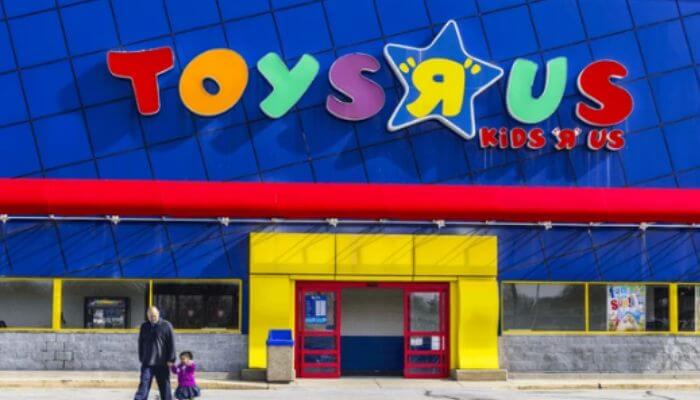
Toys “R” Us was once a magical place. For many kids, it was the best store in the world. Rows of toys stretched out like a playground. Furthermore, the giant sign, with its backward “R,” welcomed families for decades. At its peak, the company ran more than 1,500 stores across the globe. In 2017, everything collapsed. Suddenly, the company filed for bankruptcy. As a result, the news shocked millions of people around the world.
So, how did this bankruptcy happen? In other words, how did a brand that once ruled the toy world lose everything? In summary, Toys “R” Us was unable to adapt to changing times. Meanwhile, rivals like Amazon, Walmart, and Target moved fast. They adapted quickly, while Toys “R” Us stayed the same. Below, this article tells the full story. It covers the company’s rise, its slow decline, and the lessons every business can learn from its fall.
How Toys “R” Us Began
The story starts in 1948. That year, Charles Lazarus opened a small baby store in Washington, DC. He called it Children’s Super Mart. However, Lazarus soon noticed something important. Parents, in particular, desired more than just baby products. They also wanted engaging toys for their kids. As a result, he shifted his focus toward toys.
Then, in 1957, he renamed the store Toys “R” Us. From that point on, the shop became a toy supermarket. Bright colors, a large toy selection, and a fun mood set it apart from other shops. Because of the changes, families kept coming back year after year.
The brand expanded rapidly in the 1970s and 1980s. Soon, it became the largest toy seller on the planet. Its slogan, “I would rather not grow up,” became iconic. For years, the company faced minimal competition. The brand became part of childhood itself for an entire generation of kids.
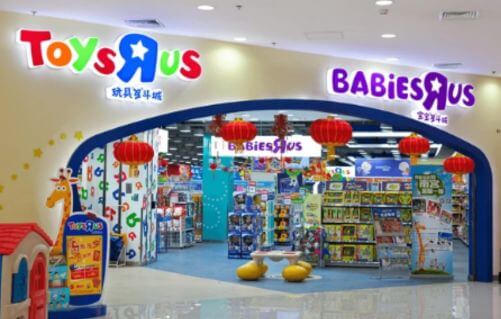
For years, the company faced little real competition. Consequently, it led toy sales, especially during the holiday season. Later, it also entered the baby product market through Babies “R” Us. This move made it the top choice for parents everywhere. At that time, nothing seemed able to stop it.
The Warning Signs of Decline
Success, however, rarely lasts forever. By the 1990s, new threats began to appear. Gradually, these threats eroded the company’s lead. Over time, three major forces combined to weaken Toys “R” Us.
1. Big-Box Stores Entered the Game
First, Walmart and Target began selling toys more boldly during the 1990s. Unlike Toys “R” Us, these stores sold everything from food to clothes. Therefore, shopping there felt easier for busy families.
Additionally, these big stores had extensive supply chains. Because of these factors, they could offer toys at much lower prices. Toys “R” Us simply could not match those prices. As a result, shoppers slowly drifted away, and its market share began to shrink year after year.
2. E-Commerce Changed Everything
Next came the rise of the internet. In the early 2000s, online shopping grew fast. Amazon quickly emerged as a significant competitor. Shoppers loved the lower prices, wider choices, and home delivery that came with online stores.
Sadly, Toys “R” Us was slow to join this shift. In 2000, the company made a big decision. It teamed up with Amazon instead of building its own website. At first, this deal seemed smart. However, in the long run, it proved to be a costly error.
Because of this deal, Toys “R” Us never built strong digital skills of its own. So, by the time it realized how vital e-commerce truly was, it was already too late. Amazon, meanwhile, had already taken over a giant share of online toy sales. From there, catching up became nearly impossible.
3. Kids Started to Change
Meanwhile, children’s habits were changing too. Phones, tablets, and video games grew more popular every year. As a result, fewer kids wanted classic toys like dolls and action figures.
Unfortunately, Toys “R” Us remained committed to its traditional practices. It kept selling physical toys and didn’t put much money into digital fun. Therefore, it slowly fell behind the changing tastes of its young shoppers. Gradually, its core fans started to drift away.
Also Read: Uncovering the Untold Stories of Successful Brands
A Mountain of Debt
Competition alone did not sink Toys “R” Us. In fact, its debt played an even bigger role. In 2005, a consortium of investment firms purchased the company. This group included Bain Capital, KKR & Co., and Vornado Realty Trust. The deal, known as a leveraged buyout, cost $6.6 billion in total.
In a leveraged buyout, buyers purchase a company mostly with borrowed money. Afterward, that debt becomes the company’s own load to carry. Because of this deal, Toys “R” Us owed nearly $5 billion.
As a result, most of its profit went toward paying off debt, not fixing the business. So, the company could not update its stores. Nor could it upgrade its website. In short, this heavy debt left little room to compete in a fast-moving market. Every year, interest payments alone drained cash that could have funded real change.
Poor Management and Missed Chances
Meanwhile, the company also had weak leadership. For years, its managers could not agree on a clear plan to address these growing problems. Instead, the company often delayed key choices or made them too late.
One significant error is particularly evident. Toys “R” Us rarely updated its physical stores. Meanwhile, Walmart and Target kept improving their shopping areas. As a result, Toys “R” Us stores began to feel old and worn out. Often, shoppers called them messy, crowded, and dull to visit.
The company squandered its strong brand name, despite the millions of people who loved the brand and its mascot, Geoffrey the Giraffe. Millions of people loved the brand and its mascot, Geoffrey the Giraffe. Yet, the company failed to use that love online. It never spent much on social media or digital ads.
Due to its neglect, the company lost contact with a new generation of parents and children. Younger shoppers, in particular, barely noticed the brand at all.
The Final Days: Bankruptcy and Closure
By 2017, the pressure had grown too heavy to bear. Rising competition, changing habits, and heavy debt all hit at once. In September that year, Toys “R” Us filed for Chapter 11 bankruptcy in the United States.
At first, there was some hope. The company believed it could restructure its debt and shut its weaker stores. If that worked, it might return as a smaller, stronger business. Unfortunately, that plan ultimately failed.
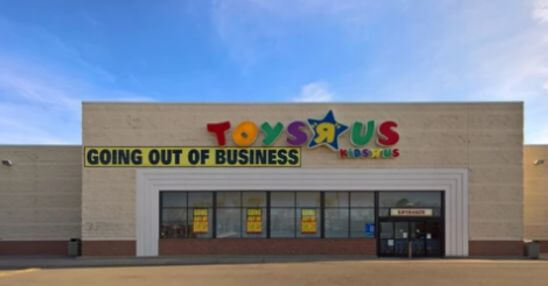
By March 2018, the company could not find the funding it needed. Consequently, it announced the closure of all its US stores. This choice marked the true end of an era. In total, more than 800 stores shut their doors for good. Sadly, thousands of workers lost their jobs almost overnight.
The Ripple Effect on the Toy World
The fall of Toys “R” Us did not just hurt the company itself. For years, toy makers had leaned on it for shelf space and marketing help. So, when the stores closed, many makers scrambled to find new retail partners fast.
Furthermore, the collapse sent a clear warning to other old-school retailers. It proved that even a giant brand can fail if it does not adapt. Since then, many physical stores have worked harder to modernize their operations. After all, no one wants to repeat such painful mistakes.
Interestingly, the Toys “R” Us name did not vanish completely. In later years, new owners tried to bring back small versions of the brand inside other stores. Even so, the massive chain of the past never fully returned. In the end, nostalgia alone could not rebuild what debt and slow choices had destroyed.
A Quick Timeline of the Collapse
To sum up the journey, here is a short timeline of key events:
- 1948: Charles Lazarus opens Children’s Super Mart.
- 1957: The store is renamed Toys “R” Us.
- 1980s: The brand becomes the world’s largest toy seller.
- 2000: Toys “R” Us partners with Amazon instead of building its own site.
- 2005: A $6.6 billion leveraged buyout loads the company with debt.
- 2017: The company files for Chapter 11 bankruptcy.
- 2018: All US stores close for good.
Clearly, each event built on the one before it. Together, they explain why the fall felt both sudden and, in hindsight, unavoidable.
Key Lessons from the Toys “R” Us Collapse
Every failure, thankfully, teaches something useful. Below are the biggest lessons from this well-known story.
1. Embrace E-Commerce Early
First, Toys “R” Us waited too long to build its own online store. Because of that delay, Amazon took control of the online toy market. Therefore, businesses today must invest early in digital tools. Otherwise, rivals will be the first to move in and claim that space.
2. Watch Changing Consumer Behavior
Next, consumer habits shift often, sometimes without much warning. Toys “R” Us failed to notice these shifts in time. Therefore, companies must stay alert at all times. They should track new trends and adjust their plans before it’s too late to act.
3. Avoid Excessive Debt
Furthermore, heavy debt can crush even a strong, well-known company. The leveraged buyout left Toys “R” Us with limited growth potential. As a result, businesses should always borrow with care and plan. Otherwise, debt payments can drain funds needed for real growth.
4. Keep Investing in the Customer Experience
Furthermore, outdated stores drove shoppers away, slowly but surely. Meanwhile, rivals kept improving their spaces and services. Companies must therefore continuously refresh their customer experience over time. Standing still, after all, often means falling behind everyone else.
5. Protect Brand Loyalty With Action
Finally, a beloved brand, on its own, is not enough to ensure success. Toys “R” Us had deep emotional value, but it failed to fully leverage it. Therefore, companies must turn brand love into real action and engagement. Otherwise, that loyalty can quietly fade away over time.
Conclusion
The fall of Toys “R” Us remains one of the most talked-about stories in retail history. Once, it was a beloved brand that shaped childhood for millions of families. Yet, rising competition, a slow shift to e-commerce, and a crushing pile of debt proved too much for it to survive.
Still, its story offers real value today. In particular, business leaders can learn a great deal from these mistakes. Above all, companies must adapt fast, manage debt with care, and never stop investing in their customers. Otherwise, even the largest and most beloved names can eventually fade away.
Could Toys “R” Us Have Survived?
Even so, some experts still debate this question today. Perhaps, with less debt, the company could have invested more in its stores. Perhaps, had it launched its website earlier, it could have kept pace with Amazon. Yet, hindsight always makes choices look clearer than they felt at the time.
Even now, the brand still holds a special place in many hearts. In fact, some shoppers still wear old Toys “R” Us shirts with pride. Nostalgia has real power. However, nostalgia alone cannot pay off billions in debt or rebuild an outdated website. In the end, the numbers simply did not work in the company’s favor.
Frequently Asked Questions
1. Why did Toys ‘R’ Us go bankrupt?
Toys “R” Us went bankrupt because of heavy debt from a 2005 leveraged buyout. Meanwhile, growing competition from Amazon, Walmart, and Target made things worse. On top of that, the company was slow to shift toward e-commerce.
2. When did Toys ‘R’ Us close all its stores?
The company announced the closure of all its US stores in March 2018. This came after it failed to secure new funding during its bankruptcy process.
3. How much debt did Toys ‘R’ Us have?
After its 2005 leveraged buyout, Toys “R” Us carried close to $5 billion in debt. As a result, it had very little money left to spend on stores and technology.
4. Did Amazon play a role in the downfall of Toys ‘R’ Us?
Yes, it did. An early deal meant Toys “R” Us relied on Amazon’s site instead of building its own. Because of this choice, its digital growth slowed down a lot.
5. What can businesses learn from the Toys ‘R’ Us collapse?
Businesses can learn to invest early in e-commerce and avoid too much debt. Additionally, they should track changing habits and continue improving the customer experience.

Tabassum Shaik is an Author, Researcher, and SEO Specialist with over 8 years of experience creating informative content on business, startups, entrepreneurship, marketing, technology, and digital trends. She specializes in researching industry trends and transforming complex topics into practical, easy-to-understand insights. Her goal is to help readers stay informed, learn new ideas, and make better business decisions.