The Midnight Hunger That Started a Revolution
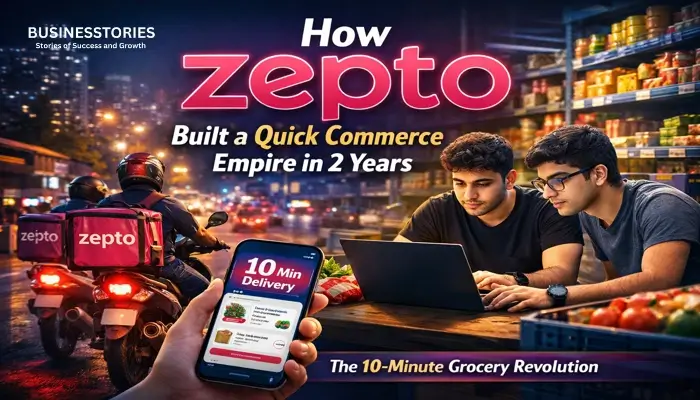
It was past midnight in Mumbai. Aadit Palicha, 19, stared at his phone, trying to order groceries. The delivery app promised 45 minutes. He needed things now. He’d felt this frustration before in college dorms, after late-night study sessions, during chaotic exam weeks. But this time, instead of waiting, he called his childhood friend Kaivalya Vohra. “What if we could deliver groceries in 10 minutes? Not in 45 minutes. Not in 30 minutes, but in 10 minutes.” That phone call, somewhere in late 2021, planted the seed for what would become one of India’s most audacious startup stories, Zepto.
Two Stanford dropouts who bet on India
Aadit and Kaivalya were not typical founders. They were teenagers barely out of school who had been accepted to Stanford University, one of the most prestigious institutions in the world. They enrolled and attended classes. And then, within months, they dropped out.
Not because Stanford was too hard. Because India felt too urgent.
They had seen what quick commerce was doing in Turkey with Getir, in Europe with Gorillas, and in the US with Gopuff. They looked at India, a country of 1.4 billion people, a booming middle class, dense urban neighborhoods, and a mobile-first population already addicted to on-demand everything—and saw something nobody else seemed to fully grasp yet.
India wasn’t just ready for quick commerce. India was perfect for it.
The Model Nobody Believed In
When Aadit and Kaivalya started pitching Zepto in early 2021, they were met with polite skepticism. Grocery delivery was a crowded, brutal category. BigBasket had spent a decade building trust. Swiggy Instamart and Blinkit (then Grofers) were already pivoting toward speed. Why would anyone back two teenagers with no operating experience?
The founders had a clear answer: dark stores.
Unlike traditional grocery delivery apps that pick from large warehouses on the city’s outskirts, Zepto’s model relied on micro-fulfillment centers. The small, densely stocked “dark stores” (stores closed to the public, built solely for picking and packing orders) are strategically placed within neighborhoods. Within a 1.5 to 2 km radius, a Zepto delivery rider could reach almost any home in under 10 minutes.
The math worked. The logistics worked. The unit economics, with enough density, could work too. They bet everything on it.
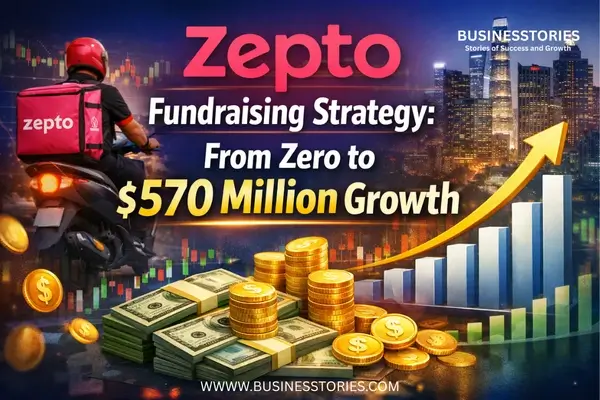
From Zero to $570 Million: The Fundraising Sprint
Zepto officially launched in April 2021. Within months, the traction was impossible to ignore.
Orders were growing 200–300% month over month. Customer retention was unusually high for a grocery app. People weren’t just trying Zepto once; they were replacing weekly supermarket trips with multiple Zepto orders every week.
By November 2021, Zepto raised its Series B round — $60 million — led by Y Combinator’s Continuity Fund. This was a landmark moment: YC’s growth-stage fund rarely backs Indian companies this early, and rarely at this speed.
The signal was clear to the market: this was not just another grocery app. Something different was happening.
Over the next 18 months, the rounds came fast:
- Series C (January 2022): $100 million
- Series D (May 2022): $200 million
- And Series E (August 2022): $200 million at a $900 million valuation
In under two years, Zepto had raised more than $570 million and was knocking on the door of unicorn status—all before either founder turned 22.
The Operational Machine Behind the Magic
Investors don’t fund stories. They fund execution. And what Zepto built operationally was quietly remarkable.
Dark store density was everything: Each store covered a tight delivery radius, which meant Zepto had to build a lot of them fast. By mid-2022, Zepto was operating over 100 dark stores across 10 Indian cities. Mumbai, Delhi, Bangalore, Hyderabad, Chennai, Pune — wherever dense urban neighborhoods and high smartphone penetration existed, a Zepto dark store wasn’t far behind.
SKU curation was surgical: Unlike a traditional grocery store carrying 50,000+ SKUs, each Zepto dark store carried roughly 2,500–5,000 high-velocity products. This meant faster picking, less spoilage, and tighter inventory management. If 80% of orders came from 20% of the catalog, Zepto wanted to know exactly which 20% and make sure it was always in stock.
Technology ran the entire operation: Zepto built in-house systems for demand forecasting, inventory management, rider routing, and order batching. Their machine learning models predicted what products would sell in which neighborhoods during which hours. Stores restocked dynamically. Riders were positioned proactively. By the time you placed your order, the system had already anticipated that you needed to.
Zepto Culture: Urgency as a Core Value
Talk to anyone who has worked at Zepto’s early team, and a pattern emerges: the place ran on controlled chaos in the best possible way.
Decisions that took weeks at other companies took hours at Zepto. Store launches were planned and executed in days. Product features shipped in days, not sprints. There was an overwhelming sense that every week mattered, because it did.
Aadit and Kaivalya were not distant founders. They were on the ground in dark stores at 2 AM, on delivery routes, and in operations meetings that stretched past midnight. They made it non-negotiable: if the people building Zepto didn’t feel the urgency of a 10-minute delivery, how would the product ever achieve it?
This culture of speed-as-identity became one of Zepto’s most durable competitive advantages. Competitors might copy the dark store model. They couldn’t easily copy the mindset.
The Giant That Nearly Beat Them: Blinkit vs. Zepto
No Zepto story is complete without acknowledging the competitor it grew up against: Blinkit, formerly Grofers.
Blinkit had history, capital, and Zomato’s backing. When Zomato acquired Blinkit in 2022, the quick commerce war suddenly had stakes nobody had anticipated. On one side: a well-funded startup being quietly incubated inside India’s food delivery giant. On the other hand, two young founders had launched barely 18 months before.
And yet, by most market metrics, Zepto held its own. In several cities, Zepto’s Net Promoter Scores (NPS)—a measure of customer loyalty outpaced Blinkit’s. Delivery times were competitive. Customer acquisition, driven heavily by word of mouth, was strong.
The competition forced Zepto to be sharper. Margins tightened. Marketing became more sophisticated. The team grew from a scrappy 50-person operation to a company of thousands. Every quarter, the bar got higher, and somehow, Zepto kept clearing it.
Discover how Blinkit is transforming grocery shopping with lightning-fast deliveries—read the story behind its rapid rise.
Becoming a Unicorn (and What Came Next)
In May 2023, Zepto officially crossed the unicorn threshold, raising a fresh round that valued the company at $1.4 billion. It had taken less than two and a half years from launch.
But the founders were careful not to let the valuation become the story. Aadit had been public about his disdain for startup theater, the press releases, the vanity metrics, and the fundraising celebration culture that can distract founders from actual business building.
The goal, as he laid out in multiple interviews, was simple: make Zepto profitable. Build sustainable unit economics. Turn dark stores from cost centers into cash-generating assets. Show that quick commerce could work not just as a venture-backed experiment but as a real, enduring business.
By late 2023 and into 2024, early signs were encouraging. Contribution margins, the profitability of each order after variable costs, were improving. Average order values were rising as customers trusted Zepto with larger, more frequent baskets. The company began expanding its product catalog into higher-margin categories: private label brands, beauty, electronics accessories, and pharmacy.
What Zepto Got Right (That Others Missed)
Looking back, Zepto’s rise wasn’t just about being first or being fastest. It was about being precise.
- They picked the right cities first: Rather than spreading thin across 50 cities, Zepto went deep in 10. Density within a city matters far more than geographic breadth in quick commerce.
- They understood the Indian consumer better than foreign playbooks suggested: Quick commerce in the West often struggled because consumers didn’t order groceries frequently enough. In India’s urban centers, many households have no cars, small kitchens with limited storage, and a culture of buying fresh produce daily. The shopping behavior was already there. Zepto just gave it a 10-minute upgrade.
- They didn’t compromise on delivery time: Other apps offered 30 minutes, then 20, then 15. Zepto started at 10 and stayed there. The promise became the brand. Customers knew exactly what they were getting.
- They hired operators, not just engineers: The quick commerce model is physical-first. You can’t algorithm your way out of bad store placement or poor rider management. Zepto invested heavily in operations talent from day one.
The Road Ahead: Can the Empire Last?
Quick commerce in India is still a young industry, but it’s maturing fast. The competition has intensified. Swiggy Instamart is investing aggressively. Blinkit has Zomato’s full resources. Amazon is circling. Reliance, with its retail muscle, is watching.
Zepto’s challenge now is the hardest kind: sustaining a disruptive edge when you’re no longer the underdog. When your competitors have copied your model, your only advantage is execution, and execution at scale is exponentially harder than execution at startup speed.
There are also structural questions. Quick commerce’s environmental footprint, the sheer number of individual deliveries, packaging waste, and urban traffic, is drawing increasing scrutiny. Regulatory conversations around gig worker protections and delivery rider safety are getting louder. And as Zepto expands into tier-2 cities, it will encounter different consumer behaviors, lower average order values, and infrastructure challenges that Mumbai and Bangalore never posed.
None of these is insurmountable. But they are real.
Discover how Zapp is transforming convenience with lightning-fast, on-demand delivery that’s reshaping the future of instant commerce.
The Bigger Story: Zepto
What makes Zepto genuinely interesting isn’t just the business metrics. It’s what it represents.
For years, the conventional wisdom in Indian startup circles was that deep-tech, SaaS, or fintech was where the real innovation lived. Logistics and hyperlocal commerce were considered unglamorous, too dependent on physical operations, too hard to scale, too thin on margins.
Zepto challenged that narrative head-on. Two teenagers with no prior operating experience proved that a physical-world, delivery-based business could be built at startup speed and venture scale—if you had the right model, the right density, and an almost obsessive commitment to the customer promise.
They didn’t disrupt an industry with a laptop. They built dark stores, hired thousands of gig workers, optimized last-mile routes, and learned the hard way, one 10-minute delivery at a time.
That’s not a unicorn story. That’s an operations story. And in many ways, it’s a more important one.
Zepto by the Numbers
| Milestone | Date |
| Founded | 2021 |
| First Dark Store Launch | April 2021 |
| Series B ($60M, YC-led) | November 2021 |
| 100+ dark stores across India | Mid-2022 |
| $900M valuation | August 2022 |
| Unicorn status ($1.4B) | May 2023 |
| Cities operational | 10+ major metros |
| Delivery promise | 10 minutes |
Zepto’s story is still being written. But whatever the final chapter looks like, the first two years already told us something worth remembering: in business, as in delivery, speed wins — if you build the infrastructure to back it up.

Tabassum Shaik is a writer, storyteller, and SEO specialist with over 8 years of experience creating research-based content across business, startups, entrepreneurship, marketing, technology, and digital trends. She focuses on delivering accurate, practical, and easy-to-understand content for readers.