

Starting a catering business can be one of the most rewarding ventures for anyone who loves food and hospitality. In fact, the global catering market size is projected to reach $97.3 billion by 2027, growing at a steady compound annual growth rate of 5.2%, according to industry reports. However, figuring out exactly how to start a catering business, from choosing your niche to navigating health permits, can feel overwhelming at first.
That is where this guide comes in. Whether you dream of launching a home-based catering business or building a full-scale commercial operation, we have broken down every step into clear, actionable advice. You will learn about real startup costs, the licenses you truly need, and insider tips from successful caterers. By the end of this article, you will have a roadmap that takes you confidently from idea to launch day and beyond.
What Does It Really Cost to Start a Catering Business?
Before you invest a single dollar, you need a clear understanding of the real numbers. Many aspiring caterers underestimate the initial financial outlay, which can lead to cash-flow problems down the line. Let’s take a moment to break down the actual costs involved.
| Expense Category | Low Estimate | High Estimate |
| Licenses & Permits | $150 – $400 | $800 – $2,000 |
| Commercial Kitchen Rental | $500/month | $2,500/month |
| Equipment & Supplies | $2,000 | $10,000+ |
| Insurance (General Liability) | $500/year | $2,000/year |
| Marketing & Branding | $500 | $3,000 |
| Initial Food Inventory | $300 | $1,500 |
| Vehicle/Transportation | $1,000 | $5,000+ |
Total Estimated Range: $4,950 to $26,000+
A micro-catering setup run from a home kitchen may cost as little as $2,000 to launch. On the other hand, a full-service operation with a dedicated commercial space can easily exceed $50,000. Therefore, your first task is to honestly assess which tier fits your current budget and goals.
Hidden Costs Nobody Talks About
Beyond the obvious line items, successful caterers warn about overlooked expenses. For instance, many newcomers forget to budget for tasting events, which are critical for winning wedding clients. Similarly, software subscriptions for invoicing, menu planning, and CRM tools can quietly add $100 to $300 per month.
Many first-time business owners are surprised to learn that spoilage and waste usually consume 3% to 8% of their food budget. One unique tactic smart entrepreneurs use is negotiating a pay-per-use agreement with a licensed commercial kitchen. Cutting monthly rental costs by up to 60% while staying fully compliant.
Licenses and Permits: What You Actually Need
Licensing is the one area where mistakes can lead to immediate shutdowns. Since you handle food for the public, regulators treat catering businesses seriously — and so should you. Here is the complete checklist.
The Non-Negotiable Licenses
- Business License: Nearly every city and county requires a general business license to operate legally. Expect to pay $50 to $400 annually depending on your location.
- Food Service License: This is your core permit, issued by the local health department. It certifies that your kitchen meets sanitation standards. An inspection usually precedes approval.
- Catering Permit: Some jurisdictions issue a specific catering endorsement separate from the standard food service license—especially for off-site events.
- Food Handler’s Permit / ServSafe Certification: Most states mandate that at least one person on your team holds a valid certification in food safety management. ServSafe is the gold standard in the U.S.
- Liquor License: If you plan to serve alcohol at events, you must obtain a liquor license. Rules vary dramatically by state, and the costs can range from $300 to over $14,000 annually.
Cottage Food Laws: A Game-Changer for Home-Based Caterers
Not every aspiring caterer needs a commercial kitchen on day one. Thanks to cottage food laws, many states now allow certain food businesses to operate from a home kitchen, provided you sell directly to consumers and stay within specific revenue caps (often $50,000 to $250,000 per year).
However, cottage food laws typically cover only low-risk items like baked goods, jams, and dry mixes. For full-service catering with hot entrees, a commercial kitchen remains non-negotiable. Always check your state’s specific cottage food regulations before assuming you qualify.
How to Start a Catering Business: A 7-Step Action Plan
Now that you understand the costs and legal requirements, let us walk through the exact sequence you should follow to build a strong foundation. These steps come from interviews with successful caterers who have been in the industry for over a decade.
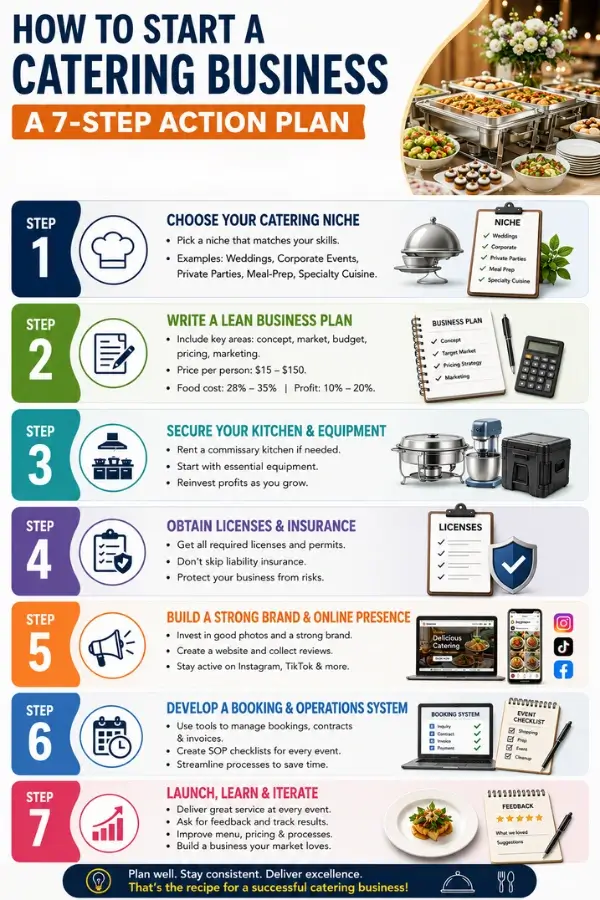
Step 1: Choose Your Catering Niche
The catering industry is vast, and attempting to cater to everyone can lead to burnout. Instead, narrow your focus. Popular niches include wedding catering, corporate event catering, private party catering, meal-prep catering, and specialty cuisine catering. Each niche has different customer expectations and pricing models.
For example, corporate clients value punctuality and consistency above all else, while wedding clients prioritize presentation and customization. Pick the niche that matches both your cooking strengths and your personality.
Step 2: Write a Lean Business Plan
Skip the 40-page document. A lean catering business plan covering your concept, target market, startup budget, pricing strategy, and marketing channels will suffice. The critical section here is your pricing model. Most caterers charge on a per-person basis, ranging from $15 to $150 per guest depending on menu complexity and event type.
Make sure your per-person price accounts for food costs (aim for 28% – 35%), labor, overhead, and a 10% – 20% profit margin.
Step 3: Secure Your Kitchen and Equipment
Your kitchen is the backbone of your entire operation. If building out a commercial kitchen exceeds your budget, consider renting a commissary kitchen by the hour. Platforms like The Kitchen Door and local restaurant incubators can connect you with shared spaces.
For equipment, start with the essentials: commercial-grade sheet pans, chafing dishes, hot boxes, food processors, and sturdy transport containers. As your bookings grow, reinvest profits into specialized equipment.
Step 4: Obtain All Necessary Licenses and Insurance
Refer back to the licensing section above. Additionally, do not skip liability insurance. A single foodborne illness claim or a slip-and-fall incident at an event can bankrupt an uninsured caterer. General liability policies start at around $500 annually but provide peace of mind worth far more.
Step 5: Build a Memorable Brand and Online Presence
Your brand is more than a logo. It is the feeling clients associate with your food and service. Invest in professional food photography — this single move can double the inquiries you receive. Create a clean website with a sample menu, real testimonials, and an accessible contact form.
Meanwhile, Instagram and TikTok have become powerful platforms for caterers. Post behind-the-scenes clips, plating videos, and client event highlights. Consistency on social media builds trust faster than any advertisement.
Step 6: Develop a Simple Booking and Operations System
Even a one-person operation needs systems. Use scheduling tools like HoneyBook or 17hats to manage inquiries, contracts, and invoices in one place. Create a standard operating procedure (SOP) checklist for each event, from ingredient shopping to final cleanup. This reduces errors and makes scaling easier when you eventually hire staff.
Step 7: Launch, Learn, and Iterate
Your first few events will teach you more than any guide ever could. Treat every gig as a learning opportunity. Ask for feedback. Track which menu items get the most compliments and which ones come back uneaten. Adjust your pricing, processes, and menu accordingly. Within six months, you will have a finely tuned business that genuinely reflects what your market wants.
Expert Tips from Successful Catering Business Owners
We gathered insights from seasoned caterers who have weathered recessions, pandemics, and shifting food trends. Here is what they wish someone had told them on day one.
Start Small and Scale Gradually
Chef Maria Gonzalez, owner of a thriving corporate catering company in Austin, Texas, started with a single induction burner and a folding table. “I booked small office lunches for six months before I took on a 200-person event,” she says. “That slow build gave me the confidence and systems I needed.” The lesson is clear: resist the temptation to overspend on equipment or staff before your client base justifies it.
Network Relentlessly with Event Planners
Event planners are the gatekeepers of the catering world. A single relationship with a busy wedding planner can fill your calendar for an entire year. Attend industry mixers, join local business groups, and always follow up with a handwritten note after an introduction. Planners remember personal touches because they rarely receive them.
Master Your Cost Tracking from Day One
Many caterers fail not because they lack clients, but because they do not truly understand their margins. Track every ingredient cost down to the ounce. Use recipe costing software or a detailed spreadsheet. As one expert bluntly puts it, “If you cannot tell me the exact food cost of your signature appetizer, you do not have a business; you have a hobby.” Aim to keep food costs between 28% and 35% of your total event price.
Offer Tasting Boxes as a Marketing Tool
A unique strategy gaining traction among modern caterers is the sample tasting box. Instead of waiting for clients to request a formal tasting, send a beautifully packaged box of three to four signature bites to potential corporate clients or wedding planners—proactively. This approach has helped several small caterers land contracts within weeks of launching, because it removes the barrier of the unknown.
Conclusion: Your Catering Business Journey Starts Now
Learning how to start a catering business is not about having all the answers on day one. It’s about understanding the key building blocks, realistic costs, proper licenses, a clear niche, and smart systems, and then taking consistent action. The catering industry rewards those who combine passion for food with disciplined business habits.
Start by defining your niche, crunching your numbers honestly, and securing the permits that keep you compliant. From there, each event you cater will refine your skills and reputation.
Remember, some of today’s most successful catering companies began in a modest home kitchen with a single client and a big dream. Persistence and a willingness to learn from every experience often separate those who succeed from those who don’t. So take the first step: write down your niche and your rough startup budget today.
Then, research one local license requirement. Small wins build unstoppable momentum. Your future clients are waiting — now it is your turn to serve.
How to Start a Catering Business: FAQs
Q: How much does it cost to start a catering business from home?
A: A home-based catering business under cottage food laws can launch for $2,000 to $5,000, covering basic equipment, permits, and initial ingredients. Your final cost depends heavily on your state’s specific regulations and your chosen niche.
Q: What licenses do I need to start a small catering business?
A: At minimum, you need a business license, a food service license from your local health department, and a food handler’s permit or ServSafe certification. A catering permit and liquor license may also be required depending on your services.
Q: Can I run a catering business from my home kitchen legally?
A: Yes, if your state’s cottage food laws allow it. However, these laws typically cover only low-risk foods like baked goods. For full-service hot-food catering, you will need access to a licensed commercial kitchen.
Q: How long does it take to launch a profitable catering business?
A: Most catering businesses reach consistent profitability within 12 to 18 months. Your timeline depends on your niche, marketing efforts, and how quickly you build relationships with event planners and repeat corporate clients.
Q: Is a catering business profitable in today’s market for beginners?
A: Absolutely. With food costs controlled at under 35% and steady bookings, a small catering business can achieve 15% to 25% net profit margins. Corporate and wedding niches tend to offer the strongest earning potential for newcomers.

Author & Researcher with 8 years of experience across IT and non-IT industries, delivering insightful and data-driven content.