
Introduction
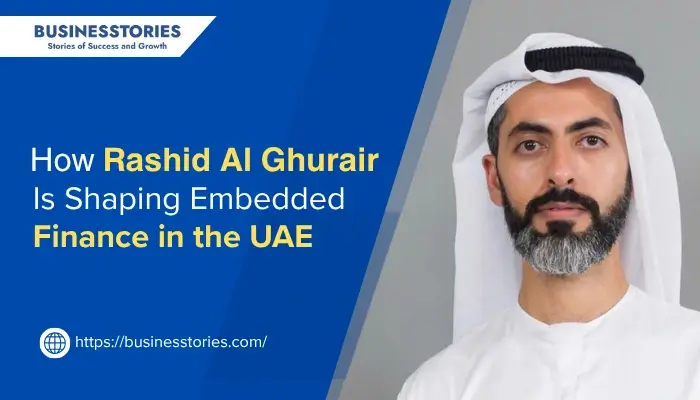
The UAE has become one of the most active fintech markets in the Middle East. As more companies move toward digital-first operations, Rashid Al Ghurair stands out as a founder linked to the next wave of financial innovation. His story matters because it sits at the intersection of payments, software, and everyday business use.
In simple terms, he is part of a bigger shift: finance is no longer a separate service. Instead, it is becoming built into the platforms people already use. This is what makes embedded finance so powerful. It lets businesses offer payments, wallets, lending, or money movement inside their apps and workflows. Therefore, the customer does not need to leave the platform to complete a financial task.
That saves time, reduces friction, and creates a better user experience. In the UAE, where digital adoption is high and competition moves fast, this model is especially important. Another reason this topic deserves attention is scale. The UAE is investing heavily in digital infrastructure, fintech regulation, and smart commerce. As a result, founders who can connect finance with software are well placed to grow.
Rashid Al Ghurair represents this kind of founder story: practical, future-facing, and closely tied to the region’s innovation agenda.
What Embedded Finance Means for UAE Businesses
Embedded finance means adding financial services inside a product, platform, or business process. For example, an e-commerce app can let users pay without leaving the checkout page. A logistics platform can offer instant payouts.
A small-business tool can provide invoicing, working capital, or card payments from one dashboard. Therefore, finance becomes part of the customer journey, not a separate step.
In the UAE, this integration matters for several reasons.
- First, the country has a strong digital economy. Consumers expect quick, smooth, mobile-first services.
- Second, many businesses serve regional and global customers, so they need modern payment flows.
- Third, the market is crowded. That means firms must stand out through convenience and speed.
Embedded finance in the UAE also fits the needs of small and mid-sized businesses. Many SMEs want easier access to payments, cash flow tools, and financing. However, they often lack time to deal with traditional banks or complex systems. Embedded finance can solve that problem by placing useful tools right where business owners already work.
Rashid Al Ghurair and the Rise of Smart Financial Infrastructure
Rashid Al Ghurair’s founder story reflects a broader move toward smart financial infrastructure. This means systems that make payments, transfers, and financial operations easier for businesses of all sizes. While many startup stories focus only on consumer apps, this one is about the plumbing underneath digital commerce.
That distinction matters. Many of the most valuable fintech companies do not look flashy on the surface. Instead, they provide the tools that power the user experience behind the scenes. These tools may include APIs, payment orchestration, account services, settlement layers, and compliance support. Therefore, they help other companies launch financial features much faster.
The UAE is a strong place for this kind of innovation because regulators, banks, and startups are increasingly open to collaboration. In addition, the country’s business environment encourages experimentation. As a result, founders can build infrastructure that scales across industries.
Why the UAE Is a Hotspot for Embedded Finance
The UAE has several advantages that make it a natural home for embedded finance.
First, it has a large base of digitally active consumers. Second, it has strong infrastructure, including high-speed internet, mobile adoption, and modern payment systems. It has also developed into a regional center for entrepreneurs, investors, and global companies.
This matters because embedded finance grows best where users already trust digital tools. In the UAE, people regularly use apps for transport, shopping, food, travel, and banking. Therefore, the market is ready for financial features that feel seamless. Businesses can add value without forcing users into a separate banking journey.
There is also a strategic dimension. The UAE wants to remain competitive in the global innovation economy. That means supporting fintech, digital assets, and advanced commerce tools. Embedded finance helps with all three. It improves customer experience, supports SME growth, and deepens digital trade.
How Founders Like Rashid Al Ghurair Create Market Impact
Founders like Rashid Al Ghurair matter because they turn broad trends into usable products. Embedded finance can sound abstract, but founders make it real. They translate market demand into services that solve everyday problems. That is where value creation happens.
In practical terms, a founder in this space usually focuses on three things.
- First, they identify a pain point, such as slow payments or hard-to-use business finance tools.
- Second, they create a product that integrates seamlessly and fits into existing workflows.
- Third, they build trust through reliability, compliance, and ease of use. Therefore, the product feels natural, not forced.
The impact goes beyond one company. When a founder builds useful infrastructure, other businesses grow faster too. For example, a startup offering embedded payments can help merchants collect money more smoothly. A platform offering working capital can help SMEs expand inventory. A tool offering automated settlements can reduce manual work and errors. So the value spreads through the ecosystem.
What the Future of Embedded Finance in the UAE Looks Like
The future of embedded finance in the UAE will likely move in three directions: deeper integration, broader access, and smarter automation. First, finance will become even more embedded inside software tools. Second, more sectors will adopt it, including healthcare, logistics, education, and real estate. Third, automation and AI will make financial workflows faster and more predictive.
This is important because customers now expect instant experiences. They want faster onboarding, quicker payments, and better visibility into cash flow. At the same time, businesses want lower costs and more control. Embedded finance helps both sides. It reduces friction while improving data flow.
However, the next phase will also bring new questions. How do firms protect user data and how do they manage compliance across borders? How do they keep systems transparent and fair? These are not small issues. In fact, they may decide which startups win and which ones fade.
Conclusion
Rashid Al Ghurair represents a larger shift happening across the UAE’s startup scene. Embedded finance is no longer a niche idea. It is becoming a core part of how businesses sell, serve, and scale. As a result, founders who build smart financial infrastructure are gaining strategic importance.
The strongest insight from this story is simple: finance works best when it disappears into the user journey. That is why embedded finance is growing so quickly. It saves time, reduces friction, and helps companies create better experiences. In the UAE, where digital adoption is high and innovation is a national priority, this trend has even more momentum.
For entrepreneurs, the message is clear. If your product touches commerce, payments, or workflow software, embedded finance could be a major advantage. For investors, the opportunity lies in the infrastructure layer. For readers, Rashid Al Ghurair’s story offers a useful lens on where the UAE’s next wave of fintech value may come from.