Introduction
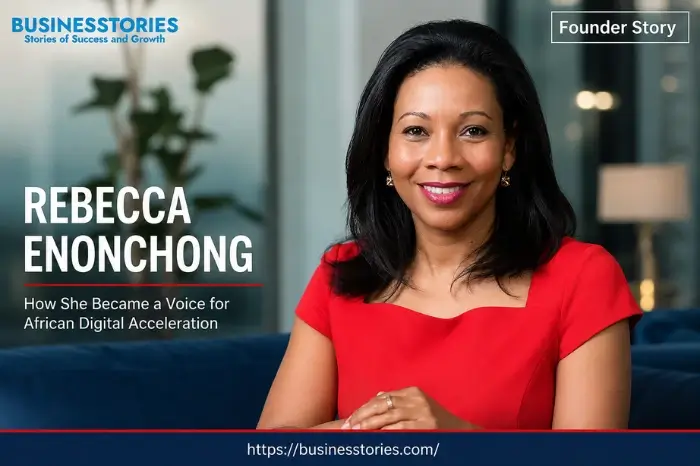
Rebecca Enonchong is one of the most important voices in African tech. She builds companies, advocates for founders, and improves digital systems across the continent. Her story matters because it shows how one person can influence policy. Support startups and shape public debate at the same time.
At first glance, her journey may resemble that of a founder. However, it is also a story about leadership, persistence, and clear communication. She did not build only for profit. She raised awareness of African entrepreneurs, especially those in tough markets, on her platform.
As Africa’s digital economy grows, her work feels even more relevant. More people now want to understand how she turned business success into public influence. This article explains that journey in simple terms. It looks at her early life, her startup work, her advocacy, and the lessons other founders can learn.
Why Rebecca Enonchong Stands Out in African Tech
Rebecca Enonchong became widely known as the founder and CEO of AppsTech. It is a global enterprise software company. This success was important because it indicated that an African founder could build for large clients. They compete beyond local borders.
Rebecca Enonchong stands out because she combines business skill with public purpose. Many founders focus only on building a company. However, she also speaks up for better laws, stronger digital access, and fair support for startups.
That mix provides her influence. In many African countries, tech growth depends on more than coding or funding. It also depends on trust, policy, and access. Rebecca Enonchong has pushed on all three. For example, she has long spoken about the need for internet access, startup support, and more room for local builders.
Therefore, her voice matters to founders, investors, and public leaders. She shows that a founder can also be an advocate. She also shows that advocacy can help the whole market grow.
Key idea: Rebecca Enonchong became influential because she linked entrepreneurship with public action.
From Founder to Advocate
Rebecca Enonchong first earned respect as a founder and business leader. She helped build digital companies that solved real problems. Because she worked inside the market, she understood the pain points better than many outside observers.
This helped her speak with authority. She did not talk about African tech from a distance. She lived it. Her insights on startups, digital trade, and policy are significant for this reason. In addition, she learned that many barriers are systemic. A startup may have a wonderful idea, yet still struggle with power cuts, weak internet, or unclear rules.
Consequently, her public message became broader. She moved from building companies to defending the conditions that allow businesses to grow. This shift is important. It shows how a founder can turn experience into leadership. It also explains why people across the continent listen when Rebecca Enonchong speaks.
The Issues She Keeps Pushing Forward
Digital access and basic infrastructure
One of Rebecca Enonchong’s main themes is access. Without reliable internet, digital growth slows down. Online services become harder to run without stable power. Without affordable tools, young founders can’t move forward.
She often highlights these gaps because they affect real people every day. For a student, poor connectivity can block learning, and for a small business, it can halt sales. For a startup, it can delay growth. Therefore, when she discusses digital acceleration, she is not using a buzzword. She is describing a basic need.
Her point is simple: Africa cannot accelerate if large parts of the population remain offline or underserved. This view helps explain why her voice reaches beyond tech circles. It speaks to education, jobs, trade, and inclusion.
Policy, fairness, and startup growth
Rebecca Enonchong also keeps these policies in mind. In many places, digital rules can either support growth or slow it down. Clear taxes, fair regulation, and open markets help startups plan.
On the other hand, sudden rules and red tape create fear. That is why she argues for systems that support innovation. According to public reports from regional tech groups, African startups still face major funding and policy gaps.
As a result, many beneficial ideas never reach scale. Rebecca Enonchong’s message is that better rules can unlock more jobs, more trade, and more local success. She also reminds leaders that small firms need room to test, fail, and grow. This is how robust tech ecosystems function.
How Her Voice Grew Across the Continent
Rebecca Enonchong’s voice grew because she used both action and clarity. She did not hide behind complex language. Instead, she used direct words that many people could understand. That style matters.
Simple language helps ideas spread. It also helps more people join the conversation. Over time, she became visible in media interviews, events, and policy debates. She spoke about Africa’s digital future in a way that connected business with public life.
She also built trust by staying consistent. Even when tech trends changed, her core message stayed the same: Africa needs stronger systems for digital growth. In addition, her visibility inspired, especially young women founders.
They saw someone who could lead, speak, and influence. That example is powerful. It shows that representation is not just symbolic. It can shape who feels able to enter tech in the first place.
Lessons for Founders and Change-Makers
Rebecca Enonchong’s journey offers practical lessons for anyone who wants to build in Africa’s tech space.
- First, founders should solve real problems. She built around needs that mattered.
- Second, they should understand policy, not just product. Rules can shape success.
- Third, they should speak clearly. Strong ideas grow faster when people can understand them.
- There is also a fourth lesson: stay close to users. Rebecca Enonchong’s influence comes from being grounded in reality.
She understands what breaks, what blocks growth, and what helps people move forward. For young founders, her experience means listening before scaling. It also means joining public conversations, not avoiding them.
For policymakers, her story is a reminder that the private sector and public sector must work together. Digital acceleration requires collaboration. It needs collaboration.
The Bigger Picture for African Digital Acceleration
The story of Rebecca Enonchong is bigger than one person. It is also about Africa’s place in the global digital economy. The continent has young talent, strong demand, and many local problems that need smart solutions.
However, growth depends on the right conditions. That includes better infrastructure, stronger education, easier access to capital, and rules that encourage innovation. Rebecca Enonchong keeps these issues in focus.
As a result, she helps move the conversation from blame to action. This is one of the most useful parts of her legacy. She does not only point out what is wrong. She also points to what can improve.
That positive, practical voice matters because many people need hope along with strategy. In that sense, her role is both symbolic and useful. She represents what African digital leadership can look like when business sense meets public responsibility.
Conclusion
Rebecca Enonchong became a voice for African digital acceleration because she combined experience, courage, and consistency. She built a market. Then she spoke for the market. More importantly, she turned personal success into public value. Her story shows that African tech growth needs more than good products.
It also requires improved access, more intelligent policies, and leaders who advocate for change when it is necessary. For founders, the lesson is clear. Build with purpose. Learn the system. Then use your voice to improve it. For readers, the call to action is simple: support local innovation, pay attention to policy, and back the people shaping Africa’s digital future.
Rebecca Enonchong proves that one strong voice can help many others move faster. And in a fast-changing digital world, such leadership is needed now more than ever.

Tabassum Shaik is an Author, Researcher, and SEO Specialist with over 8 years of experience creating informative content on business, startups, entrepreneurship, marketing, technology, and digital trends. She specializes in researching industry trends and transforming complex topics into practical, easy-to-understand insights. Her goal is to help readers stay informed, learn new ideas, and make better business decisions.