Introduction
Lisa Su has emerged as a leading figure in the AI hardware boom. Under her leadership, AMD moved from a turnaround story to a core player in the AI infrastructure supercycle. That matters now because the AI race is no longer only about models and apps. It is also about the chips, servers, memory, and data center systems that power them.
As demand for AI accelerators, data center GPUs, and high-performance computing grows, the market has shifted toward the companies that can supply real compute at scale. AMD is one of those companies. Lisa Su is the reason AMD is competitive in the market.
This story is not just about one CEO or one chipmaker. It is about a bigger shift in tech. Companies now need more power, better efficiency, and stronger supply chains. At the same time, cloud firms and AI labs are building giant systems that need constant chip upgrades. That is why the chip war matters. It shapes who gets access to compute and who falls behind.
Lisa Su and AMD’s Long-Term Turnaround
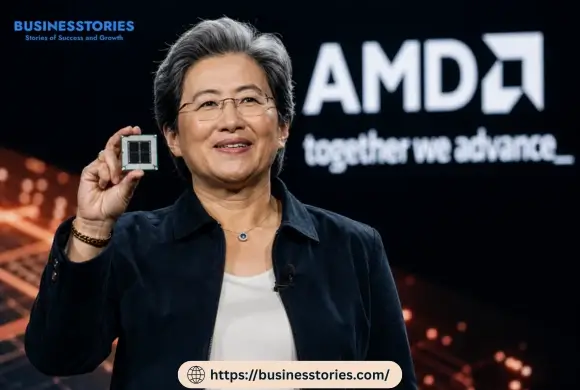
Lisa Su took over AMD when the company needed more than a small fix. It needed a full reset. At the time, AMD faced pressure from stronger rivals and had to prove that it could win back trust. So, Su focused on execution, not hype. She backed product quality, better planning, and a steady roadmap.
That approach changed AMD’s image. Instead, AMD transformed from a perceived weaker alternative into a company with a promising future. AMD improved its CPUs, expanded its server reach, and pushed harder into markets where performance matters most. As a result, it built a stronger base for the AI era.
This turnaround was important because the AI market rewards companies that can deliver across many layers. Buyers do not just want one fast chip. They want a platform that works across cloud computing, enterprise systems, and AI training workloads. AMD began to fit that need.
A key insight here is that Lisa Su did not try to win with noise. Instead, she won with consistency. Founder stories often overlook this aspect. Yet it is one reason AMD now matters so much in the chip war.
Why the AI Infrastructure Supercycle Matters
The phrase “AI infrastructure supercycle” sounds big, but the idea is simple. AI needs a huge amount of compute. And for that reason, the market is entering a long period of spending on chips, servers, memory, networking, and cooling systems.
This is not a short trend. It is a structural shift. Every major company that wants to use AI at scale needs more hardware. That includes cloud providers, software firms, research labs, and even governments. So, demand keeps rising for the parts that power AI systems.
AMD benefits from this shift because it sells the kind of hardware that can support intense workloads. Its chips help run data centers, train models, and process large sets of data. In other words, AMD is not just making chips. It is helping build the backbone of modern AI.
There is also a second layer to this story. The AI boom uses a lot of energy. Therefore, buyers care about performance per watt, not just raw speed. That creates room for AMD to compete. If a chip can deliver strong results with lower power use, it becomes very attractive.
This area is where Lisa Su’s strategy shows real depth. She recognized that winning the next chip war would require more than just one metric. Instead, a combination of speed, efficiency, scale, and trust would determine the winner.
How AMD Is Competing in the Chip War
AMD’s role in the chip war has grown because the company now serves several high-value markets. It competes in CPUs, GPUs, and AI accelerators. That makes it more flexible than a company focused on one narrow product line.
One major area is data center GPUs. These chips help power AI training and inference. They matter because large models need massive parallel processing. AMD has worked to improve its GPU stack so it can compete more directly in AI workloads. That has made the company more visible to cloud buyers and enterprise teams.
Another key area is high-performance computing. This market includes scientific research, large simulations, and advanced engineering tasks. These systems often overlap with AI needs. Thus, AMD’s strength here helps it build credibility in the broader compute market.
AMD also benefits from the growing demand for supply diversity. Many buyers want more than one vendor in their stack. They want backup options, better pricing, and less risk. This creates opportunities for AMD to secure deals, even when a leading competitor dominates the category.
The unique insight here is this: AMD’s biggest advantage may not be only its chip performance. It provides the market with a second serious path for AI infrastructure. That matters more than many people realize.
Why Lisa Su’s Strategy Fits the Future of Compute
Lisa Su’s strategy works because it matches where the market is going. The future of compute is not just about faster chips. It is about smarter systems. That includes better power use, stronger software support, and more flexible hardware choices.
AMD has moved closer to that future by building products for real workload needs. It focuses on data center demand, AI training, and enterprise scale. That helps the company stay relevant as AI moves from pilot projects to full deployment.
This matters because businesses now want practical AI. They want tools that can run at scale without huge waste. They also want systems that can grow over time. AMD fits this trend because its products support a wide range of workloads, from cloud services to research systems.
Simultaneously, Lisa Su has maintained AMD’s focus on long-term goals. That may be her strongest trait. She did not chase every short-term market swing. Instead, she kept investing in the parts of the business that would matter most five years later.
That kind of discipline is rare. Yet it is precisely what the AI hardware market needs. The companies that win will not just ship fast. They will plan well, build well, and adapt quickly.
What AMD’s Rise Means for the Tech Industry
AMD’s growth changes more than one company’s balance sheet. It shifts the structure of the tech market. More competition in AI chips means more choice for customers. It also means faster innovation and, often, better pricing.
For cloud firms, this competition is important. They need massive compute budgets. So, any new hardware option can improve margins and system design. For enterprises, it can also lower the cost of AI adoption. That makes AI more practical for more teams.
There is also a larger industry effect. As AMD gains strength, the market becomes less dependent on a single chip leader. That helps reduce risk across the supply chain. It may also push the whole sector to move faster.
Lisa Su’s role in the company is central. She helped make AMD relevant in the most important tech race of the decade. And she did it by staying focused on product, execution, and market timing.
So, if you want to understand the future of compute, you need to watch AMD. And if you want to understand AMD, you need to watch Lisa Su.
Conclusion
Lisa Su has helped turn AMD into a key force in the AI infrastructure supercycle. She did it by rebuilding the company with patience, focus, and strong technical choices. As a result, AMD now plays a larger role in the chip war shaping the future of compute.
This matters because AI depends on hardware as much as software. It needs chips, power, memory, and scale. AMD is now part of that foundation. And Lisa Su is one of the leaders pushing it forward.
The bigger lesson is clear. In the AI era, the winners will not only be the companies with bold ideas. They will also be the ones that can build the systems underneath those ideas. That is why this story matters now.
If you are tracking AI, semiconductors, or future tech, pay attention to AMD and Lisa Su. Her strategy offers a useful lesson in how to win in a fast-moving market: stay focused, build for real demand, and think several steps ahead.

Tabassum Shaik is an Author, Researcher, and SEO Specialist with over 8 years of experience creating informative content on business, startups, entrepreneurship, marketing, technology, and digital trends. She specializes in researching industry trends and transforming complex topics into practical, easy-to-understand insights. Her goal is to help readers stay informed, learn new ideas, and make better business decisions.