

Introduction
What does it take to build one of the most valuable AI startups in America? For Figure AI, the answer is simple: bold ideas, a fantastic team, and robots that do real work.
Figure AI was founded in 2022. In just three years, it grew into a company worth $39 billion. That is a stunning rise by any measure. Moreover, the company now sits at the heart of America’s race to lead in humanoid robotics.
The startup builds robots that look and move like humans. These robots can walk, see, think, and do physical tasks. And they are already working in real factories. Tech giants like Microsoft, NVIDIA, OpenAI, and Jeff Bezos have all backed the company with hundreds of millions of dollars.
How did Figure AI achieve such rapid progress? In this article, we trace its full journey, from its founding story to its record-breaking funding and landmark deals. You will also learn what comes next for this ambitious startup.
Who Founded Figure AI and Why It Matters
Brett Adcock: The Serial Entrepreneur Behind the Vision
Brett Adcock founded Figure AI in 2022. He grew up on a farm in Illinois. He is not a robotics engineer and studied business at the University of Florida. But he has a strong track record. He builds big companies in tough markets.
Before Figure AI, Adcock co-founded Vettery. It was an AI-powered hiring platform. He sold it to Adecco for over $100 million. Then he launched Archer Aviation, an electric air taxi startup. It went public at a $2.7 billion valuation. So it is clear Adcock knows how to grow big ideas into big businesses.
In 2022, he saw a clear gap. The world was short of workers. Many factory jobs were demanding, boring, or risky. Furthermore, most factories were built for humans, not for wheeled robots. So he set out to build a robot that fits right into human workspaces. That idea became Figure AI.
He put in $100 million of his own money as seed funding. This sent a powerful message to investors: the founder truly believes in this company. He then built a team from top names at Boston Dynamics, Tesla, Google DeepMind, and Apple. That mix of belief and talent gave Figure AI instant credibility.
Furthermore, Adcock chose a full-stack strategy from day one. Adcock aimed for FigureAI to have complete control over its hardware, software, and AI systems, all housed within a single entity. Such an approach costs more at the start. However, it gives the company full control over how its robots grow smarter over time.
The Figure AI Funding Journey: From $70M to $39 Billion
A Valuation That Climbed 15x in 18 Months
The financial growth of Figure AI is difficult to believe. Even by the standards of Silicon Valley, it is exceptional. The company went from a $500 million valuation in 2023 to a huge $39 billion in just two years. That is a 78-times increase.
Here is how each funding round unfolded:
Series A — May 2023: Figure AI raised $70 million, led by Parkway Venture Capital. At this stage, the company had a working prototype and a clear plan. However, it had no real product yet. The round set a valuation of $500 million.
Series B — February 2024: This round was a major turning point. Figure AI raised $675 million at a $2.6 billion valuation. The investor list was impressive. It included the following: Microsoft, OpenAI, NVIDIA, Amazon, Intel Capital, and Jeff Bezos all joined in. This round confirmed that Figure AI was a top player in physical AI.
Series C — September 2025: Figure AI crossed the $1 billion mark in committed funds. Its post-money valuation reached $39 billion. Parkway Venture Capital led the round again. New backers included Brookfield, Salesforce, T-Mobile Ventures, and Qualcomm Ventures. In total, Figure AI had raised about $1.9 billion.
The 15x jump from Series B to Series C happened in just 18 months. That speed reflects strong investor excitement about humanoid robotics. It also reflects Figure AI’s ability to deliver real results in the real world. By the time the Series C closed, Figure AI robots were already running live shifts inside a BMW car plant. Only a few robotics startups have ever reached that milestone.
Figure AI’s Robots: From Figure 01 to Figure 03
Three Generations, Each Smarter Than the Last
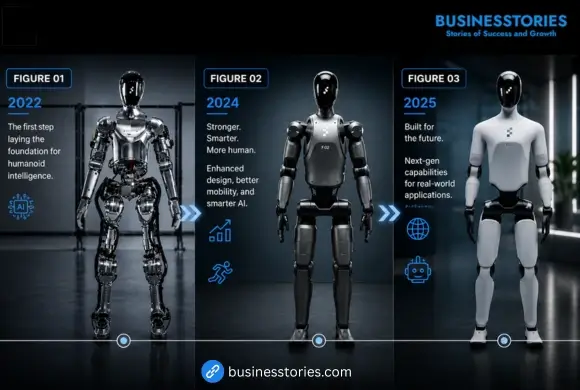
Figure AI built three generations of robots in just three years. Each generation represents a significant advancement over the previous one. Together, they show how fast the company can move and improve.
Figure 01 (2022) was the prototype. It was a two-legged robot and was built to prove the concept. It uses external cables for easy repairs. Its first target was logistics. Figure AI never sold Figure 01 to any customers. But it proved the team could build a real walking robot from scratch.
Figure 02 (August 2024) was the first robot ready for real commercial use. It stood about 170 cm tall and weighed 70 kilograms. It could carry up to 25 kilograms, and it had 35 degrees of freedom, six cameras, two graphics processing units, and a built-in battery. Its hands had 16 degrees of freedom. That gave them the skill to pick up and place parts with outstanding precision. Figure 02 was the robot that went to work at BMW’s factory.
Figure 03 (October 2025) was a complete rebuild. It has 44 degrees of freedom and cameras in each hand. Its fingertip sensors can feel forces as light as 3 grams—light enough to handle a raw egg without cracking it. It also has a soft outer shell for safe contact with humans.
And it supports wireless charging. TIME Magazine named it one of the best inventions of 2025. Furthermore, Figure 03 was designed to work in homes, not just in factories. Each new robot also produced valuable training data. That data then fed into the next robot’s AI system. So the whole system improves with each new version.
The BMW Partnership: Proof That Humanoid Robots Can Work
From Test Floor to Live Factory Production
The most important milestone in Figure AI’s history is also its most concrete. In January 2024, Figure AI signed a real agreement with BMW Manufacturing to deploy robots at its plant in Spartanburg, South Carolina.
The results were striking. Over ten months in 2025, Figure 02 worked ten-hour shifts, five days a week. It helped produce more than 30,000 BMW X3 vehicles. The robot handled one specific task: picking up sheet metal parts and placing them into welding fixtures. It had to do the job with millimetre-level precision, within a two-second window. In total, it moved more than 90,000 components and logged around 1,250 operating hours.
BMW confirmed the robot worked well within its existing systems. Workers at the plant were told about it early on. At first, they were curious. Over time, the robot became a normal part of the team. This smooth start is a key sign. It indicates that robots can work with people, not replace them.
Additionally, the BMW deployment gave Figure AI something money cannot easily buy: real-world training data. Every move the robot made fed back into Figure AI’s AI training system. So did every adjustment it made. That data is now a key asset as the company scales up.
After this success, BMW and Figure AI began testing the new Figure 03 for more tasks. BMW also took the program to a plant in Germany. That shows the technology is ready for the real world.
The Helix AI model serves as the brain behind the robots.
How Figure AI Built Its Own Intelligence
Early Figure AI robots used AI that was built with help from OpenAI. However, in February 2025, Figure AI ended that partnership. CEO Brett Adcock explained the reason. He said large language models had become a smaller part of the problem. The bigger challenge was building AI that could control a robot’s body at high speed. It had to work in the real world. So the team built its own solution.
The result is Helix, an in-house Vision-Language-Action (VLA) model. So Helix acts as the brain of the robot. It combines what the robot sees, what it is told to do, and how it moves. Together, they let the robot understand spoken commands. Then it turns them into smooth, precise actions.
Helix works through two systems. First, a slower, thoughtful system processes the scene and understands language at about 7 to 9 frames per second. Second, a rapid system turns those decisions into body movements at 200 times per second. This two-speed design lets the robot think carefully. Yet it can also move rapidly.
What makes Helix especially powerful is how well it generalizes. In testing, Figure robots picked up thousands of objects they had never seen before. They did this by following simple language commands. Furthermore, Helix can run on two robots at the same time. This lets them work as a team on shared tasks, like putting away groceries together.
This in-house AI stack is a strong strategic advantage. It means Figure AI controls its roadmap. And it does not rely on outside providers. As Adcock put it: “Figure’s AI models are built entirely in-house.”
What’s Next for Figure AI?
Scaling Up and Moving Into Homes
Figure AI is not slowing down. In March 2025, the company opened BotQ. This new factory can produce up to 12,000 humanoid robots per year. This move signals a clear shift. Figure AI is moving from pilot projects to mass production.
Beyond factories, Figure AI is also targeting the home. Figure 03 was built for the home. Its soft body, wireless charging, and fine-tuned finger sensors make it particularly well-suited for everyday tasks. These include cooking, cleaning, laundry, and elder care. In late 2025, Figure AI began testing Figure 03 in real homes. The potential market is enormous. Hundreds of millions of homes could one day use a capable home robot.
By early 2026, Figure 03 also appeared at a White House event. That moment highlighted Figure AI’s growing role in America’s AI strategy.
Additionally, Figure AI is running a program called Project Go-Big. It collects real-world robot training data across many settings. The more robots work in new places, the smarter Helix becomes. So over time, rivals will find it very difficult to keep up.
Conclusion
Figure AI’s rise from a 2022 startup to a $39 billion company is one of the best stories in modern AI. The company had a clear vision from the beginning. It wanted to build robots that fit into human workspaces. These robots would take on the tough, risky, and boring jobs. Then the team showed that they could do it.
Furthermore, Brett Adcock’s leadership has been central to this success. First, he brought in top talent. Then he put in his money. And he built a team that could deliver at every stage. Furthermore, the BMW deal gave the world proof that humanoid robots can work real shifts and deliver real output. Also, the Helix model gave Figure AI the ability to keep improving on its own.
But the biggest chapter of this story is still ahead. As AI scales up, enters homes, and refines itself, its impact will only grow. The humanoid robotics market could be worth trillions. And Figure AI is one of its best-placed players.
So if you follow the future of work and automation, keep Figure AI in mind. The robots are here. And they have only just started.
Are you inspired by Figure AI’s story? Explore more founder stories and startup deep-dives at Businesstories.com—your guide to the companies shaping the future of business.
Frequently Asked Questions About Figure AI
Q1: What does Figure AI do?
Figure AI builds general-purpose humanoid robots powered by its AI system, Helix. Its robots work in factories and warehouses and soon in homes. They handle repetitive, dangerous, or physically demanding tasks.
Q2: Who founded Figure AI?
Figure AI was founded by Brett Adcock in 2022. He is a serial entrepreneur. He previously co-founded Vettery (sold for $100M+) and Archer Aviation (went public at a $2.7B valuation).
Q3: What is Figure AI’s current valuation?
As of late 2025, Figure AI holds a $39 billion valuation. This came after its Series C funding round of over $1 billion. It is one of the most valuable humanoid robotics companies in the world.
Q4: Who are Figure AI’s main investors?
Key investors include Microsoft, NVIDIA, OpenAI, Amazon, Jeff Bezos, Intel Capital, Parkway Venture Capital, Brookfield Asset Management, Salesforce, and Qualcomm Ventures.
Q5: Has Figure AI deployed robots in real use?
Yes. Figure AI deployed its Figure 02 robot at BMW’s Spartanburg, South Carolina, factory. It worked ten-hour shifts for ten months, helping produce over 30,000 BMW X3 vehicles and moving more than 90,000 components.

Tabassum Shaik is an Author, Researcher, and SEO Specialist with over 8 years of experience creating informative content on business, startups, entrepreneurship, marketing, technology, and digital trends. She specializes in researching industry trends and transforming complex topics into practical, easy-to-understand insights. Her goal is to help readers stay informed, learn new ideas, and make better business decisions.