
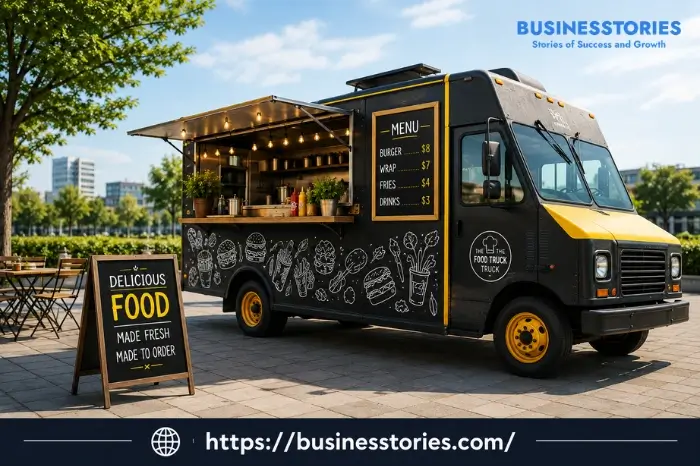
Starting a food truck business can be one of the most exciting ways to enter the food industry. It offers lower overhead than a full restaurant, more freedom in location, and a chance to test your food concept in the real world. However, success takes more than a good recipe and a cool truck wrap. You need a clear plan, a realistic budget, the right licenses, and a strong marketing strategy.
Many first-time owners focus only on the truck itself. Yet the truck is just one part of the business. You also need to think about permits, insurance, kitchen equipment, menu pricing, daily operations, and where you will sell. In addition, you must understand the costs that can appear after launch, such as fuel, repairs, inventory, and staffing. That is why a step-by-step approach matters.
This guide breaks down how to start a food truck business in a simple, practical way. You will learn what to budget for, which licenses and permits you may need, how to build a profitable menu, and how to attract customers. You will also get useful tips that can help you avoid common mistakes and improve your chances of success.
1. Start with a Clear Food Truck Concept
Pick a simple idea that can work fast
The best food truck concepts are usually simple, focused, and straightforward to execute in a small kitchen. A truck has limited space, so your menu should match that reality. For example, tacos, burgers, sandwiches, rice bowls, coffee, and desserts are popular because they are quick to prepare and easy to customize. A narrow menu also helps you control food costs and reduce waste.
If you try to sell too many items, your service slows down. Your inventory grows more complicated. Your staff also has to learn more processes. Therefore, it is often smarter to start with a small menu and do it very well.
Know your ideal customer
Before you launch, think about who will buy from you. Are you targeting office workers who want lunch fast? Are you aiming for event crowds that want indulgent food? Or do you want to serve late-night customers near bars and entertainment districts? The answer affects your menu, prices, and locations.
For example, office workers often want speed, consistency, and reasonable prices. Festival customers may care more about flavor, novelty, and portion size. Meanwhile, campus customers might respond well to value deals and grab-and-go meals. When you know your audience, you can build a food truck business that fits real demand instead of guessing.
Research the local market
Look at other trucks in your area. What do they sell? Where do they park? Which ones have strong social media followings? This kind of research helps you spot gaps in the market. If there are already many burger trucks, you may need a better angle. On the other hand, if there are few healthy meal options, that could be your opening.
A unique concept does not always mean something strange. Often, it simply means a better version of something familiar. For instance, you might offer regional flavors, premium ingredients, or a more convenient service style.
Build a basic business model
Your concept should answer four simple questions:
- What will you sell?
- Who will buy it?
- Where will you sell it?
- How will you make money?
If you can answer those clearly, you already have a stronger foundation than many beginners. A clear concept makes every later step easier, from truck design to menu pricing to marketing.
2. Estimate Your Food Truck Startup Costs
Understand the major cost categories
One of the biggest mistakes new owners make is underestimating startup costs. A food truck business may be cheaper than a restaurant, but it is still a serious investment. Your startup budget usually includes the truck, kitchen equipment, permits, insurance, branding, inventory, and working cash.
Here are the main categories to plan for:
- Truck purchase or lease
- Truck build-out or retrofit
- Cooking and refrigeration equipment
- Generator and power systems
- Plumbing and water systems
- Point-of-sale system
- Business licenses and health permits
- Insurance
- Initial inventory
- Branding, signage, and truck wrap
- Marketing and launch promotion
- Working capital for the first few months
Learn the rough cost ranges
Costs vary a lot by location, truck condition, and concept. A used truck may cost far less than a brand-new custom build. However, a cheaper truck may need repairs or upgrades. A new truck may cost more at the start, but it can reduce maintenance problems early on.
Many owners discover that the truck itself is only part of the budget. The build-out can be expensive because food safety rules often require proper ventilation, refrigeration, sinks, and fire suppression. Equipment costs can also rise fast if your menu needs fryers, griddles, ovens, or coffee machines.
Don’t forget operating cash
This is where many first-time owners run into trouble. They spend most of their money on the truck and equipment, then run short on cash for daily operations. You still need money for fuel, food inventory, wages, repairs, and marketing. In addition, sales may be slow during the first few weeks while you build awareness.
That is why it is smart to keep a cash reserve. A solid reserve can help you survive low-sales periods, weather issues, or mechanical problems. If you want your food truck business to last, working capital matters just as much as the truck itself.
Add a downtime buffer
Here is a tip many competing guides skip: plan for downtime. Food trucks break down. Events get canceled. Weather changes customer traffic. A good budget should include money for the unexpected. Even a small buffer can protect your business from a painful cash crunch.
3. Get the Licenses and Permits You Need
Check local rules before you buy
Licensing is one of the most important steps in starting a food truck. Yet it is also one of the most confusing because the rules change by city, county, and state. Some areas make food trucks relatively simple to launch. Others require multiple permits, inspections, and approvals before you can sell one meal.
Because of that, always check with your local health department, city office, and business licensing office before you buy the truck. You would rather not invest thousands of dollars only to learn that your truck does not meet local requirements.
Common permits and approvals
Depending on your location, you may need the following:
- A business license
- A food service permit
- A health department permit
- A food handler card or certification
- A fire department inspection
- Vehicle registration and commercial auto insurance
- A sales tax permit
- A commissary kitchen agreement
- Parking or vending permits
- Event-specific permits
Some cities also require food trucks to operate from a commissary kitchen. This is a shared licensed kitchen where you may prep food, store supplies, clean equipment, and dispose of waste. If your area requires a commissary kitchen, factor it into both your budget and your daily routine.
Why permits matter so much
Permits are not just paperwork. They prove that your food truck business meets safety and legal standards. Without the right permits, you may face fines, inspection failures, or forced shutdowns. Furthermore, many event organizers will not let you sell unless you can show current documents.
Stay organized
Keep copies of all licenses, insurance documents, and inspection papers in a folder inside your truck. That way, you can show them quickly if an inspector, venue manager, or event organizer asks. A little organization saves time and stress later.
A practical approach
Start a checklist for your local market. Write down every permit you need, who issues it, how long it takes, and when it expires. Then track renewal dates on your phone or calendar. This small habit can prevent missed deadlines and lost sales.
4. Buy or Build the Right Truck
Choose the right truck for your stage
You usually have three choices: buy new, buy used, or lease. A new truck gives you more reliability and a custom layout. A used truck costs less up front, but it may need repairs or upgrades. Leasing can reduce the initial investment, although terms vary and may limit flexibility.
The best choice depends on your budget, your timeline, and how much risk you can handle. If you are testing a new idea, a used truck may be enough. When you already know demand is strong, a new build may make more sense.
Inspect the truck carefully
Before you buy, check the engine, brakes, tires, electrical system, plumbing, refrigerator, hood, and generator. Also inspect the frame and body for rust or hidden damage. If possible, bring in a mechanic or truck specialist. Their advice can save you from a costly mistake.
Design the truck around the menu
Your menu should shape your truck layout. A coffee truck needs different equipment than a pizza truck. A taco truck needs efficient prep space, refrigeration, and quick cooking stations. A dessert truck may need more display space and less heavy equipment.
When the truck matches the menu, your service becomes smoother. Staff can move faster. Customers wait less. And your team can stay more organized during busy rushes.
Build for workflow, not just looks
A lovely wrap helps branding, but workflow matters more. Consider how food moves from prep to cook to serve. Place tools and ingredients where staff can reach them quickly. This improves speed and reduces mistakes. In a small truck, a smart layout can make a significant difference.
5. Build a Menu That Is Fast and Profitable
Keep it short and focused
A small menu often performs better than a long one. It reduces inventory, speeds up prep, and makes staff training easier. In a mobile kitchen, every extra item adds complexity. Therefore, focus on a few core items that you can make consistently well.
Choose items with strong margins
Your menu should not only taste delicious. It should also make money. Some ingredients look cheap at first, but they create high waste or need too much labor. On the other hand, simple items with shared ingredients can be very profitable.
A common menu strategy is to choose one or two signature items, then build the rest of the menu around them. For example, a truck that sells grilled chicken bowls might also offer fries, drinks, and a seasonal special. This keeps operations simple while still giving customers variety.
Add one signature product
Every successful food truck needs something memorable. It might be a signature sauce, a special recipe, or a unique twist on a common food. This helps customers remember you. It also encourages people to post about your truck and share it with others.
Use seasonal and local ingredients
Seasonal ingredients can lower costs and improve freshness. Local ingredients can also strengthen your brand story. Customers often like to support businesses that work with nearby farms or local suppliers. That can make your food truck business feel more connected to the community.
Test before you launch
Try your menu at pop-ups, soft openings, or private events before your full launch. This helps you spot problems early. You may find that one item is too slow, another is too expensive, or a third is far more popular than expected. Testing helps you adjust before large crowds arrive.
6. Price Your Food for Profit
Start with your food cost
Pricing should begin with numbers, not guesses. You need to know how much each item costs to make. Then add enough margin to cover labor, fuel, packaging, permits, repairs, and profit. Many operators aim to keep food costs in a workable range so the business can stay healthy.
Avoid the low-price trap
New owners often price too low because they want to attract customers. However, low prices can hurt you fast. If your prices do not cover all your real costs, growth becomes difficult. Instead, focus on value. Customers are often willing to pay more if the food is great, the service is fast, and the brand is strong.
Use bundles and combos
Combo meals can raise average order value and make the buying decision easier. For example, you can offer a meal with an entree, side, and drink. This works especially well during lunch rushes and events.
Track and adjust
After launch, review sales regularly. Look at which items sell best, which ones have high margins, and which ones slow down service. Then adjust prices or remove weak items. Good pricing is not a one-time task. It is an ongoing part of running a profitable food truck business.
7. Choose the Best Locations and Sales Channels
Focus on traffic and fit
Location affects sales more than many beginners expect. The best spot is not always the busiest one. It is the spot where your food matches the crowd. Office districts are ideal for lunch. Breweries may work well for evening crowds. Festivals can bring strong weekend sales. Campuses, parks, and markets can also perform well.
Mix daily sales with event sales
A strong food truck business usually does more than one type of selling. If you rely solely on one lunch spot, revenue may be unstable. A better approach is to combine regular service with catering, private events, farmers’ markets, and festivals. This gives you more balance across the week.
Track location performance
Keep a simple log of where you park, how many meals you sell, and what your average order size is. Over time, this data shows where you make the most money. It also helps you stop guessing and start making better location decisions.
Use flexible scheduling
Weather, local events, and seasonality all affect traffic. Because of that, flexibility is a major advantage. If one location slows down, shift to a better one. Plan your inventory and staffing if a festival weekend appears promising. Fast adjustment can improve sales and reduce waste.
8. Market Your Food Truck Business
Build a clear brand
Your truck should look clean, bold, and easy to recognize. Your name, logo, and colors should match your food style. For example, a playful dessert truck may use bright colors, while a premium sandwich truck may use a more refined design.
Use social media daily
Food trucks live and die by their visibility. Post your location, hours, menu specials, and event schedule on social platforms. This makes it easy for customers to find you. You can also share behind-the-scenes content, prep photos, and customer reactions.
Encourage repeat business
Repeat customers are the foundation of long-term success. Offer loyalty cards, limited-time specials, or bundle deals. Also ask happy customers to leave reviews. Good reviews build trust and help new people try your truck.
A unique marketing insight
Geo-targeted updates often work better than broad ads. If you post your exact lunch location in the morning, nearby workers can decide quickly. That kind of timely, local posting often brings better results than generic marketing. For a mobile business, clarity beats hype.
9. Run Daily Operations Smoothly
Use checklists every day
A checklist helps your team stay consistent. It should cover opening tasks, prep, cleaning, inventory checks, and closing duties. In a small kitchen, simple routines matter a lot. They reduce mistakes and make training easier for new staff.
Watch inventory closely
Food waste can quickly eat into profits. Track what sells well and what gets thrown out. Then order based on real demand. This helps you spend smarter and keep cash available for growth.
Train your staff well
Good service matters just as much as excellent food. Train your team to work quickly, stay calm, and communicate clearly. When staff know what to do, lines move faster, and customers leave happier.
Keep the customer experience simple
People often choose food trucks because they want convenience. So, make ordering straightforward, pricing clear, and pickup fast. A smooth experience can turn a one-time buyer into a loyal fan.
Conclusion
Starting a food truck business is exciting, but it works best when you treat it like a real business from day one. That means choosing a clear concept, building a realistic budget, getting the right licenses, and designing a truck that supports your menu. It also means pricing your food carefully, choosing smart locations, and marketing consistently so customers know where to find you.
The best food trucks are usually not the most complicated. Instead, they are the ones with a focused menu, strong branding, efficient operations, and a profound understanding of local demand. When you plan well, you reduce stress and increase your chances of building a business that can grow over time.
Research and numbers should be your first step if you are serious about starting a food truck business. Estimate your startup costs. Check every permit you need. Then build a menu that is simple, profitable, and easy to serve. Then test your idea, listen to customer feedback, and keep improving it. That steady approach can help you launch with confidence and grow with purpose.
FAQs About Food Truck Business
1. How much money do I need to start a food truck business?
Startup costs vary, but you should budget for the truck, equipment, permits, insurance, inventory, and working cash. A realistic food truck startup costs plan helps you avoid cash shortages after launch.
2. What licenses are needed for a food truck business?
Most areas require a business license, health permit, food handler certification, and vehicle registration. Some locations also need a commissary kitchen agreement for a food truck business.
3. What menu items for food trucks are most profitable?
Simple, quick items with shared ingredients often work best. Tacos, sandwiches, rice bowls, and specialty fries can perform well on a profitable food truck menu if food cost stays controlled.
4. How do I find the best location for my food truck?
Search for places with strong foot traffic, steady demand, and a suitable fit for your food style. Office areas, campuses, festivals, and breweries are popular locations for food trucks.
5. Is a food truck business easier than a restaurant?
A food truck can cost less to start and offers more flexibility than a restaurant. However, a food truck business still needs permits, maintenance, and smart day-to-day planning.

Tabassum Shaik is an Author, Researcher, and SEO Specialist with over 8 years of experience creating informative content on business, startups, entrepreneurship, marketing, technology, and digital trends. She specializes in researching industry trends and transforming complex topics into practical, easy-to-understand insights. Her goal is to help readers stay informed, learn new ideas, and make better business decisions.