
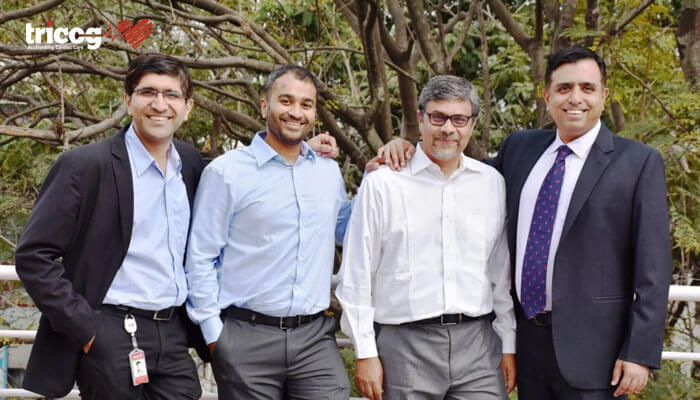
Sadly, heart disease is the world’s top killer. Yet in many towns, a heart doctor is hours away. This gap is the problem that Tricog Health set out to fix. Dr. Charit Bhograj, a heart doctor, started Tricog in 2014. His team then built an AI tool that reads heart scans in minutes. Remarkably, it works almost as well as a top expert.
Today, Tricog has screened over 12 million patients. It also collaborates with over 5,000 hospitals and clinics. In this guide, we look at how Tricog Health works. We also cover why it matters and where it may go next. So, let’s dive in.
What Is Tricog Health, and Why Does It Matter?
Tricog Health is a health-tech firm based in Bengaluru, India. Specifically, it mixes AI with real doctors to find heart problems fast. The idea, in short, is simple.
- First, a small clinic hooks up a low-cost ECG device.
- Next, the device sends the scan to the cloud.
An AI engine then reads it in a matter of seconds. Thereafter, a trained heart doctor checks the result. As a result, even a tiny rural clinic gets big-city-level care.
In fact, the idea for Tricog was inspired by real pain. Dr. Bhograj had seen too many patients arrive too late. Often, no expert was near to read their scan in time. He teamed up with three tech experts, Udayan Dasgupta, Zainul Charbiwala, and Abhinav Gujjar.
Together, they built InstaECG. Essentially, this device sends ECG data to the cloud. There, both AI and real doctors read it within minutes. Because of this shared design, no single point of failure exists in the chain.
Clearly, this speed matters a lot. After all, time is the most significant factor in surviving a heart attack. Every minute of delay, after all, raises the risk of harm or death. So, cutting wait time from hours to minutes can save lives.
Because of that speed, Tricog says it has helped catch over 350,000 serious heart cases early. Many of these cases, otherwise, may have gone unnoticed until it was too late.
Digital Coworker
What makes Tricog stand out, though, is its mixed model. Notably, it does not trust AI alone. It also does not lean only on rare experts. Instead, it blends both. First, the AI spots patterns fast across giant sets of past cases.
Then, a real cardiologist signs off on tricky cases. As a result, this “AI plus expert” mix builds trust. Understandably, many doctors feel unsure about a pure “black box” tool. This model, however, alleviates that concern.
Tricog also works far past India’s borders now. The firm also operates in parts of Southeast Asia and Africa. Indeed, these areas share a common issue. In simple terms, there is a shortage of heart doctors relative to the number of patients.
Tricog’s operation over standard internet connections allows even small clinics to quickly join the platform. They do not need in-house experts to start.
In terms of trends, Tricog fits into the rise of AI heart disease detection tools. These developments are also part of a wider shift toward remote ECG reading services. This method detects risks much earlier than waiting for negative symptoms. Here is a view often missed in other write-ups, though: Tricog is not just selling software.
Instead, it is quietly building a full referral system for heart care. This is much like how mobile banking leaped past old banks in poor markets. That systems-level view, not just the AI itself, may be why Tricog’s model can last for the long haul.
How Tricog’s AI Technology Works
At the core of Tricog’s tool is a deep learning system. It has been trained, over time, on millions of past ECG scans. Notably, each scan links to a known, confirmed result. When a patient gets a scan, the data flies to Tricog’s cloud right away.
There, the AI checks the wave patterns closely. Specifically, it looks for signs tied to over 140 heart conditions. These include odd heart rhythms and blocked blood flow, among other issues.
The Three-Step Diagnostic Pipeline
Overall, the steps are simple to follow. First, the device turns the scan into digital data. It then sends this data over a secure link. Second, the AI flags likely issues and marks areas of concern. Third, a certified heart doctor checks the AI’s work.
They then send back a signed, verified report. Since these steps run fast, most ECG reports arrive in under 20 minutes. Urgent cases get flagged and sent back within just 10 minutes. More complex echo scans are ready within two hours.
Clearly, this speed is not just nice to have. Rather, it is a real clinical need. For instance, in cases of a sudden heart attack, fast facts cut harm. Consequently, hospitals that use Tricog in their ER or cath lab start treatment sooner. This intervention can mean the gap between a full recovery and lasting harm.
Beyond a Single Scan: Tracking and Prediction
In addition, Tricog’s AI does more than read one scan alone. It also tracks a patient’s scans over time. This process is called longitudinal tracking. Thanks to this method, it helps doctors spot slow changes that one single scan might miss.
On top of that, Tricog is building tools that predict risk ahead of time. These tools spot small shifts that may hint at future heart trouble. As a result, they can flag risk before any symptom shows up at all.
Additionally, another strong point is Tricog’s echo tools. These specifically measure how well the heart pumps blood, a value known as LVEF. Doing the measurement by hand takes time, and it can vary between readers too.
Meanwhile, Tricog’s AI does this work fast and gives steady, repeatable results. This technology cuts down on human error a tremendous amount, which matters most in busy, high-volume clinics.
Looking ahead, Tricog is also building tools for wearables. For instance, think of devices like the Apple Watch. As more people wear gear that reads basic ECG data, Tricog’s AI could provide a quick first check. Such technology could, in turn, identify problems before they escalate into emergencies.
This opportunity is one that many rivals miss. Wearable ECG readings could help Tricog move past hospitals. It could also reach daily home health checks. However, few rivals can make this shift. That is because it needs both user trust and hospital-grade skill.
Tricog’s Impact on Global Healthcare Access
Overall, the numbers tell much of Tricog’s story on their own. To start, the firm has screened well over 12 million patients. Along with these achievements, it works with over 5,000 hospitals and clinics. It has also helped find close to 350,000 serious heart cases.
By its count, in fact, Tricog’s tools have touched over 10 million lives. This spans India, Southeast Asia, and Africa. Together, these are big wins for a firm built to fix one clear, human need. That need, simply put, is to get the right answer to the right patient on time.
What makes this reach so key is where it lands. Many Tricog partner sites, after all, sit in small towns and rural spots. Often, these places lack a full-time heart doctor on staff. So, instead of asking each site to hire a rare expert, Tricog rents out expert-grade skill on demand.
As a result, a small clinic can turn into a working heart-screening spot almost overnight. Better yet, it does not need a huge new spend to do so. On top of that, Tricog has built strong ties with big partners. It works with device makers like GE Healthcare and Omron. It also teams with drug firms like AstraZeneca. This lets Tricog place its AI layer right inside tools doctors already use.
COVID-19 crisis
Notably, during the COVID-19 crisis, Tricog gave free 24/7 ECG reads within 10 minutes. This helped busy health systems when expert time was at its lowest point. Tricog also has strong financial support. Overall, the firm has raised close to $30 million across several funding rounds. Backers include the Sony Innovation Fund, Omron Healthcare, and The University of Tokyo Edge Capital.
Blume Ventures and Inventus Capital Partners are on the list as well. This cash, in turn, has fueled growth in new markets. Additionally, it backs Tricog’s stated goal of reaching 100 million patients by 2027.
Unique Insight
Tricog does not just add more screened patients to a list. It also multiplies the work hours of each doctor it partners with. One doctor, helped by AI triage, can check far more reports each day without giving up on care or speed.
So, the true impact is not just patients screened. It is also expert time created, a resource even scarcer than the scan machines themselves in many emerging markets.
Challenges, Competition, and the Road Ahead for Tricog Health
No health-tech story comes without some bumps, and Tricog is no different. For one, trust remains an issue. Some doctors still feel wary about AI-led calls on life-or-death cases. However, Tricog eases the concern by keeping a real doctor in the loop for every report. Still, careful planning will be needed to grow this model as patient counts rise.
Data care presents another challenge to overcome. Patient data, for instance, crosses borders often, and rules on privacy differ by place. This calls for strong, safe data systems. So, as Tricog grows into new countries, it must meet each region’s health rules. At the same time, it must keep its rapid turnaround times firmly in place.
Rivals are rising too. Firms like AliveCor, Biofourmis, Eko, and CardioDiagnostics build AI heart tools as well. Some focus on wearables, while others focus on hospital-grade scans instead. This rivalry is, in a way, a good thing. After all, it pushes the whole field toward better accuracy and lower cost.
Even so, Tricog’s mix of AI plus real doctors gives it a clear edge. This approach is most true in markets that want a fully managed service, not just raw software alone. Looking forward, Tricog’s plan covers a few key moves.
- First, it wants deeper links with wearable gear.
- It also wants additional tools for predicting risk.
- Third, it also wants to continue growing in Asia and Africa.
Beyond that, the firm has hinted at entering the US health market. This move would bring tougher rules to face. However, it would also provide access to a significantly larger patient population.
Actionable Checklist for Healthcare Leaders
For health leaders weighing a tool like Tricog’s, a few steps can help.
- First, check turnaround-time claims against your site’s patient load and case mix.
- Second, ask how the AI model was tested and how large and varied the dataset was.
- Third, confirm that the data rules the AI model meets comply with your region’s laws before you sign on.
These steps help ensure an AI heart tool adds real clinical value. The AI heart tool should not merely serve as a shiny new badge for outdated work.
| Metric | Figure |
| Founded | 2014, by Dr. Charit Bhograj |
| Patients screened | 12 million+ |
| Partner hospitals & clinics | 5,000+ |
| Heart conditions detected | 140+ |
| Standard ECG turnaround | Under 20 minutes |
| Critical case turnaround | Under 10 minutes |
| Total funding raised | ~$30 million |
| Regions served | India, Southeast Asia, Africa |
Conclusion
Tricog Health shows what happens when exceptional medical skill meets smart AI design. By pairing a trained model with real doctor checks, the firm has turned a once-rare skill into something any small clinic can use in minutes. That skill is expert heart care. Its growth, with over 12 million patients screened and thousands of partner sites, shows a real gap that tech is now helping to close.
What stands out most is how Tricog builds trust. It does not aim to replace doctors. Instead, it stretches their reach. One expert can now review far more cases without losing care quality. This balance of machine speed and human sense may explain why hospitals across India, Southeast Asia, and Africa keep signing up.
As Tricog moves toward wearables and new markets, its core goal stays the same. It wants to get the right answer to the right patient before it is too late.
Frequently Asked Questions
1. What does Tricog Health actually do for cardiac patients?
Tricog Health mixes AI with doctor checks to read ECG and echo scans from afar. This gives fast, safe heart results to clinics that lack an in-house expert.
2. How fast is Tricog’s AI-powered ECG diagnosis process?
Most ECG reports arrive within 20 minutes. Urgent cases get flagged and sent back within 10 minutes, so doctors can start care sooner.
3. Is Tricog Health available outside of India right now?
Yes. Tricog runs across parts of Southeast Asia and Africa. It is also looking at the US health market to reach even more patients.
4. Who founded Tricog Health, and when did it start?
Dr. Charit Bhograj, a heart doctor, founded Tricog Health in 2014. He worked with tech co-founders to make expert heart care open to all.
5. Does Tricog’s AI replace the need for real cardiologists?
No. Every AI-flagged report at Tricog still goes to a real heart doctor for a final check. This mix of speed and expert judgment keeps results safe.

Tabassum Shaik is an Author, Researcher, and SEO Specialist with over 8 years of experience creating informative content on business, startups, entrepreneurship, marketing, technology, and digital trends. She specializes in researching industry trends and transforming complex topics into practical, easy-to-understand insights. Her goal is to help readers stay informed, learn new ideas, and make better business decisions.