
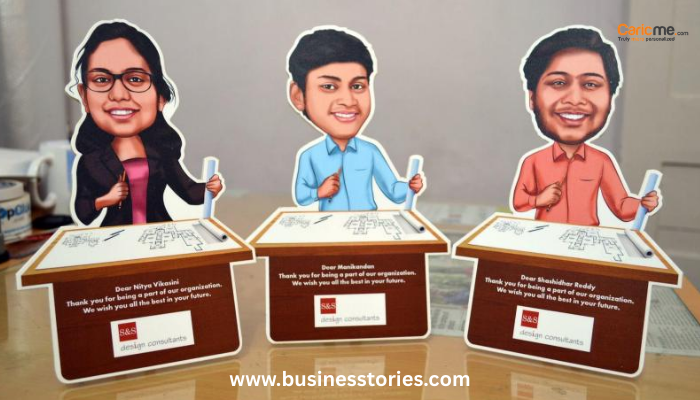
Some gifts get used once and then forgotten. However, a funny, hand-drawn version of your face is hard to forget. That simple idea sits at the heart of Caricme, a Bangalore startup that turns ordinary photos into personalized caricature gifts.
In fact, Caricme began with three artists who worked desk jobs at Infosys. They were passionate about art, so they left their secure jobs and established a brand centered around it. Today, their story is a useful case study for anyone who wants to turn a creative skill into a real business.
In this listicle, you will learn what Caricme does and who started it. You will also see how the ordering process works and why it stands out in a crowded gift market. Finally, we will share clear lessons you can use in your startup journey.
“Art is not what you see, but what you make others feel.” — Reetesh Rao, Founder of Caricme
What Is Caricme? A Quick Look at the Startup
Caricme is an online store that makes custom caricature gifts from customer photos. You upload a picture, and an artist draws a fun, exaggerated cartoon of the person. Then the team prints that artwork on a product and ships it to you.
The brand began around late 2012. By October 2014, YourStory reported that the young company was about two years old. At that point, it had a small team of four people. Even so, it was already handling around 350 orders a month.
What Kind of Gifts Does Caricme Make?
The brand places its art on many forms and materials. As a result, a single drawing can become a framed print, a keepsake, or a desk gift. The company’s own website says it makes gifts for family, friends, partners, bosses, and colleagues.
Furthermore, the brand sells to both people and firms. For example, people buy them for birthdays and wedding days. Meanwhile, firms use them to reward and thank staff. So one product line serves two very different groups of buyers.
Why the Name “Caricme” Works
The name blends “caricature” and “me.” Because of this, it tells you exactly what you get: a caricature of you. That is a smart choice for a small brand. After all, a clear name saves money on explaining what you sell.
A Unique Insight: Selling the Smile, Not the Product
Most gift sellers compete on the item itself, such as a mug, a frame, or a cushion. Caricme, on the other hand, sells a reaction. The real product is the laugh someone has when they see their cartoon self. Therefore, the physical object serves merely as a delivery method for the emotional experience.
This distinction is relevant for anyone studying custom caricature gifts online. When the emotional value is the primary focus, the price becomes less significant. Furthermore, buyers are more likely to share photos of the gift on social media. This phenomenon transforms each customer into a source of free marketing.
Meet the Founders Behind Caricme
Every startup has an origin story. Here, it begins with three artists stuck in corporate roles.
Three Artists in a Corporate Design Team
Reetesh Rao, Rajesh Acharya, and Kotresh Chatriki are all trained artists. Reetesh and Kotresh both hold fine arts degrees. Meanwhile, Rajesh went on to study painting at a higher level.
By chance, all three ended up in the Communication Design Group at Infosys in Bangalore. There, they worked side by side for more than six years. They handled design projects, high-profile delegate work, and company events.
As a result, they learned each other’s strengths very well. They knew who was best at drawing, who could manage clients, and who could run operations. In short, they had already tested their teamwork before risking their money.
The Spark: Making an Art Form Easy to Buy
Rajesh had a special skill in drawing caricatures. So the trio asked a simple question: why is this art so difficult to buy? In those days, you usually needed to find a street artist or attend an event. Clearly, there was a gap.
So they decided to make caricatures easy to order online. That idea became Caricme.
Building From Small Wins
At first, the founders did not run big ad campaigns. Instead, early orders came from friends, colleagues, word of mouth, and Facebook posts. Then, slowly, demand grew.
Next, they partnered with small online sellers. Those regular orders gave them confidence. Thereafter, they listed on bigger platforms such as Amazon, Ferns N Petals, and Snapdeal. According to Reetesh, strong sales on these channels led them to launch their e-commerce site. By 2014, they had built a base of more than 3,000 customers.
A Founder Mindset Worth Noting
Interestingly, the founders said they were not chasing giant goals. Instead, they wanted to do work they enjoyed. Yet that calm approach helped them grow steadily without burning out. For many artist-led startups in India, this approach is a healthy model. You do not always need venture capital to build something lasting.
Also Read: How To Start A Handicraft Business From Home And Make Money
How Caricme Works: From Photo to Finished Gift
One reason buyers trust the brand is its simple ordering flow. Here is how the process works, step by step.
Step-by-Step Ordering Process
- Choose your product. First, pick the gift format you want from the website.
- Upload a clear photo. Next, send a suitable photo of the person you want drawn. A bright, front-facing picture works best.
- Share your idea. Furthermore, add details such as hobbies, a job, or a fun theme. For example, a cricket fan could appear holding a bat.
- Review the soft copy. Thereafter, the artist sends a digital draft. Please review it and request any changes if necessary.
- Approve and receive. Finally, the team prints the approved artwork on your gift and ships it.
Why the Review Step Is So Important
That fourth step is the secret to the brand’s quality. Because customers approve the art before printing, there are fewer surprises. In fact, Kotresh told YourStory that this process kept the rejection rate below 0.5%.
Think about what that means. Out of every 200 orders, fewer than one came back. For a business that makes one-of-a-kind items, that is an impressive number.
Built to Last
The team also invested time in research on printing. They wanted the artwork to stay bright for years. As a result, customers get a keepsake, not a gift that fades in a month.
Tips for Ordering a Better Caricature
If you plan to order a personalized caricature gift in India, these tips will help:
- Use a sharp photo with good light.
- Avoid sunglasses or heavy shadows on the face.
- Share a few personal details so the artist can add a story.
- Order early before big festivals like Diwali or Valentine’s Day.
- Check the draft closely, including the spelling of any names.
A Unique Insight: The review step does more than reduce errors. It also builds excitement. Customers see the draft before the gift arrives, so they feel part of the creative process. That small moment of joy makes them more likely to come back.
Why Caricme Stands Out in India’s Gift Market
The gift market in India is busy. So how does a small studio compete? Let us look at the numbers first.
A Growing Market for Personal Gifts
According to IMARC Group, India’s gifting market reached about USD 816.3 million in 2025. Furthermore, IMARC thinks it will grow to nearly USD 1.09 billion by 2034. In addition, it names the rise of personal gifts as a key trend.
Meanwhile, the online gifting market in India hit about USD 300 million in 2024, says IMARC. Here too, it sees a clear shift toward custom gifts. Globally, Technavio expects the personalized gifts market to grow by about USD 13.6 billion between 2025 and 2030.
In other words, shoppers want gifts that feel personal. That trend works in Caricme’s favor.
The Single-Unit Advantage
Many personalized gift brands focus on bulk orders. However, Caricme took the opposite path. Kotresh explained that the brand will make even a single personalized unit. So a buyer does not need to order 50 mugs to get one excellent gift.
This small policy has a big effect. It makes the brand friendly to individual shoppers. At the same time, it still welcomes corporate clients who need larger orders.
Facing the Competition
Of course, Caricme is not alone. Today, many small studios in India sell digital caricature gifts. Some are in Mumbai and some in Thane. Most offer flat 2D cartoons, digital files, and bulk deals for firms.
So what keeps Caricme different?
- First, it has a team of trained fine artists, not just template designers.
- Second, it has already earned credibility with major marketplaces.
- Third, it has a clear focus on character-based products rather than general gifts.
A Unique Insight: An Old Art With a New Home
Caricature is not new to India. In fact, artists like Gaganendranath Tagore used it in colonial Bengal to mock power and spark laughter. Back then, caricature was a tool for satire.
The startup takes that same art and gives it a warmer purpose. Instead of mocking leaders, it celebrates loved ones. That shift from critique to celebration is a quiet but powerful idea. It links a modern startup to a long Indian art tradition.
Lessons Entrepreneurs Can Learn From Caricme
The Caricme story is small in scale but rich in lessons. If you dream of building a creative business in India, here are practical takeaways.
1. Test Your Team Before You Launch
The founders worked together for six years before starting up. For that reason, they already trusted each other. So before you pick co-founders, try a side project together first. Then you will see how you handle stress, deadlines, and money.
2. Start With the People You Know
The brand’s first orders came from friends and Facebook. Similarly, you can start small. Share your work with your network. Then ask happy buyers to tell others. Word of mouth costs nothing and builds trust fast.
3. Borrow Traffic, Then Build Your Own Home
Instead of building a website first, the team sold on marketplaces. Later, it launched its own store. This approach is a smart sequence of steps. Marketplaces bring ready buyers. Meanwhile, your site gives you control over pricing and customer data. So use marketplaces to prove demand, and then move people to your own channel.
4. Put Quality Checks Before Delivery
The draft review step kept returns under 0.5%. Likewise, you can add a simple approval step to your process. For instance, a bakery could send a cake sketch before baking. A logo designer could share three drafts. Either way, early feedback saves time and money.
5. Serve Two Markets With One Skill
The startup sells to both families and firms. As a result, it is not fully dependent on festive seasons. Corporate orders can fill quiet months. So ask yourself: who else could use what you make?
6. Grow at Your Own Pace
Finally, the founders chose joy over hype. That is a fair choice. After all, not every startup must chase a huge price tag. Sometimes, a steady studio that makes a profit is the best result.
A Unique Insight: Caricme shows that a niche gift startup can succeed by being specific. It did not try to sell everything. Instead, it did one thing well and became known for it. That focus is often more powerful than size.
Conclusion
The Caricme story shows that a love of art can turn into a real business. Three Infosys artists, Reetesh Rao, Rajesh Acharya, and Kotresh Chatriki, saw that caricature art was difficult to buy. So they made it simple to order online.
Along the way, they made several smart choices.
- First, they started with friends and Facebook.
- Next, they sold on marketplaces like Amazon and Snapdeal.
- Then, they built their own store and passed 3,000 customers within about two years.
- Their review-before-print process also kept returns below 0.5%.
Moreover, the timing works in their favor. India’s gift market keeps growing. Furthermore, more shoppers now want gifts that feel personal. Because the brand makes even one custom piece, it serves both everyday buyers and office teams.
Most of all, Caricme reminds us that the best gifts deliver a feeling. A cartoon of your best friend or boss is not just a print. Instead, it is a shared laugh and a memory that lasts.
So what should you do next? If you need a unique gift, try a personalized caricature for your next birthday, wedding, or office farewell. And if you are an aspiring founder, take one lesson from this story and apply it this week. Test your team, add a review step, or list your product on a marketplace. Caricme’s journey began with small steps.
Frequently Asked Questions (FAQs)
1. Who founded Caricme, and where did the three founders first meet?
Three artists, Reetesh Rao, Rajesh Acharya, and Kotresh Chatriki, started the brand. The three founders met while working in the design team at Infosys in Bangalore. Then they worked side by side for over six years before they began.
2. How does Caricme turn a simple photo into a custom caricature?
First, you upload a clear photo online. Then an artist creates a digital caricature draft for your review. After you approve it, the team prints the artwork on your chosen gift and ships it to you.
3. Can companies order Caricme caricature gifts for office events?
Yes. The brand sells to both people and firms. Its caricature gifts work well for staff rewards, team thank-yous, and farewells. So firms can use them as unique corporate caricature gifts for staff and clients.
4. What makes Caricme different from other caricature gift brands?
Trained fine artists run the brand, and they are open to creating even a single custom piece. Furthermore, its draft review process kept returns below 0.5%, which builds strong trust with buyers of custom caricature gifts.
5. What are the best tips to obtain a great caricature gift from Caricme?
First, use a bright, sharp photo that faces the camera. Next, share hobbies or a playful theme with the artist. Finally, order well before festivals and review the draft with care before you say yes to the print.

Tabassum Shaik is an Author, Researcher, and SEO Specialist with over 8 years of experience creating informative content on business, startups, entrepreneurship, marketing, technology, and digital trends. She specializes in researching industry trends and transforming complex topics into practical, easy-to-understand insights. Her goal is to help readers stay informed, learn new ideas, and make better business decisions.