
Neurostellar Wants to Make Mental Fitness the Next Big Thing
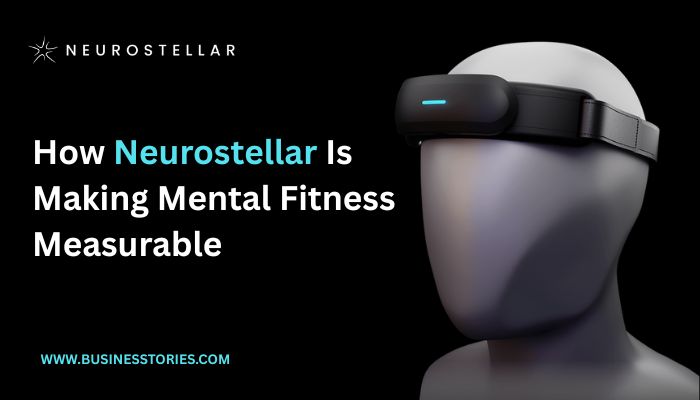
We all know what a fitness tracker does. It counts your steps. It tracks your heart rate. But what if a device could track your mind? That is what Neurostellar set out to build. The Chennai startup makes a smart headband called Orbit. It reads brain signals and body data in real time. And it turns those signals into clear, useful advice.
From Lab to Real Life
Karthik Raghavendran and Dhanushya Sree Ramesh started Neurostellar in 2021. They came from IIT Madras. That provided them with access to top research labs and strong early support. Raghavendran leads as CEO. He also runs the NeurotechX India Chapter. Ramesh drives business strategy and growth.
At first, the team worked on a different problem. Many epilepsy patients get the wrong diagnosis. So the founders built a wearable EEG device to detect seizures. Over time, though, they shifted focus. They saw a bigger chance of mental performance for healthy users.
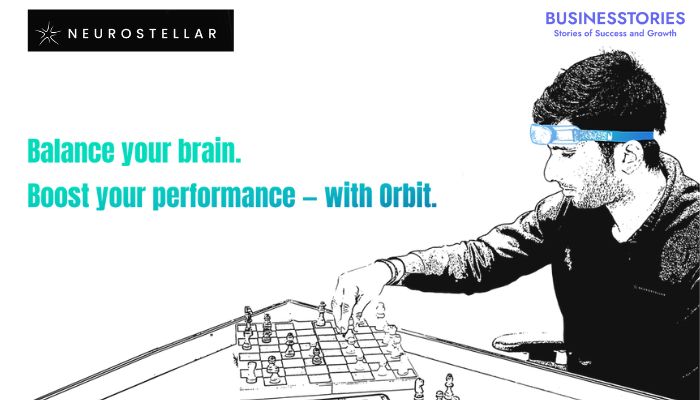
Their first big tests involved chess grandmasters, top executives, and the Indian Air Force. The results were strong. Orbit’s insights held up in real, high-stress settings. That early proof gave the team the push they needed to grow.
How Orbit Works
Most fitness bands count steps. Orbit, by contrast, reads your brain. It uses three types of sensors. Together, they give a clear picture of your mental state.
First, there is EEG. This stands for electroencephalography. It uses two small sensors on your forehead. They pick up brainwave patterns tied to focus, distraction, and mental load.
Second, there is PPG, or photoplethysmography. This uses light to measure your heart rate and breathing. From that data, Orbit can gauge your stress and recovery levels.
Third, motion sensors help cut out noise. Real-world movement can mess up brain readings. So smart filters clean the data. This keeps the readings accurate even outside a lab.
On top of that, Orbit uses both local and cloud-based software. Local processing keeps your data private on the device. But cloud models learn your personal patterns over time. They build a baseline just for you. And they give you richer insights each session.
After each use, you get a clear summary. It shows when your focus peaks. It also gives tips on how to rest and recover better. Over time, you learn your own mental rhythms.
A Pilot-First Business
Neurostellar did not rush into retail. Instead, it ran pilots first. These small tests let the team check if the product truly worked. They also showed whether people would pay for it. Both answers came back yes. So the team moved on to broader sales.
Today, Neurostellar earns money in a few ways. Sports teams and firms can buy group plans. Defense groups and large firms can join training programs. Top executives can get premium memberships with extra tools and insights. The core model is hardware plus software. You buy or lease the device. Then you pay a monthly fee for the data and coaching.
The startup also has strong backing. In May 2025, it raised over $150,000 from angel investors. Two of those investors are Swapnil Jain and Tarun Mehta. They co-founded Ather Energy, a well-known EV brand. The startup also got a grant from BIRAC, a government biotech fund. Together, these funds give Neurostellar time and room to grow.
Why This Matters
Mental fitness is a fresh idea. It is not the same as mental health. Instead, it treats your thinking skills like a muscle. You can train them. You can track them. And you can improve them over time.
This idea fits several big trends at once.
In elite sports, small gains matter a lot. Better focus can mean a faster reaction or a smarter move. Real-time brain data can cut the time it takes to go from training to peak form.
In the workplace, stress and burnout are real problems. A tool that spots mental fatigue early can help firms act fast. That is good for workers and good for business.
In defense and other high-risk jobs, clear thinking can save lives. Pilots, surgeons, and rescue workers all face huge mental loads. Orbit can help track their state and reduce risk.
And for everyday users, a new market is opening up. Think of it like a gym for your brain. That means new chances for subscriptions, coaching, and related tools.
Standing Out in a Crowded Market
The wearable market has many big players. Both large wellness brands and smaller neurotech firms compete in this space. But Neurostellar has real edges over them.
It uses more than one type of sensor. Combining brain and body data gives richer, more accurate results than a single sensor alone. Its link to IIT Madras adds trust. It also opens doors to research ties with top institutions. And its track record with elite groups gives it proof before it even goes mass market.
Still, the team does not rest on these strengths. Instead, they keep refining their tools. And they keep proving that their results are real. This makes it hard for bigger, less focused rivals to catch up.
Challenges the Team Must Solve
Despite good progress, Neurostellar faces real hurdles.
Brain data is sensitive. Users need to trust that their data is safe. So the team must keep clear rules about privacy. On-device processing helps. But clear, open data policies matter too.
The device is also not cheap. High-grade sensors cost money. As a result, only top earners can afford it right now. To grow beyond that, the team needs new pricing options. Leasing plans and group bundles can help.
Clinical claims are another issue. Orbit works well as a wellness tool. But moving into health care needs more proof. The team will need formal studies and sign-off from regulators. That takes time and money.
Finally, lab results must hold in the real world. A signal that works in a quiet lab may not work on a busy flight deck. So the team must test in diverse, real-life settings. Research partnerships can speed this up.
What Comes Next
If early results hold, Neurostellar has many paths forward.
On the product side, the headband could evolve. Earbuds and desk sensors could come next. Richer coaching tools could follow after that.
On the market side, the team is pushing beyond India. The UAE and the US are next. Both have strong spending power and deep sports and defense networks.
Research partnerships are also on the horizon. Working with brain science labs can help validate Orbit for clinical use. Published studies can build wider trust faster.
And ecosystem ties could add long-term value. Linking with wellness apps, sports platforms, and sleep tools would make Orbit stickier. Users who link Orbit to their other tools are less likely to stop using it.
The Bottom Line
Neurostellar is a new kind of startup. It takes hard science and turns it into simple, useful tools. It helps people see their mental state clearly. And it gives them real ways to improve it.
The team has strong roots at IIT Madras. It has solid funding and proven early results. And it has a bold vision. Mental fitness is not yet a mainstream idea. But Neurostellar is working to change that.
As the founders put it, they are not just building a gadget. They are building a new way to talk about mental performance. Focus, stress, and recovery will no longer be invisible. And that could change how we all live and work.
“Neurostellar isn’t just building a wearable — it’s building a new language for mental performance, where focus, stress, and recovery are no longer invisible.”

Tabassum Shaik is an Author, Researcher, and SEO Specialist with over 8 years of experience creating informative content on business, startups, entrepreneurship, marketing, technology, and digital trends. She specializes in researching industry trends and transforming complex topics into practical, easy-to-understand insights. Her goal is to help readers stay informed, learn new ideas, and make better business decisions.