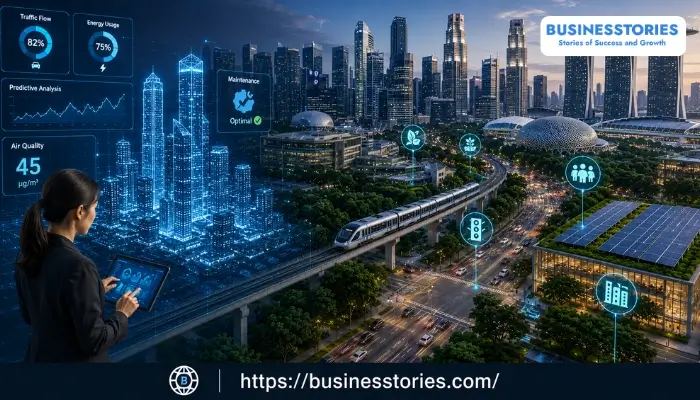
Singapore has consistently been a forward-looking city. Now, it is making another significant advancement. Digital twins and AI could change how the city works, grows, and serves people every day. This is not just about new tech. It is about making urban life smoother, safer, cleaner, and more efficient.
A digital twin is a live virtual copy of a real place. It can show roads, buildings, public spaces, weather, traffic, and even energy use. When AI joins this system, the city can do more than just display data. It can predict problems, test ideas, and guide better choices fast. That is why this idea matters now.
Singapore is a strong place for this shift. It already has smart transport, strong digital systems, and a long-term plan for urban growth. However, the city also faces big pressures. Land is limited. The population is aging. Heat is rising. Traffic patterns keep changing. So, the need for smarter planning is time-sensitive.
In this article, we will look at how digital twins and AI may reshape transport, housing, public safety, energy, and daily life in Singapore. We will also explore what makes this future exciting, complex, and very real.
What Makes Digital Twins and AI Important for Singapore?
Singapore is not a large country, but it has enormous urban goals. Every road, building, and transport line must function efficiently due to the limited space. That is where digital twins can help. They let planners see the city as a living system, not just a set of separate parts.
A digital twin can combine real-time data from sensors, cameras, transport networks, weather systems, and utility grids. Then, AI can study that data and identify patterns. For example, it can show where traffic may slow down, where flood risk may rise, or where energy use may spike. As a result, city leaders can act before problems grow.
This information matters because cities are getting more complex. People move in different ways. Work patterns shift. Climate risk rises. At the same time, public demand for comfort, speed, and safety keeps growing. Therefore, Singapore needs tools that can help it plan better and react faster.
Another reason this topic matters is trust. Citizens want cities that feel responsive, but they also want privacy and fairness. Therefore, digital twins and AI must be used with care. The technology is powerful, yet it also needs strong rules. That balance is part of what makes Singapore such an interesting case study.
There is also a business side. Smart urban systems can support startups, software firms, data teams, and green tech providers. So, this shift may create new jobs and new products. In other words, the city itself can become a platform for innovation.
Why the shift is happening now
First, sensor networks are cheaper and better than before. Second, AI tools can process huge data sets quickly. Cities now face simultaneous challenges related to climate, mobility, and resources. Because of these factors, the timing is right for digital twins to move from pilot projects to real city use.
A unique insight
Most people think of smart cities as more screens and more data. However, the real change may be simpler. The biggest shift may involve testing solutions before building anything, rather than reacting after problems occur. That is the real value of digital twins.
How Digital Twins and AI Could Improve Transport and Mobility
Transport is one of the clearest places where digital twins can help. Singapore already has a strong public transport system. Even so, rush hour pressure, road work, and changing travel habits can still create delays. With a digital twin, planners can see how the whole transport network behaves in real time.
For example, AI can study train load, bus flow, traffic lights, and road use together. Then it can suggest changes that improve movement across the city. If a station gets crowded, the system can spot it early. When a road starts to clog, planners can test a fix before making a live change. This can save time for thousands of people every day.
Digital twins can also support better planning for the future. Suppose the city wants to add a new bus line or expand a rail link. Instead of guessing, planners can test many versions in a virtual model. They can assess travel time, cost, crowd flow, and impact on nearby roads. As a result, they can choose the best option with more confidence.
This is especially useful in a city like Singapore, where small planning errors can have large effects. Land is scarce, so transport systems must work with excellent care. Therefore, a digital twin is not just a beneficial tool. It can become a core part of long-term mobility planning.
Everyday uses for commuters
For people who ride trains and buses, the benefits can feel very direct. AI can help manage delays. It can guide crowd control. It can even improve route planning during heavy rain or special events. Over time, such technology can make the commute calmer and more predictable.
A deeper impact
The largest transport gain may not be faster travel alone. It may be better to trust. When people feel that the system adapts well, they are more likely to use public transport. That can reduce private car use, support cleaner air, and improve the city overall.
Smart Buildings, Energy Use, and Cleaner Urban Living
Buildings use a lot of energy. They also shape how people live, work, and feel in a city. So, if Singapore uses digital twins and AI well, the results could be powerful. Smart buildings can become more efficient, more comfortable, and more climate-ready.
A digital twin can track how a building uses power, water, and cooling. AI can then find waste and suggest changes. For example, it can adjust air-conditioning based on use, weather, and time of day. It can also spot systems that are failing before they break. That means less waste, lower cost, and fewer service issues.
This matters a lot in a hot, humid city. Cooling uses a large share of energy in many urban buildings. Therefore, better control can lead to major savings. It can also help reduce carbon emissions. This is important because cities must now grow while also cutting their climate impact.
Digital twins can also help during design. Architects and engineers can use them to test sunlight, airflow, shade, and heat. This means new buildings can be planned for comfort before they are built. As a result, people may enjoy better indoor spaces and lower energy bills.
What this technology means for homes and offices
For homes, AI can help manage lighting, cooling, and water use. For offices, it can support occupancy-based systems and smarter maintenance. In both cases, the goal is simple: use less, waste less, and improve comfort.
Why the shift has long-term value
The hidden value of this shift is not only in savings. It is also in resilience. When a city uses data well, it can manage rising heat, water stress, and power demand more smoothly. This enhances the safety and stability of urban life over time.
Public Safety, Health, and Faster City Response
Cities must do more than move people and power buildings. They must also keep people safe. Here, digital twins and AI could play an important role in Singapore. They can help city teams prepare for floods, heat waves, crowd surges, and other risks.
Because Singapore is dense and highly connected, rapid response matters. A digital twin can show where risks may rise first. For instance, if heavy rain is coming, AI can assess drainage pressure and flood-prone areas. Then, city teams can take action early. They can redirect traffic, issue alerts, or send crews where needed.
The same approach can help with public events. Large crowds can create safety issues, especially in busy districts. Therefore, a digital twin can help planners test crowd flow and entry points before events begin. That can reduce bottlenecks and improve security.
There is also a health angle. As people age, cities need to support more accessible and responsive services. AI can help track heat stress, emergency demand, and walkability. It can also support better planning for clinics, green spaces, and elder-friendly routes. Thus, the city becomes more caring, not just more efficient.
A more human city
A common fear is that smart cities may feel cold or controlled. However, the most effective application of digital twins is to create a more human-centric environment. It can help cities become more human by spotting problems early and improving daily life quietly in the background.
A practical insight
Safety is often treated as a separate topic. Yet it connects to transport, buildings, weather, and public space. That is why digital twins are useful. They show how these pieces work together, which leads to smarter action.
Data, Privacy, and the Trust Question
Every smart city dream has one big challenge: trust. Digital twins and AI depend on data. Lots of it. That data may come from cameras, sensors, transport systems, utilities, and public spaces. Therefore, people naturally ask, “Who sees the data, and how is it used?”
This question is crucial in Singapore. The city is known for efficient systems, but people still want privacy, fairness, and clear rules. Therefore, any digital twin strategy must include strong data limits and clear use cases. Without that, public support could weaken.
The positive aspect is that this challenge does not pose a significant obstacle. In fact, it can improve the system. When cities explain what data they use and why they use it, trust grows. When they protect personal identity and limit access, people feel safer. Thus, effective governance is not a side issue. It is part of the technology.
AI also needs fairness. A model trained on weak or biased data can lead to poor choices. That can affect transport, services, or safety planning. For that reason, human review still matters. AI should support city planners, not replace them.
What responsible use looks like
Responsible use means setting clear rules, using anonymized data when possible, and testing systems before full rollout. It also means giving people a way to ask questions. In short, smart cities must be both intelligent and accountable.
Why this is a major advantage for Singapore
Singapore can use its strong institutions to build trust into the system from the start. If it succeeds, it may become a model for other cities that want smart tech without losing public confidence.
What Businesses, Startups, and Citizens Should Watch Next
The move toward digital twins is not only for government teams. It also creates opportunities for businesses, startups, and individuals. In fact, one of the most exciting parts of this shift is how many new use cases it can unlock.
For startups, there is room to build tools for urban simulation, data maps, maintenance, energy control, and mobility planning. For larger firms, there are chances to improve buildings, logistics, and customer services. Citizens may experience faster commutes, cooler buildings, better alerts, and more responsive public spaces as a result of these gains.
However, the next phase will require more than strong software. It will need strong cooperation. City agencies, private firms, research teams, and residents must work together. Otherwise, the system may stay fragmented. Therefore, collaboration is just as important as code.
Three steps to watch
- First, look for pilot projects that become citywide systems.
- Second, watch for links between transport, energy, and climate data.
- Third, pay attention to how Singapore sets rules for privacy and AI use.
These three signals will show whether the model is scaling well.
A final business insight
The most valuable companies may not be the ones that simply sell AI. They may be the ones that understand how to connect AI to real city outcomes. That is where the future market is heading.
Conclusion: Digital twins and AI have the potential to shape the future of Singapore.
Singapore is entering a new urban phase. Digital Twins and AI could help it plan better, move faster, save energy, and respond to risk with more care. They can make transport smoother, buildings smarter, and city systems more resilient. More importantly, they can help the city make decisions before problems grow.
Still, the future will not depend on technology alone. It will also depend on trust, clear rules, and human judgment. That is why the most successful smart city will not just be the most connected one. It will be the one that uses data wisely and keeps people at the center.
For Singapore, this is a big chance. It can lead not only in smart tech but also in smart urban design. It can show how a dense city can stay efficient, safe, and livable at the same time. And because of that, other cities will be watching closely.
If you are a policymaker, founder, planner, or tech leader, now is the time to pay attention. The next wave of urban innovation is not years away. It is already taking shape. Digital Twins and AI could become the tools that help Singapore design a better daily life for everyone.
Seasoned Project Manager with 20+ years of experience in the IT industry, driving successful project delivery, team leadership, and strategic execution.