
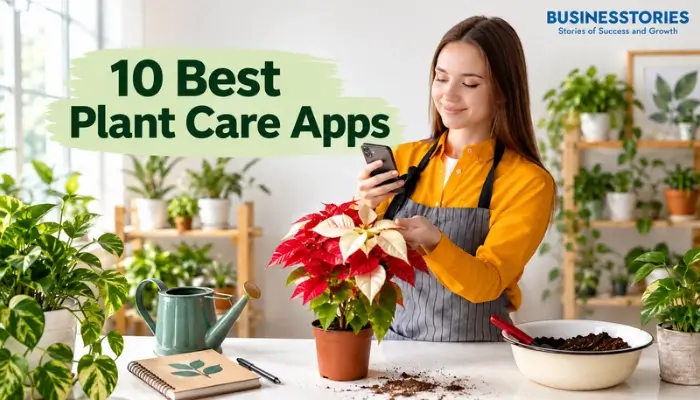
Do your plants droop the moment you look away? You are not alone. In fact, many plant parents forget to water on time. Others, meanwhile, miss the early signs of disease. That is why plant care apps exist.
These smart tools use your phone’s camera and AI. As a result, they can name a plant, track its watering needs, and spot trouble early. In this listicle, we tested and researched the ten best plant care apps for 2026. Each one helps you build a simple routine.
So, over time, your indoor jungle can thrive, not just survive. Maybe you want a free plant identification app. Or, on the other hand, maybe you want a full AI plant doctor app. Either way, you will find a suitable match below.
Why Plant Care Apps Matter for Every Plant Parent
Plants cannot talk. So, instead, they show stress in quiet ways. A yellow leaf, a curled edge, or slow new growth all mean something. But most people, unfortunately, miss these signs until it is too late. That is where plant care apps step in. Essentially, they turn small clues into clear, simple steps.
For example, Planta’s team says its users track well over 40 million plants worldwide. That is a huge number, and it clearly shows how much people trust digital tools over guesswork. Meanwhile, Picture The app says it identifies plants for millions of users every single day. It specifically claims that common plants in good light have an accuracy rate of over 98%.
So, what makes these apps so useful?
- First of all, they reduce the mental effort you have to put in. In other words, you do not have to remember every schedule by heart.
- Second, they work as a handy plant identification app. Because of these features, you never have to wonder what that mystery plant on your windowsill is.
- Third, many double as an app for identifying plant diseases, and they can spot pests or fungal issues from a single photo.
Here is an idea most articles skip. The real value, actually, is not the diagnosis itself. Instead, it is the habit the app builds. Once you check in daily, you naturally start to notice small details in person too. In short, the app trains your eye rather than replacing it.
Still, no app is perfect. Overall, a photo-based diagnosis works best as a first guess, not a final answer. So, always check the app’s advice against what you see and feel in the soil.
The 10 Best Plant Care Apps for Healthier, Happier Plants
Below are the ten apps that scored well in our research and in user reviews. Additionally, we grouped each one by its top strength. That way, you can quickly find the best apps to keep plants alive for your exact needs.
1. Planta: Best Overall Plant Care App
Planta builds a care plan just for you. Specifically, it covers watering, misting, feeding, and repotting for each plant you add. Its “Dr. Planta” tool, meanwhile, acts like an AI plant doctor app. Simply snap a photo of yellow leaves or brown spots, and it offers a likely cause.
The free version covers basic watering alerts. On the other hand, premium unlocks the light meter and full diagnosis tools for $7.99 a month, or $35.99 a year. Because it adapts to your home’s light and the season, it stays one of the best apps to keep plants alive for busy owners.
2. Picture This: Best for Plant Identification
PictureThis is a well-known plant identification app. Notably, it can name hundreds of thousands of species from one photo. It also has a disease auto-diagnosis tool, so it functions as an app for identifying plant diseases too.
Overall, tests show it does well with clear leaf photos. However, accuracy drops with blurry shots or tree bark. The free tier has ads and limited scans, while premium costs about $39.99 a year and adds unlimited IDs plus expert chat.
3. PlantNet: Best Free Plant Care App
If cost matters most, PlantNet is fully free with very few ads. Research groups built it, and it can name about 60,000 wild and garden plants. Furthermore, it uses photos shared by its whole community.
As a result, it does not offer reminders or disease diagnoses. Instead, it shines as a pure ID tool. Every photo you upload also aids in genuine scientific research. So, for beginners who just want a plant’s name, the app is the easiest place to start.
4. Greg: Best Plant Care App for Beginners
Greg turns plant care into a friendly chat, not a strict rulebook. First, new users answer a few quick questions about light and pot size. Greg then creates a personalized watering schedule based on that.
Because it explains the “why” behind each tip, it works well as a plant care app for beginners. Furthermore, the tone stays warm and encouraging, even if you forget to water for a week.
5. PlantIn: Best AI Plant Doctor App
PlantIn mixes a photo scan with a few follow-up questions. This often makes it more reliable than photo-only tools. So, it is a strong example of an AI plant doctor app done right, since it does not lean on the image alone.
That said, most detailed care steps sit behind a paid plan, so you will likely need a premium plan for full treatment guides.
6. Blossom: Best for Expert-Backed Plant Health Advice
Blossom pulls its tips from The Spruce, a trusted gardening site. As a result, the site adds real editorial trust to its advice. It provides a botanist hotline for direct inquiries in addition to plant identification.
It also has a disease tool for common houseplant issues. So, overall, Blossom suits anyone who wants human expertise layered on top of AI guesses.
7. Vera: Best for Tracking Plant Growth
Vera focuses on the visual diary side of plant care. You log photos over time, and the app builds a simple timeline. As a result, you can watch new leaves grow or track recovery after treatment.
Granted, it offers fewer diagnostic tools than some rivals. Still, it is excellent for collectors who want to document a plant’s full story.
8. Botan: Best App to Diagnose Plant Diseases from Photos
Botan calls itself an app for identifying plant problems from photos. Specifically, each scan comes with a science-based treatment guide and a recovery estimate. A short trial lets new users try unlimited IDs first, and then it switches to a paid plan.
So, if you specifically want the best apps to diagnose plant diseases, Botan’s clear recovery plans stand out from simple photo-match tools.
9. Gardenia: Best for Large Plant Databases
Gardenia provides you with access to a database of over 2,000 plants. It also sends reminders for watering, feeding, and repotting. Overall, it leans toward simple scheduling rather than deep AI diagnosis.
It’s a good fit for those who mainly want steady reminders. Moreover, the app stays clean and simple, which helps first-time users feel at ease.
10. Garden Tags: Best for Community Support
Garden Tags mixes plant ID and care guides with an active community of growers. Real people answer your questions and share their progress photos. So, if you like a second opinion from humans, not just an algorithm, this social layer adds real value on top of the usual care tools.
Free vs. Paid Plant Health Apps: Which One Do You Need?
Most plant parents eventually ask this question. So let’s break it down simply. Free vs. paid plant health apps differ in three main ways: ID limits, diagnosis depth, and personal detail.
Free versions, like PlantNet or basic Planta, usually cover the essentials. Specifically, you get a simple ID, basic watering alerts, and a small plant list. If you only own a hardy pothos or snake plant, that is often enough. In fact, one long-term Planta user tracked 50 plant types over two years, and she found that free watering alerts alone solved most everyday problems.
Paid plans, on the other hand, unlock the tools that matter once your plant family grows. These often include unlimited ID, full disease diagnosis, a light meter, and custom plans built for your climate. For instance, PictureThis Premium adds expert chat, while Planta Premium adds the light meter and full “Dr. Planta” history.
However, a higher price does not always mean better results. Some tests found that mid-priced apps like PlantIn can match pricier rivals on disease detection. Why? This approach is because it pairs photos with a few smart questions rather than relying solely on the image.
So, before you pay, ask yourself three things.
- First, how many plants do you own?
- Second, do you need a diagnosis often, or just now and then?
- Third, would a one-time lifetime plan suit you better than a monthly fee?
Here is a point many people skip: app fatigue is real. If you already pay for two or three plant apps, merging them into one full app often saves money. Additionally, it cuts down on confusing app-switching. Choose one main app for daily care, and keep a free ID app handy for quick, one-off questions.
How to Diagnose Plant Problems from a Photo
Using a plant disease identification app the right way makes a big difference. Follow these simple steps for better results every time.
- Wipe the leaf gently first: Dust or water spots can confuse the AI, so clean the area before you snap a photo.
- Use natural daylight: Yellow indoor bulbs change leaf color and throw off the results.
- Photograph both sides of the leaf: Many pests, like spider mites, hide underneath.
- Take a close-up and a wide shot: The close-up shows fine detail, while the wide shot shows the plant’s overall shape and health.
- Double-check the result yourself: If the app identifies a pest, look for actual webbing, spots, or bugs before starting any treatment.
When you follow this process, any app that identifies plant problems from photos becomes a real diagnostic partner, instead of a guessing game.
Final Thoughts: Choosing the Right Plant Care App for You
In the end, the best plant care apps are the ones you will actually open each day. If you are new to plants, start with a friendly option like Greg. Then, add a simple plant identification app, such as PlantNet, for quick lookups.
Alternatively, if your plant family has grown or pests keep showing up, invest in a stronger tool like PictureThis, Botan, or PlantIn. Remember, though, that no app can replace real observation. So, check the soil with your finger, not just a phone notification.
Still, these ten apps genuinely make plant care easier and far less stressful. This principle holds whether you are treating a sick fiddle-leaf fig or just trying to recall your Monday watering routine.
So, which app fits your plant family best? Pick one from this list today, add your first plant, and take a quick “before” photo. Then, in three months, you will likely see fuller leaves, fewer surprises, and much more confidence as a plant parent.
Frequently Asked Questions About Plant Care Apps
Q1: What is the best free plant care app for beginners?
PlantNet is the top free choice. It names thousands of species with no ads or fees, so it makes a gentle first step for beginners.
Q2: Can a plant disease identifier app really replace a professional?
No, an app only gives a helpful first guess. Always verify serious issues with a local nursery or extension office before you begin major treatment.
Q3: How accurate is an AI plant doctor app?
Accuracy depends on lighting and photo quality. Most AI plant doctor apps work well on common houseplants but struggle with rare or mixed types.
Q4: Are paid plant care apps worth the subscription cost?
Paid plans help if you own many plants or need frequent diagnosis. Otherwise, free tiers usually cover basic watering and ID needs just fine.
Q5: Which app works best to identify plant problems from a photo?
Botan and Picture both do well with photo-based diagnosis. Each one pairs a photo scan with treatment tips and a recovery estimate.

Senior Business Analyst / Prduct Owner with 12+ years of experience driving data-driven insights, optimizing business processes, and delivering strategic IT solutions.