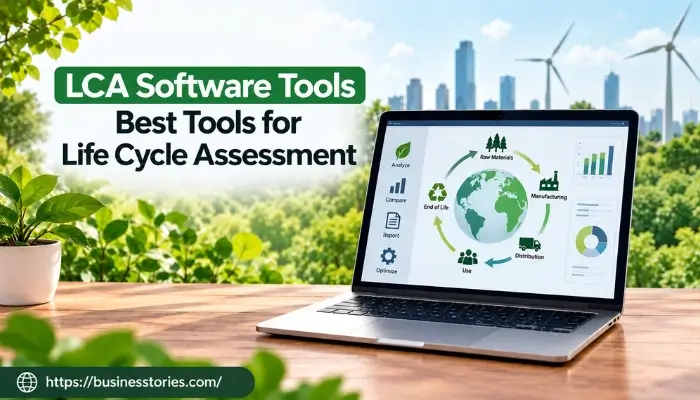
Every product has a hidden story. It starts with raw materials pulled from the earth. It moves through factories, trucks, and store shelves. Ends its life in a landfill or a recycling bin. LCA software tools help you see this whole story in clear numbers. You learn exactly where a product’s environmental impact comes from.
Have you ever tried to track carbon data in a spreadsheet? If so, you already know the pain. Rows pile up. Formulas break. Data goes stale fast. So, this is where life cycle assessment platforms help. They turn a messy manual task into a clean, repeatable system.
As a result, your team spends less time on data entry. Instead, you spend more time acting on real insights. In this guide, we cover the best LCA software tools on the market today. We look at what each tool does well and who it fits best.
We also share simple steps to help you pick the right one. Whether you run a construction firm or a consumer brand, you will find a fit here.
What Is LCA Software, and Why Does It Matter?
LCA software is a digital tool. It calculates the environmental footprint of a product or service. It also tracks the full life cycle: raw materials, manufacturing, transport, use, and disposal. In summary, it addresses a significant question. What is the actual environmental cost of this item over its entire life cycle?
Manual life cycle work used to mean stacks of spreadsheets. It also meant long hours of manual data entry. Today, software does most of that work. It pulls data from large emissions databases. Then applies standard calculation methods.
It builds reports that hold up under review. This standard matters more than ever. Regulators, investors, and customers now want proof, not just promises, when a brand claims to be green.
ISO 14040 and ISO 14044 standards
Most trusted tools follow the ISO 14040 and ISO 14044 standards. These rules also set out how a life cycle assessment should be planned and measured. Many tools also support newer rules, like the Product Environmental Footprint (PEF) and EN 15804.
These frameworks are now common for construction and consumer goods sold in Europe. Without shared standards, two companies could measure the same product two different ways. Their results would not match, and neither would be easy to trust.
Here is a view you rarely see on other lists. The real value of LCA software is not the report itself. It is the shift in thinking it creates within a company.
Picture a design team that sees, in real time, that switching to recycled plastic cuts emissions by a third. That number soon shapes every future material choice. So the software does more than measure impact. It quietly changes how a team thinks about suppliers and design.
New teams often start with a simple carbon footprint calculator. It offers a quick taste of what full LCA software can do. However, basic calculators often skip key impact areas, such as water use and land use.
If your company faces new disclosure rules soon, a full LCA platform is the safer choice. It pays to think past a single carbon number. Aim for a system built to grow with your reporting needs.
Top LCA Software Tools Compared
Choosing among LCA software tools can feel like a big task. Each platform serves a slightly different type of user. Below, we break down the top options. This way, you can quickly match features to your goals.
1. SimaPro
SimaPro comes from PRé Sustainability. It is one of the most respected names in life cycle assessment. The tool was built for LCA experts and product designers. These users need to run detailed, in-depth assessments.
The platform offers scenario modeling and uncertainty analysis. It also holds a giant library of background data. As a result, many consultancies and research teams trust it for audit-ready results. That said, the learning curve is real.
SimaPro rewards users who already know terms like “functional unit” and “system boundaries.” If your team has that skill, few tools match its depth.
2. One-Click LCA
One Click LCA has grown into one of the largest LCA platforms in the world. Today, it serves customers in over 170 countries. It also combines the deep modelling power of SimaPro with a more user-friendly and scalable design.
So, the platform holds a massive global database with more than 500,000 datasets. These cover manufacturing, construction, chemicals, and consumer goods. This tool shines brightest in construction.
Architects, engineers, and manufacturers use it to build Environmental Product Declarations (EPDs) fast. They do not need a full-time LCA expert on staff to do it. So, if speed and scale matter more than profound customization, this tool is worth a close look.
3. openLCA
openLCA, developed by GreenDelta, has been active since 2006. It is the leading free, open-source choice in this space. It is a fast, professional tool for life cycle and footprint work. Because it is open-source, you get full transparency.
You can also adapt it to fit your exact needs. It even bundles life cycle costing and social impact tools into one workflow. This gives clear insight into which steps in a life cycle have the most impact. Because it costs nothing, openLCA is a wonderful starting point.
Students, small teams, and consultancies love it for this reason. It also connects to nearly 100,000 sustainability datasets. Free training and case studies help new users get up to speed fast.
The trade-off? You will likely spend more time on setup. You will also spend more time on self-teaching than you would with a paid, supported platform.
4. Sphera LCA for Experts (formerly GaBi)
Sphera’s LCA for Experts carries the legacy of GaBi, a long-trusted name in this field. So, it combines LCA modelling with reliable, steady data. It also draws on more than 20 databases built for specific industries.
The tool supports process-based modelling with clear system boundaries. So, teams can set up functional units and reference flows in a clean, structured way. Built-in uncertainty tools let you test new assumptions, too. Best of all, you do not need to rebuild your whole study from scratch each time.
This platform suits teams running repeat product assessments. Here, consistency and clear audit trails matter as much as the raw numbers. Enterprise sustainability teams with trained LCA staff tend to gain the most value.
5. Ecochain
Ecochain focuses on manufacturers. Its sweet spot is construction materials and industrial equipment. The company has also spent over fifteen years building LCA software just for this audience. So, it is not a generic tool stretched to fit a new sector.
Because the software uses real industry data and program rules, teams often reach compliant results faster. They also need less custom setup work to get there.
How to Choose the Right LCA Software for Your Business
Picking the best LCA software tool goes beyond the biggest database. It also goes beyond the flashiest dashboard. The right choice matches your team’s skill level, your industry, and your reporting needs. Here are five clear steps to help guide your decision.
Step 1: Define your goal first.
Are you building a single Environmental Product Declaration? Are you tracking a full product line? Or are you meeting a rule like CSRD? Your answer narrows the list fast. Some tools focus on EPDs. Others handle broad, multi-impact modelling.
Step 2: Match the tool to your team’s skill level.
If you have already trained LCA staff, a deep tool like SimaPro or Sphera LCA for Experts will reward that skill. A guided platform like One Click LCA will shorten your learning curve if you don’t have one.
Step 3: Check the industry fit.
A construction-focused tool like One Click LCA or Ecochain brings ready-made templates for building materials. A general tool like openLCA or SimaPro works across most sectors. However, it may need more manual setup for a niche industry.
Step 4: Confirm standards compliance.
Ensure your tool clearly supports ISO 14040 and 14044. If needed, check for PEF, EN 15804, or TRACI support as well. This one verification can save you from redoing a full assessment later.
Step 5: Weigh your budget and true cost.
Free tools like openLCA skip license fees. But they often need more of your team’s time. Paid platforms bundle in support, training, and ready-made data. For a busy team, that trade can be well worth the price.
Here is a second insight worth noting. Many companies pick a tool based on its database size alone. That is often a mistake. The tools that stick around long-term are the ones that fit daily workflows. This change might mean a plugin for your design software.
It might mean an export format your compliance team already accepts. Or it might mean a dashboard that your leadership can actually read without training. In the end, adoption matters more than a long feature list.
Common Mistakes to Avoid When Using LCA Software
Even the best LCA software cannot fix a poorly planned assessment. New teams tend to repeat a few common mistakes. Here is what to watch for.
Skipping the goal and scope stage.
Jumping straight into data entry is tempting. However, if your functional unit and system boundaries stay fuzzy, your results will not hold up later. Take the time upfront to define exactly what you are measuring and why.
Using generic data when better data exists.
Many tools let you swap in supplier-specific or regional data instead of global averages. Doing so often boosts accuracy a lot, especially for energy-heavy steps like manufacturing or transport.
Ignoring uncertainty analysis.
A single number can look precise while hiding a wide range of real outcomes. Tools like SimaPro and Sphera LCA for Experts build in scenario testing for this exact reason. Use that feature. Do not treat one static number as the full truth.
Treating LCA as a one-time project.
Your environmental data shifts as suppliers and materials change. An assessment from two years ago may no longer reflect reality. Build a regular review cycle into your sustainability calendar. This keeps your numbers useful, not just a report that gathers dust.
Forgetting the end audience.
A dense, technical report may satisfy an auditor. However, it might confuse a product manager or a marketing lead. Many contemporary tools provide straightforward dashboards for this reason. Use them, rather than sending raw technical output to every stakeholder.
Conclusion
Selecting the appropriate LCA software tools depends on three key factors. Think about your goals. Think about your team’s skill level. Then think about your industry’s rules. SimaPro and Sphera LCA for Experts suit deep, expert-led work.
One Click LCA and Ecochain fit construction and manufacturing teams that need speed and ready templates. openLCA remains the strongest free choice for teams willing to invest time in learning the platform.
No matter which tool you pick, remember one thing. Software is only half the answer. Clear goals, accurate data, and regular reviews matter more than any single feature. In fact, the best LCA software is simply the one your team will use every month. It should guide real choices about materials, suppliers, and design.
Frequently Asked Questions About LCA Software Tools
What is the easiest LCA software for beginners to learn quickly?
One Click LCA and Ecochain tend to suit beginners best. They offer guided templates and large built-in databases. This cuts the need for deep LCA modelling skills from day one.
Is OpenLCA really free to use for commercial life cycle assessment?
Yes, openLCA is free and open-source under an MPL-2.0 license. Businesses and consultants can use it for paid client work. That said, some extra databases may carry separate costs.
Which LCA software tool works best for construction projects?
OneClick LCA and Ecochain both focus on construction and building materials. Both offer EPD generation, whole-life carbon tools, and data built just for that industry.
Do LCA software tools follow international environmental standards?
Most trusted LCA software tools follow the ISO 14040 and 14044 standards. Many also support the Product Environmental Footprint and EN 15804 rules for use in Europe.
How often should a company update its life cycle assessment results?
Update your assessment whenever suppliers or materials change in a big way. Assess at least once a year, too. This keeps your sustainability claims accurate and ready for audit.

System Architect & Web Designer with 15+ years of cross-industry experience delivering scalable IT and innovative digital solutions.