Introduction
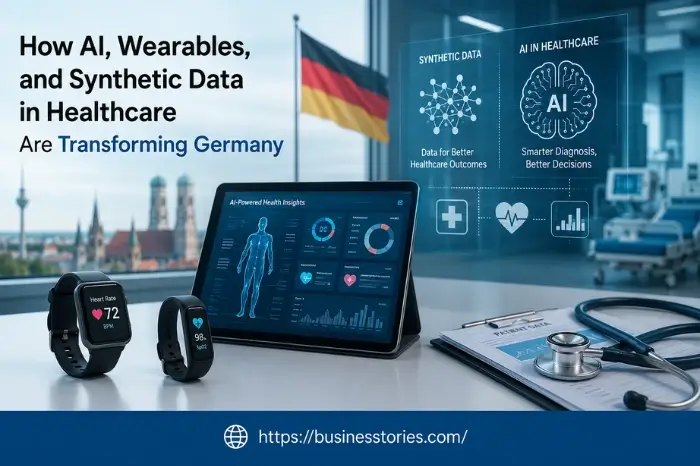
AI, wearables, and synthetic data in healthcare are changing care in Germany. They help doctors, patients, and researchers work faster and smarter. They also make care more personal. As a result, the health system can respond better to real needs.
Germany has a strong healthcare system. However, it also faces clear pressure. The population is aging. Costs are rising. Staff are busy. So, the country needs new tools that can support care without adding more strain.
That is where these three technologies matter. AI can spot patterns in data. Wearables can track health every day. Synthetic data can help teams test tools without using real patient records. Together, they support safer and smarter digital health.
This article explains how these tools are helping Germany. It also shows why they matter now. In addition, it gives simple ideas you can use to understand the shift.
1. Why Germany Needs New Health Tools
Germany has a strong medical system. Still, it faces real problems.
- First, more people now need long-term care.
- Second, many clinics and hospitals have too much work.
- Third, health data often stays in separate systems.
Because of these issues, care can feel slow or split up. However, digital tools can help. AI can support better decisions. Wearables can give more useful health updates. Synthetic data can help teams build new tools in a safer way.
Germany is also known for careful rules. That is a positive thing. Yet, it can slow down new ideas. Therefore, the best tools are the ones that protect privacy and still improve care. This trend is one reason why AI, wearables, and synthetic data in healthcare fit so well in Germany.
There is also a bigger shift happening. More people now want care that is easy to access and more personal. They want help before small issues turn into big ones. They also want tools that fit into daily life. Therefore, the demand for smarter health tech keeps growing.
A useful insight here is simple: Germany does not need more data alone. It needs better use of the data it already has. That is precisely where these tools can make a difference.
2. 5 Ways AI Is Improving German Healthcare
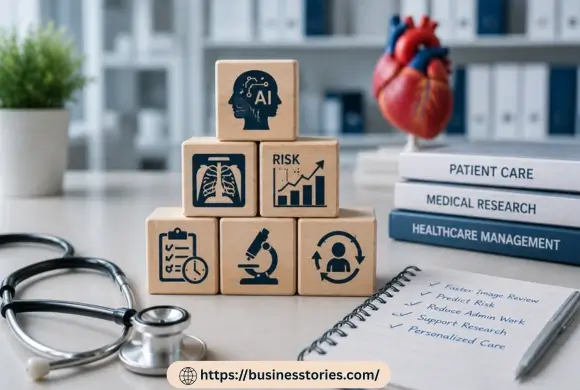
AI is becoming more useful in hospitals, clinics, and research teams. It does not replace doctors. Instead, it helps them work with more speed and focus.
1. It supports faster image review
AI can scan medical images and flag possible problems. For example, it can help with X-rays, CT scans, and MRIs. As a result, doctors may locate issues sooner.
2. It helps predict risk
AI can study large data sets and identify patterns. Then, it can help predict who may face higher health risks. This is useful for heart disease, diabetes, and other long-term conditions.
3. It reduces admin work
Hospitals manage many tasks every day. However, AI can help with scheduling, sorting data, and planning resources. That allows staff more time for patients.
4. It supports research
Researchers need to study large amounts of medical data. AI can help them do that faster. Therefore, AI can accelerate the progress of trials, studies, and care models.
5. It helps with personal care
AI can also help match care plans to a person’s history and needs. This supports precision medicine and data-driven healthcare.
The most important point is this: AI works best when it solves one clear task. It does not need to do everything at once. In fact, simple use cases often deliver the strongest results.
3. How Wearables Are Changing Daily Care
Wearables are making health tracking more regular. Instead of waiting for clinic visits, people can now track health every day. That is a big change for care in Germany.
1. They track health over time
Smartwatches and fitness bands can measure heart rate, sleep, steps, and activity. Some can also track other health signs. Because of that, patients and doctors can see patterns more clearly.
2. They support remote care
Wearables help doctors follow patients from a distance. This is useful for older adults and people in rural areas. It also helps when visits are difficult to schedule.
3. They can spot change early
A small shift in heart rate or activity may show a bigger issue. So, wearables can help people act sooner. That can lead to better outcomes.
4. They improve patient involvement
When people see their health data, they often pay more attention. As a result, they may sleep better, move more, or manage stress better.
5. They support real-world research
Wearables collect data from daily life, not just from clinics. Therefore, researchers obtain a fuller view of how health works in the real world.
A unique insight here is that wearables do more than track. They can change habits. When people can see their numbers, they often feel more in control. That sense of control matters a lot.
4. Why Synthetic Data Matters So Much
Synthetic data is fake data that looks real. It does not come from actual patients. Nevertheless, it still helps teams test and build health tools.
1. It protects privacy
Germany has strict data rules. That is why synthetic data is useful. It lets teams work without exposing real patient records.
2. It helps build AI tools
AI often needs large data sets to learn. However, real medical data can be difficult to use. Synthetic data helps teams start testing early.
3. It supports teamwork
Hospitals, startups, and researchers can share synthetic data more easily. So, they can work together without the same privacy risks.
4. It helps rare disease work
Some medical problems do not have much data. Synthetic sets can help fill gaps and support research in those areas.
5. It lowers early friction
Teams can move faster at the start because they do not need to wait as long for access to real records.
The main insight is simple. Synthetic data is not a replacement for real care data. Instead, it is a safe step that helps new ideas grow. That makes it very useful in Germany, where trust matters a lot.
5. How These Tools Work Better Together
The real change comes when these three tools work as one system. Each one plays a different role. However, together, they create a much stronger model for care.
1. Wearables collect daily signals
They capture health data from daily life. This helps show trends over time.
2. AI turns that data into insight
AI can study the signals and find patterns. Then, it can support better decisions.
3. Synthetic data helps development
Teams can use synthetic data to train and test tools safely. So, they can move faster without risking privacy.
4. Chronic care becomes stronger
This mix is especially helpful for long-term conditions. For example, it can support care for diabetes, heart disease, and high blood pressure.
5. The health system becomes more connected
When data, devices, and models work together, care becomes smoother. In turn, that helps hospitals, doctors, and patients.
A fresh insight is that the change is not only a tech shift. It is a care flow shift. The value appears when data moves from the person to the model, to the doctor, and back to the person again.
6. What Germany Still Needs to Scale
Germany has strong potential. However, it still faces a few key barriers.
1. Better data sharing
Health data is often spread across many systems. Therefore, better connection tools are needed.
2. More trust in AI
Doctors will use AI only if they trust the results. So, tools must be clear, tested, and straightforward to explain.
3. Better user design
Patients should not feel confused by wearables. Instead, the tools should feel simple and useful.
4. Stronger support for startups
New health tech companies need funding, guidance, and access to real care settings.
5. Smart rules and good timing
Rules must protect people. At the same time, they should not block useful change. That balance is important.
The most significant lesson here is that scale is not just about tech. It is about people, process, and trust. Without those, even effective tools can fail.
Conclusion
AI, wearables, and synthetic data in healthcare are helping Germany move toward better care. AI improves speed and insight. Wearables bring health tracking into daily life. Synthetic data helps teams build tools safely. Together, they support a more modern health system.
Germany does not need technology for its own sake. It needs tools that fit real care needs. That is why trust, privacy, and clear value matter so much. When doctors use these tools well, they can work better, patients can stay informed, and researchers can move faster.
The path forward is clear. Start small. Focus on one problem. Measure results. Then grow from there. That is how digital health becomes real change.
If you work in healthcare, tech, or policy, now is a good time to explore where these tools can help most. In Germany, smart use of data—not data alone—will shape the future of care.
FAQs
1. How do AI and wearables help healthcare in Germany?
AI, wearables, and synthetic data in healthcare help by tracking health, spotting risks, and supporting faster care decisions.
2. Why is synthetic data useful for German hospitals?
Synthetic data helps with privacy-safe healthcare innovation because it lets teams test tools without using real patient records.
3. Can wearables improve long-term care in Germany?
Yes. Wearable health devices can show daily patterns, which helps doctors manage chronic conditions more effectively.
4. Does AI replace doctors in healthcare settings?
No. AI in healthcare supports doctors by analyzing data, but people still make the final medical decisions.
5. What is the most significant barrier to digital health in Germany?
The main barrier is system connection. For digital health in Germany to grow, we need better data flow, trust, and clear rules.

Senior SAP Consultant with 10+ years of experience delivering end-to-end enterprise solutions in the IT industry.