
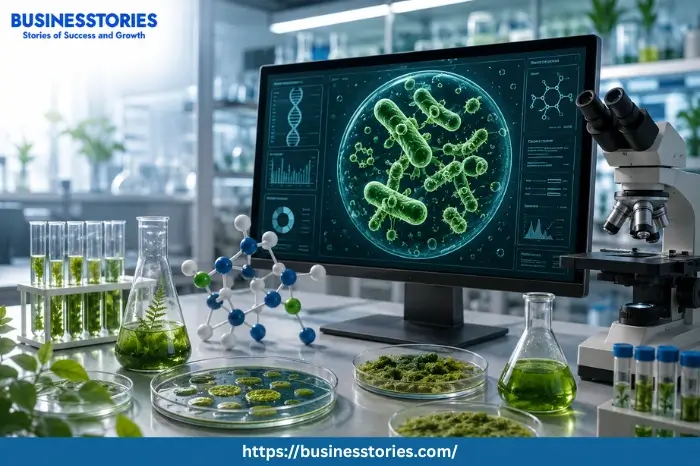
Science is entering a new phase. And it is moving fast. Today, scientists do not just read the code of life. They write it too. In fact, they use AI to design tiny living cells from scratch. So, the generative biology boom has arrived. And it is changing how we grow food. It is changing how we heal the sick. And it is changing how we fight climate change.
What factors are contributing to the accumulation of large amounts of biodata without significant cost shifts? It is the mix of three key tools.
- First, there is AI that can plan out living systems.
- Next, CRISPR gene editing makes precise cuts in DNA.
- Finally, there is synthetic biology, which builds life in a way similar to how we build cars.
Together, these tools have opened a new market. And experts think it will be worth more than five billion dollars by 2030.
But the generative biology boom is not just about cash. It is about resolving real problems. Farmers need to grow more food with fewer harsh chemicals. Sick people need new drugs that truly work. And the planet needs real help with a warming climate. So, AI-made microbes are here to help meet these big needs.
In this article, we will explore what the generative biology boom really means. We will see how it is reshaping farms, clinics, and climate science. We will also look at the big debates around patents, safety, and fair access. Let us dive into the world where AI meets life itself.
What Is the Generative Biology Boom?
In simple terms, the generative biology boom refers to the emergence of AI-generated life. In the past, a scientist had to guess what a gene might do. Then they ran slow, costly lab tests. Now, though, AI models can scan giant piles of DNA data. And in just days, they can plan out new proteins and new microbes.
Think of it like a chatbot. A chatbot writes text when you give it a prompt. In the same way, a biology AI writes gene code when you give it a goal. You might say, “Make a bug that eats methane gas.” The AI then begins to work. It picks the best DNA parts and tests them in a virtual space. Then it hands over a design. Thereafter, the lab crew constructs the actual microbe.
This is not a far-off dream. Ginkgo Bioworks already screens well over one hundred thousand microbe designs each month. And they use AI to do it. So, the pace of discovery has jumped by ten times or more. What once took years now takes weeks.
Why Is This Boom Happening Now?
Several trends have lined up at the right time.
- First, the cost of reading DNA has dropped more than ninety-nine percent over twenty years. Because of these advancements, we now have huge gene libraries to learn from.
- Second, cloud computing is cheap and quick. So, AI models can train on big piles of biodata without huge cost.
- Third, CRISPR tools are now sharp and mature. And they let scientists edit genes with high skill.
Additionally, the world is in need of solutions. The climate is heating up. Pests are growing tough against old sprays. And new bugs that make people sick keep appearing. Therefore, states and investors are pouring funds into this field. In short, the generative biology boom is real. And it is only the beginning.
Smart Microbes for Farming That Replace Chemicals
Farming is facing significant challenges. The world’s people are heading toward ten billion. Yet, healthy soil is eroding fast. For decades, farmers leaned on harsh chemical feeds. But these feeds foul rivers. These chemicals destroy the microorganisms in the soil. And they pump out gases that heat the Earth. So, the hunt for a clean fix is on. And the generative biology boom has an answer.
AI-made microbes can now take the place of chemical inputs. For example, some bug-sized helpers pull nitrogen straight from the air. Then they feed it to crops through the roots. This path is clean and safe. And it does not hurt the soil. In the same way, other microbes act like tiny guards. They shield crops from fungi and bugs without any fake sprays.
A firm called Pivot Bio leads this push. Their nitrogen-fixing microbes already work on millions of acres of U.S. farmland. Farmers just coat their seeds before planting. Thereafter, the tiny helpers stick with the roots all season. The result is simple and strong. Farmers cut down on fake feeds. They save cash. And they still get excellent yields.
Furthermore, Bayer has teamed up with bio-startups to explore microbial crop guards. They aim to phase out old chemical sprays in the next ten years. So, the farm of the near future looks quite different. Instead of trucks spraying harsh stuff, we will see seed wraps packed with live, helpful bugs. And it is the generative biology boom that made this real.
How AI-Designed Microbes Help Health Care
Your body holds trillions of tiny bugs. In fact, there are more of them in your gut than human cells in your whole frame. And these small guests shape your health in big ways. They tune your mood. They steer your immune guard. And they aid how you digest food. So, scientists now ask, can we code these bugs to beat disease?
Thanks to the generative biology boom, the answer is yes. Today, labs build live drugs. These are modified bugs that enter your body and address a specific problem. For instance, Synlogic made a drug that helps treat PKU. PKU is a rare condition in which the body cannot break down a specific component of food. However, the live drug bug effectively performs its function within the gut.
The next edge is even more impressive. It is called the gut digital twin. Scientists can now build a virtual map of one person’s gut world. Then they first test cures on that twin. Only the effective treatments proceed to be tested on the actual body. So, care gets sharper. And it gets safe.
Even though cancer care gains from this boom. Some tweaked bugs now grow right inside tumors. They pump out signals that wake up the body’s own immune guards against the cancer. And since the bugs stay in the tumor spot, healthy parts stay safe. In short, this treatment is not just a new pill. It is a brand new way to think about cure and care.
Climate Fix Powered by Tiny Bugs
A hot planet presents the greatest challenge of our time. Cutting new smoke is just half the job. We must also pull old carbon from the air. But the old ways to do this task are slow and cost a lot. The generative biology boom, though, points to a faster road.
Made-to-order bugs can act like tiny, carbon-hungry works. For instance, some bugs eat methane gas. And methane traps far more heat than plain carbon dioxide. So, firms like Windfall Bio now build bugs that feast on methane at dairy sites and waste dumps. Then, the bugs turn that gas into safe, soil-rich bits.
Another big chance lies in sea algae. AI-made algae strains pull plain carbon from the air far faster than trees. After they grow, we can use the algae mass to make green plastics, green fuels, or even food-grade proteins. So, we turn a waste gas into a useful stock. We can also apply this method on a large scale.
Some firms also explore bugs that make carbon-negative goods. LanzaTech, for example, uses tweaked bugs to turn waste gas from steel plants into fuel-grade ethanol. Then, that ethanol goes into jet fuel, scent oils, and even clothes. As a result, the entire process of producing our products can be made more environmentally friendly. And all of this starts with one tiny, AI-built cell. In short, the generative biology boom is one of our best tools to cool the Earth.
The Big Patent Fight: Who Owns AI-Made Life?
Each new gold rush brings a land grab. And the generative biology boom is no new thing. Firms race to file patents on AI-made gene strings. However, the situation presents a challenging dilemma. Who owns a life form dreamed up by a smart code?
Currently, patent law is not the same in each land. In the United States, you can patent a changed bug if it is far from wild type. But what if the AI does nine-tenths of the brain work? Is the AI the true maker? Or is it just a tool, like a lamp? Courts still fight over this point.
The CRISPR patent dispute foreshadowed the chaos that lay ahead. Two big camps fought for years over who made the key cuts. The law fees ran past tens of millions. Now, the generative biology boom opens a far wider field of claims. So, the next IP fight will likely be much bigger.
There is also a push for free and shared bio-designs. Some say life-saving gene plans should belong to all. And they point to free software as a guide. But backers want cash returns. So, a deep tug exists between shared good and private gain. How this knot is cut will shape the field for a long time.
The Nagoya Treaty adds more weight yet. This world pact says each land has rights over the wild gene stuff found inside its borders. So, if a firm takes a soil bug from Brazil to build a new product, then Brazil may own a cut. And that means world bio-trade will need fresh rules—and soon.
Key Players in the Generative Biology Boom
| Company | Core Work | Headquarters |
| Ginkgo Bioworks | AI hub for bug design and screening | Boston, USA |
| Pivot Bio | Nitrogen-fixing microbes for croplands | California, USA |
| Synlogic | Live drugs for rare gut health flaws | Massachusetts, USA |
| LanzaTech | Gas-eating bugs that turn waste to fuel | Illinois, USA |
| Windfall Bio | Methane-munching bug fixes for farms | California, USA |
| Isomorphic Labs | AI-driven drug plans (from Alphabet) | London, UK |
| Bayer / Leaps | Funds and builds microbial crop guards | Germany |
Safety, Rules, and Fair Access in the Generative Biology Boom
Any tool this strong needs firm guard rails. The rules are still being developed. The EPA checks on farm-use bugs. The FDA handles live drugs. But AI-made bugs do not fit old box checks. So, fresh frames are being built — but at a slow pace.
Safety is the top fear. What if a made-to-order bug slips into the wild? Could it beat the native bugs? Thus, lab teams put in shut-off switches. For example, they build kill switches that stop the bug if it leaves the work zone. Some bugs even need a fake food that is not found in the wild. So, they cannot live outside the lab.
Fair play is also a key point. Will these high-tech cures reach all people? Or just those with fat wallets? If a live drug costs half a million, then it deepens the rich-poor gap. Just the same, small-scale farms in Africa and Asia must be able to buy cheap, clean bug feeds. The generative biology boom must lift all boats—not just the big, sleek yachts.
Trust from the public is a must. Many folks still fear GMO goods. Therefore, the field must speak with clear and true words. They must say what AI bugs do. And they must show how they are checked for harm. Without trust, the best tools will face strong pushback. But with open talk and fair reach, this boom can truly help the whole world.
Conclusion: Why the Generative Biology Boom Matters Now
The generative biology boom is not a tale of the far-off future. It is here right now. And it touches each part of daily life. It hands the farmer a clean way to grow food. It provides the sick with a new opportunity for healing through live drugs. And it gives the world a real tool to cool the hot climate. All of this progress flows from one clean thought: we can now write the code of life itself.
But with immense might comes a deep call to care. Therefore, we must craft wise rules. We must push for fair access to all groups. We must guard the wild world while we test new tools. And we must have fair and real talks about both the risk and the prize.
The next ten years will be key. The paths we choose now will determine the direction for the rest of this era. So, stay alert in this area. Ask sharp questions. Support the scientific research that benefits the entire group. And watch as this tale turns. The generative biology boom is just at its start. And you are part of the plot.
Frequently Asked Questions
Q: What is the generative biology boom, and how does it work in plain terms?
A: Generative biology uses AI to design new DNA, proteins, and live cells. It learns from the code of wild-type organisms. Then it writes new code to do specific jobs, like eating waste gas or fixing crop soil.
Q: How do AI-made microbes help farms grow more food with less harm?
A: These smart bugs pull nitrogen from the air for crops. They also shield plants from pests. Thus, farms cut harsh chemical use, save cash, and boost long-term soil health.
Q: Are live drug microbes safe to put inside the human body?
A: Yes, they pass long and strict clinical checks. They also have built-in kill switches. So, they work only in the right spot and stay safe for the whole time.
Q: Who gets the patent if a smart AI model designs a brand new life form?
A: This area is still a gray zone in law. Currently, you can own a changed bug. But courts have not yet ruled whether an AI can be named as the true brain or co-maker.
Q: How large will the generative biology boom market grow in the next few years?
A: Most guides point to a market of over five billion by 2030. It spans farms, health, clean tech, and green goods—all in a rapid climb.

Tabassum Shaik is an Author, Researcher, and SEO Specialist with over 8 years of experience creating informative content on business, startups, entrepreneurship, marketing, technology, and digital trends. She specializes in researching industry trends and transforming complex topics into practical, easy-to-understand insights. Her goal is to help readers stay informed, learn new ideas, and make better business decisions.