
Introduction
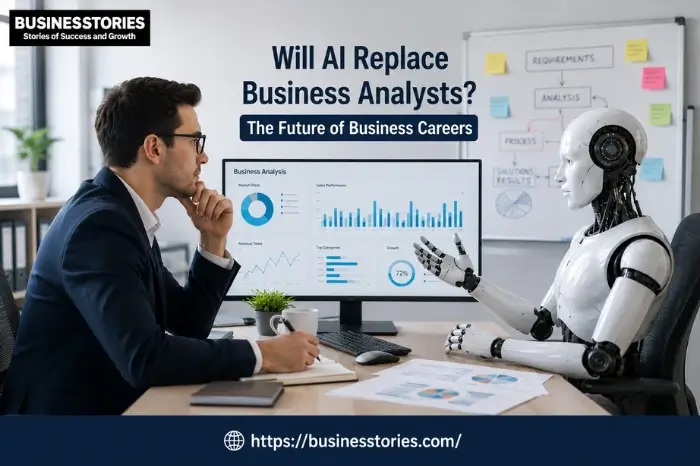
Will AI replace business analysts? This is a fair question. AI can now sort data, write summaries, and find patterns fast. So, you may wonder whether businesses still need analysts.
However, the answer is not simple. AI can help with many tasks, but it cannot fully replace human judgment. It does not understand office politics, team stress, or hidden business needs very well. Furthermore, it cannot build trust the way people can.
For that reason, the role is changing, not ending. Business analysts who learn to use AI will likely do better than those who ignore it. In other words, the job is shifting toward more thinking and less routine work.
This article explains what AI can do, what it cannot do, and how you can stay ready for the future. It uses simple words, clear headings, and practical tips. So, if you want to know whether business analysis is still a strong career, this article is for you.
1. Will AI replace business analysts?
AI is strong, but it cannot do the full job of a business analyst. It can speed up work, and it can handle repetitive tasks. However, it still struggles with human context.
For example, AI can summarize a meeting. It can also draft a report or identify trends in data. That is useful. Yet, it cannot always tell why a problem is occurring. It also cannot judge what a team should do next.
Business analysis is more than data. It is also about asking the right questions, talking to people, and making sense of mixed signals. Therefore, the analyst still matters.
A beneficial way to consider it is this: AI is a helper, not a full replacement. It can save time, but it cannot lead a difficult business discussion. It also cannot notice when a stakeholder is unsure or when a request hides a more profound need.
What AI can do well
- Summarize long notes
- Draft first versions of documents
- Spot data patterns
- Group customer feedback
- Automate routine reports
What AI still cannot do well
- Read office politics
- Build trust
- Handle vague goals
- Resolve conflict
- Make smart trade-offs
So, instead of replacing business analysts, AI is more likely to change how they work. That is an important difference. It means the role will stay, but the tasks will shift.
2. Which Business Analyst Tasks Are Most at Risk?
Some business analyst tasks are easier for AI to handle than others. In general, the most at-risk tasks are simple, repeated, and rule-based. For example, AI can help with note-taking, report drafts, and basic data checks.
Because these tasks follow clear steps, software can do them quickly. As a result, analysts may spend less time on manual work and more time on deeper work. That is a positive thing if they adjust well.
On the other hand, tasks that need human judgment are much safer. Stakeholder interviews, conflict handling, and business case thinking still need people. AI can support these tasks, but it cannot lead them well.
Tasks likely to change first
- Meeting summaries
- Requirement drafts
- Basic reporting
- Process notes
- Data cleanup
Tasks that still need human skill
- Talking with stakeholders
- Solving team conflict
- Setting priorities
- Explaining trade-offs
- Leading change
For example, a company may use AI to pull themes from customer feedback. However, a business analyst still needs to decide which themes matter most. They must then justify why those issues should take precedence.
The future, therefore, is not “AI versus analyst.” Instead, it is “AI plus analyst.” That combination will shape the job ahead.
3. Why Human Skills Still Matter in the AI Era
Even with better AI tools, human skills still matter a lot. Why? Business problems inherently involve human interactions. They involve emotion, pressure, and different goals. AI can process data, but it cannot feel the room.
Business analysts often act as bridges between teams. They speak with leaders, users, tech teams, and operations staff. Therefore, they need clear speech, patience, and strong listening skills. These skills help them identify the real problem, not just the one on the surface.
For example, a manager may say, “We need faster reporting.” That sounds simple. But the real issue may be poor data flow, weak process design, or unclear ownership. A capable analyst can uncover that. AI may not.
Human skills that matter most
- Critical thinking
- Empathy
- Communication
- Negotiation
- Judgment
Why these skills are growing in value
- Teams move faster now.
- Business needs change often.
- AI creates more output
- People still need trust.
Furthermore, trust is a big point. Leaders want answers, but they also want to know that the answers make sense. They want someone who can explain the risks and the trade-offs. That is where a business analyst shines.
So, while AI can help with speed, humans still bring meaning. And in business, meaning matters.
4. What Skills Business Analysts Need to Stay Relevant
If you want to stay strong in this field, you should build new skills now. First, keep your core BA skills. These include problem-solving, process mapping, and clear writing. Then, add AI-related skills on top.
You do not need to become a developer. However, you should know how to use AI tools in smart ways. For instance, you can use them for meeting notes, research, and first drafts. Then, you can review and improve the output.
This mix of old and new skills will help you stay useful. It will also help you move into better roles over time. In many firms, analysts who understand both business and tools get more trust.
Skills to build now
- Problem framing
- Data reading
- Process improvement
- AI tool use
- Prompt writing
- Clear storytelling
Easy ways to learn
- Use AI for one work task each day
- Practice writing better user stories
- Study one industry in depth
- Learn one dashboard tool
- Track your own business impact
A smart rule is this: do not only learn how to analyze work. Learn how to improve your work too. That skill will matter more as AI grows.
5. Future Business Analyst Roles Will Look Different
The future of business analysis will not be smaller. It will be different. In many companies, the title may stay the same, but the work will change. Analysts will likely do more strategy, more tool support, and more cross-team work.
For example, some analysts may become product partners. Others may work in digital change, data insight, or process improvement. This shift is already happening. As companies adopt more AI, they need people who can guide its use.
That means the business analyst role may grow wider. It may touch more parts of the business. It may also become more tied to decision-making.
New directions for business analysts
- AI business analysis
- Product support
- Process improvement
- Data insights
- Digital change work
Where the biggest chance is
- Checking AI output
- Defining business needs
- Measuring impact
- Improving workflows
- Helping teams adapt
A unique insight here is that AI creates a trust gap. Machines can give answers fast. But leaders still need a human to verify those answers. Business analysts can fill that gap. So, instead of losing value, strong analysts may gain it.
6. How to Future-Proof Your Business Analyst Career

The best time to adapt is now. Do not wait until AI changes your role for you. Instead, start learning how to use it in your current work. That will make the shift easier.
First, use AI tools to save time on simple tasks. Then, spend that saved time on analysis, thinking, and speaking with people. That is where your value grows. Next, focus on business results. Learn how your work helps revenue, cost, speed, or customer service.
Furthermore, keep learning. Follow your industry. Read about AI trends. Watch how your company uses new tools. The more you understand the business side, the more helpful you become.
Simple steps to take this month
- Try one AI tool at work
- Improve one process
- Interview one stakeholder
- Read one AI article
- Update your resume with results
If you can show real impact, you will stand out. In a world where AI makes quick outputs effortless, proof of value becomes more important.
So, stay curious. Stay flexible. And keep learning. That is the best way to future-proof your career.
Conclusion
Will AI replace business analysts? Not fully. AI will change the job, and it will remove some routine work. However, it will not replace the human parts of business analysis. People still need judgment, context, empathy, and trust.
That means the role is not going away. Instead, it is becoming more strategic. Business analysts who learn to use AI will likely become faster and more valuable. They will spend less time on simple tasks and more time on decisions that matter.
If you work in this field, the opportunity is your chance to grow. Learn AI tools. Build stronger communication skills. Focus on business results. Furthermore, keep asking better questions. These habits will help you stay useful in the years ahead.
So, the real question is not just whether AI will replace business analysts. The better question is, will you adapt quickly enough to stay ahead? If you do, your career can stay strong and relevant in the future of business careers.
FAQs
Q1. Will AI replace business analysts in most jobs today?
AI can automate some business analyst tasks, but it cannot fully replace human judgment, stakeholder talks, or business context in most roles.
Q2. Which business analyst tasks are easiest for AI to handle?
AI works best on tasks that automate business analysis, such as summaries, drafts, reports, and basic data checks. AI is less effective in handling conflict resolution and understanding context.
Q3. What skills help business analysts stay useful with AI?
Future-proof business analyst skills include critical thinking, communication, process improvement, and smart use of AI tools in daily work.
Q4. Will AI create new career paths for business analysts?
Yes, AI business analyst career paths are growing in product, data, and change roles where humans guide decisions and check results.
Q5. How can beginners prepare for an AI-driven BA career?
Start learning business analysis in the AI era by using AI tools, studying your industry, and improving your writing and stakeholder skills.

Senior Business Analyst / Prduct Owner with 12+ years of experience driving data-driven insights, optimizing business processes, and delivering strategic IT solutions.