A Desi Spark That Turned into a National Phenomenon
Picture a family get-together in Punjab. Someone mixes cumin, lemon, ginger, and rock salt into a fizzy drink. Everyone loves it. So far, it sounds like a normal Sunday. However, that drink turned into Lahori Zeera, one of India’s fastest-growing soft drink brands.
In fact, its parent company, Archian Foods, closed FY26 with roughly ₹775 crore (about $90 million) in revenue. It also won a valuation of about ₹2,800 crore (around $329 million) in 2025.
So how did three cousins pull off this feat against Coca-Cola and PepsiCo? In this listicle, you’ll find the five big moves behind the Lahori Zeera success story. Plus, each section ends with steps you can use in your own business.
Also Read: BANG Curry Kits: From £650 Startup to Food Success
1. The Home Kitchen Recipe That Started Lahori Zeera
Every great brand starts with a small spark. For Lahori Zeera, that spark came from a kitchen.
A Family Drink With Business Potential
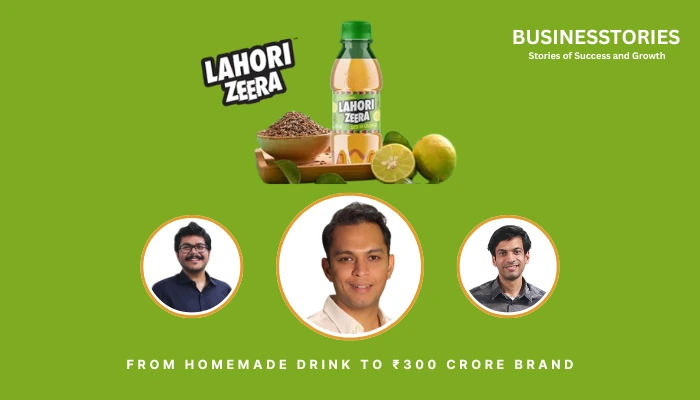
The founders are three cousins: Saurabh Munjal (CEO), Saurabh Bhutna, and Nikhil Doda (COO). Doda’s family had a long habit of home cooking. One day, he served a homemade zeera (cumin) drink to his two cousins. They tasted it and saw a business right away.
The recipe was simple. It mixed cumin, lemon juice, black pepper, dry ginger, and rock salt, with a little sugar and fizz. In North India, rock salt is also called Lahori namak. That is how the brand got its name.
Then, in 2017, the cousins launched the drink from a small plant in Punjab. Their company, Archian Foods Private Limited, became the parent of the Lahori brand.
Why a Familiar Taste Worked
Here is the clever part. Lahori Zeera did not invent jeera soda. Instead, people had sipped it at roadside stalls and dhabas for decades. Yet big soft drink companies mostly sold cola, orange, and lemon flavors.
As a result, there was a huge gap. Millions of Indians loved a taste that no major brand sold in a bottle. Doda later said that ethnic Indian drinks were a big category that nobody was focusing on.
Our take: Most startup stories praise “new” ideas. But Lahori Zeera shows that bottling an old habit can beat inventing a new one. After all, the founders didn’t need to teach anyone to like cumin. They only needed to make it easy to buy.
Steps You Can Take
- First, list the foods or habits people in your area already love.
- Next, check if any big brand sells them in a clean, ready-to-use form.
- Finally, test your version with family and friends before you spend money.
2. The ₹10 Price Point That Made Lahori Zeera Easy to Buy
Once the recipe was ready, the founders made their most important choice. They priced a 160 ml bottle at just ₹10 (about 12 US cents).
Why ₹10 Matters in India
India is a very price-conscious market. So, a ₹10 coin or note is something almost everyone carries. For that reason, the drink became an effortless impulse buy. A student, a truck driver, or an office worker could easily grab one without hesitation.
Furthermore, the low price helped the brand win in small towns. Many shoppers in Tier 2 and Tier 3 cities skip pricier soft drinks. But they will happily spend ₹10 on a cool, tasty drink on a hot day.
Speed on the Shelf
Here is a striking detail. Each bottle has a shelf life of three months. Yet, Munjal has said it usually sits on the shelf for only a day or two. In other words, shops sell out fast.
That speed helps everyone. For example, shopkeepers earn quickly, so they keep ordering. Meanwhile, distributors see steady demand, so they push the brand harder.
The Giants Followed
Later, the ₹10 price became a battleground. In 2025, Coca-Cola and PepsiCo launched ₹10 packs of Coke, Thums Up, Sprite, and Pepsi. Earlier, those drinks cost ₹12 or more. Clearly, a small Punjab brand had forced the world’s biggest drink makers to change their prices.
Our take: Most people see ₹10 as a pricing decision. However, it is really a distribution tool. A shopkeeper never has to explain a ₹10 drink or give change. So, the price itself makes the product easier to stock and sell.
Steps You Can Take
- First, identify the “magic” price that your buyers are willing to pay without hesitation.
- Then, design your product size and costs around that price, not the other way around.
- Furthermore, track how fast your stock sells, not just how much you sell.
3. Distribution First, Advertising Later
Many startups spend big on ads before customers can even find the product. Lahori Zeera did the opposite.
Building the Network Before Launch
In fact, the founders started building their distribution channel before the product launched. They focused on small neighborhood shops, called kirana stores. These shops sell most of India’s packaged drinks.
By 2025, the brand reached 18 states through more than 2,000 distributors and over 5 lakh (500,000) retail outlets. Today, general trade is still its main sales channel. Meanwhile, quick commerce, modern trade, and institutional sales are expected to bring in about 8–9% of revenue.
Profit Without Big Ad Budgets
Surprisingly, Lahori Zeera stayed profitable in its early years with no marketing spend. It had no film stars and no huge TV campaigns. Even in 2026, the brand chose to skip IPL advertising, the biggest ad window for drink brands in India.
Instead, the founders let the bottle do the talking. Doda has said that once people taste the drink and see it everywhere, they come back for more.
A Business Funded by Its Buyers
Here is a lesser-known fact. Doda once described Lahori as a “negative working capital business.” That means distributors paid for stock in advance. So, the company got cash before it even shipped the drinks.
Our take: This point rarely gets attention. However, it may be the real secret of the early years. Because buyers paid upfront, the cousins could grow for five years without outside investors. Put simply, their customers funded the company.
Steps You Can Take
- First, pick one sales channel and dominate it before adding others.
- Next, offer distributors a fast-selling product, so they agree to pay in advance.
- Then, spend on ads only after people can find your product everywhere.
Also Read: Mam Sank: From Digital Street Food to a Traditional Cuisine
4. How Lahori Zeera Raised Funding on Its Own Terms
Most consumer startups raise money first and chase profit later. In contrast, Lahori Zeera reversed that trend.
The Bottle Became the Pitch
In 2021, an investment manager in Chandigarh spotted Lahori bottles on store shelves. He then called the founders. They admitted that money was holding them back. So, he connected them to Verlinvest, a Belgium-based private equity firm.
After studying the market, Verlinvest invested $15 million in January 2022 for a minority stake. At the time, the brand had grown to about ₹80 crore in revenue in FY 21.
Our take: Notice what happened here. The founders never chased the investor. Instead, the product on the shelf did the pitching. For a consumer brand, being visible in stores can be the best pitch deck you ever make.
The Series B Leap
Next came a much bigger round. In May 2025, Motilal Oswal’s private equity arm invested ₹200 crore (about $23 million). The deal valued the company at about ₹2,800 crore, which is roughly triple its 2022 value.
Even so, the founders kept control. After the round, they still owned about 70% of the company. Verlinvest held about 19.6%.
Lahori Zeera Revenue Growth at a Glance
| Fiscal Year | Revenue | Net Profit |
| FY21 | ~₹80 crore | — |
| FY23 | ₹212 crore | ₹7.6 crore |
| FY24 | ₹312 crore | ₹22.5 crore |
| FY25 | ₹535–543 crore | ₹25 crore |
| FY26 | ~₹775 crore | — |
As you can see, revenue grew about 73% in FY25 alone. However, profit stayed flat that year because costs rose with expansion.
Steps You Can Take
- First, reach profitability before you raise money, if your business allows it.
- Then, if your business allows it, raise funds to grow faster rather than just to survive.
- Finally, keep control of big decisions by guarding your ownership.
5. Taking On Coke, Pepsi, and Campa in the Jeera Wars
Today, Lahori Zeera is no longer a small regional brand. In fact, reports describe it as India’s fourth-largest carbonated drink player.
Winning Market Share
According to NielsenIQ data, Reliance’s Campa and Lahori Zeera together doubled their market share to nearly 15% between January and September 2025. A year earlier, that share was about 7%. Meanwhile, Coca-Cola and PepsiCo’s combined share fell to around 85% of India’s ₹60,000 crore soft drink market.
The Rise of the “Jeera Wars”
Naturally, success attracts rivals. By 2026, Coca-Cola, PepsiCo, Bisleri, Parle Agro, and Dabur all sold jeera drinks. Reliance also reported strong demand for its own jeera beverages.
Still, Lahori stays focused on basics. While big players cut margins to protect shelf space, Lahori says it remains profitable.
The Real Problem: Making Enough
Here is the twist. Lahori’s biggest hurdle isn’t demand. Instead, it is production. In FY26, the company aimed for ₹800 crore but closed near ₹775 crore. Doda explained that the output was simply all they could manufacture.
So, the company is building fast. It set up a ₹175 crore plant in Lucknow and added third-party bottling units in Bihar, Bengaluru, Agra, Bhopal, and Muzaffarnagar. The goal is to have a bottling unit every 300 km across India. It is now targeting ₹1,200–1,300 crore in FY27, plus a possible move into the UAE and Gulf markets.
The “Zeera Ceiling”
New products are also coming, like Lahori Aamras and Masala Cola. Yet, the flagship still brings in about 90% of revenue.
Our take: The word “Zeera” is both a moat and a ceiling. It provides the brand with strong recall, but it may limit new flavors. So, the next big test is whether “Lahori” can grow into a master brand on its own.
Steps You Can Take
- First, own one clear product before you launch many.
- Next, plan your supply chain early; demand can outrun production.
- Furthermore, expect copycats and build loyalty that they can’t easily replicate.
Conclusion: What the Lahori Zeera Story Teaches Every Founder
The Lahori Zeera journey proves that big brands don’t always need big budgets. Instead, three cousins took a family recipe and bottled a taste India already loved.
Let’s recap the five moves.
- First, they turned a home kitchen experiment into a product with a ready-made audience.
- Second, they locked in a ₹10 price that made the drink an effortless impulse buy.
- Third, they built distribution before advertising, and buyers who paid in advance helped fund growth.
- They maintained roughly 70% ownership by only raising funds after becoming profitable.
- They ultimately challenged Coca-Cola, PepsiCo, and Campa, even compelling the behemoths to lower their prices.
Of course, the road ahead is not easy. The brand must expand production, fight copycats, and prove that “Lahori” can stand beyond “Zeera.” Still, the foundation looks strong. With revenue near ₹775 crore and a ₹2,800 crore valuation, this desi drink has already beaten the odds.
So, what’s the main lesson for you? Solve a real need, price it right, and put it where people shop. Fancy ads can come later.
FAQs About Lahori Zeera
1. Who founded the Lahori Zeera drink brand from Punjab?
Three cousins founded Lahori Zeera in 2017: Saurabh Munjal, Saurabh Bhutna, and Nikhil Doda. Their company, Archian Foods, started with a small bottling plant in Punjab and grew into a national beverage brand.
2. What ingredients go into the Lahori Zeera cumin soda drink recipe?
The Lahori Zeera cumin soda blends cumin, lemon juice, black pepper, dry ginger, and rock salt with sugar and fizz. Rock salt is also called Lahori namak, which gave the brand its distinctive name.
3. How much revenue does the Lahori Zeera company make each year now?
Lahori Zeera’s parent company earned about ₹775 crore in FY26, up from roughly ₹540 crore in FY25. The company now targets ₹1,200 to ₹1,300 crore in FY27 as new bottling plants open.
4. How did the Lahori Zeera startup compete with Coca-Cola and Pepsi?
The Lahori Zeera startup competed by selling a familiar desi flavor at just ₹10 per bottle. It also built deep kirana store distribution first and skipped costly celebrity ads, which kept the business profitable.
5. Is the Lahori Zeera drink available outside India for buyers today?
Lahori Zeera mainly sells within India for now. However, the company is exploring a co-bottling unit in the UAE to serve Indian diaspora demand across Gulf countries, with an international presence targeted by 2028.

Tabassum Shaik is an Author, Researcher, and SEO Specialist with over 8 years of experience creating informative content on business, startups, entrepreneurship, marketing, technology, and digital trends. She specializes in researching industry trends and transforming complex topics into practical, easy-to-understand insights. Her goal is to help readers stay informed, learn new ideas, and make better business decisions.