
Introduction
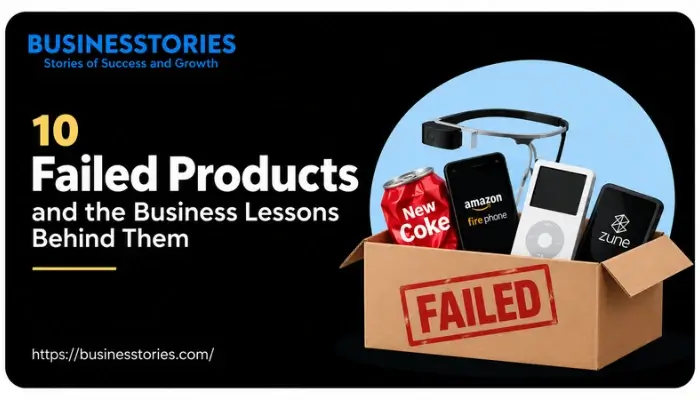
Every entrepreneur wants to launch a product that changes everything. Yet, many great ideas fail in the real world. As a result, studying failed products is one of the smartest things you can do. Every mistake imparts a valuable lesson.
Moreover, these stories are not just history. They show patterns that repeat across industries. Therefore, whether you’re starting a small business or running a big company, you can learn from them. So let’s look at 10 famous failed products and what we can learn from their failures.
First, we’ll see how emotional loyalty matters more than taste. Then, we’ll explore how timing and culture shape success. Next, we’ll learn why simplicity beats complexity. Finally, we’ll discover how safety and trust come before speed.
In short, this listicle gives you clear, actionable insights, all based on real-world examples.
1. New Coke (1985) – Don’t Ignore Emotional Bonds
What Happened
In 1985, Coca-Cola changed its famous recipe. The new drink was sweeter. It was called New Coke. Initially, it appeared to be a wise decision. However, people reacted strongly. Many felt betrayed. In fact, some even started hoarding the old formula.
Why It Failed
Most importantly, customers didn’t just buy Coke for flavor. They bought it for memories. They loved the brand. So when the formula changed, they felt hurt. Even though blind taste tests showed New Coke was better, real customers said no.
The Lesson
Never underestimate emotional loyalty. In other words, people don’t always act rationally. So before changing a beloved product, ask your users how they feel. Furthermore, be ready to reverse course fast if feedback is loud.
Action Steps:
- Survey loyal customers before any change.
- Test emotions, not just tastes.
- Have a backup plan if the market says “no.”
2. Google Glass (2013) – Innovation Must Fit Culture
What Happened
Google launched Google Glass in 2013. It was a wearable device with a screen in front of the eye. It promised to show information hands-free. But soon, people started calling users “Glassholes.” As a result, the product became a joke.
Why It Failed
First, the price was too high, around $1,500. Then came privacy fears. People would rather not be filmed without permission. Meanwhile, the battery died fast. And the design looked strange in public. So, despite being tech-forward, it failed.
The Lesson
Technology must fit the culture. In other words, a cool gadget fails if people feel uncomfortable using it. Therefore, test your product in real life. Furthermore, consider social costs before launching.
Action Steps:
- Run real-world trials before release.
- Add privacy features early.
- Design for comfort and normal use.
3. Amazon Fire Phone (2014) – No Edge, No Success
What Happened
Amazon released the Fire Phone in 2014. It offered unique features like a 3D screen and instant shopping scanning. But sales were weak. After only a year, Amazon discontinued the product. They took a $170 million loss.
Why It Failed
Above all, the phone served Amazon’s goals, not customer needs. It made shopping easier for Amazon, but not for users. Additionally, it only worked on AT&T. As a result, few people switched from Apple or Samsung.
The Lesson
Success in one area does not mean success in another. In other words, e-commerce skills do not equal smartphone skills. Therefore, enter a crowded market only if you have a real edge. Moreover, don’t limit your audience by choosing one carrier.
Action Steps:
- Check real demand before building.
- Avoid exclusive deals that reduce reach.
- Offer a difference people can feel.
4. Microsoft Zune (2006)—Ecosystem Beats Features
What Happened
Microsoft introduced the Zune in 2006. It was meant to beat the iPod. It had a larger screen and wireless sharing. But it never gained traction. Eventually, Microsoft shut it down.
Why It Failed
First, Apple already owned the market. Second, the Zune lacked iTunes and the App Store. As a result, even good hardware could not win. Without a strong ecosystem, users stayed with Apple.
The Lesson
Timing and ecosystem matter more than specs. In other words, being “good” is not enough. You need a reason to switch. Therefore, build an ecosystem from day one. Otherwise, you’re just another option.
Action Steps:
- Study the leader’s lock-in before entering.
- Invest in apps, services, and support.
- Make switching easy and rewarding.
5. Segway (2001) – Hype Can’t Create a Market
What Happened
The Segway launched in 2001. It was promoted as a future transport tool. Experts predicted it would change cities. But in reality, sales were low. Most people still walked or drove.
Why It Failed
For one thing, the price was $5,000. That was too high. Then, there was the awkward look. Cities did not make rules for it. As a result, it never became part of daily life.
The Lesson
Hype alone cannot build a market. In other words, a cool idea is not a useful product. Therefore, test whether people will actually change habits. Moreover, a high price plus low value leads to low sales.
Action Steps:
- Avoid launching on hype.
- Confirm behavior change is possible.
- Price fairly, not based on dreams.
6. Crystal Pepsi (1992)—Novelty Isn’t Value
What Happened
Pepsi launched Crystal Pepsi in 1992. It was clear cola. At first, curiosity drove sales. But after two years, it disappeared.
Why It Failed
People saw a clear drink but tasted regular cola. This confused them. Then, the novelty wore off fast. There was no real reason to buy it again. So, initial buzz turned into silence.
The Lesson
Novelty may start interest, but value keeps customers. In other words, a unique look is not enough. Therefore, focus on real benefits. Moreover, ensure your product matches expectations.
Action Steps:
- Build lasting value, not just first impressions.
- Match look and taste.
- Track repeat purchases, not just trial sales.
7. Juicero (2016) – Simplicity Wins Over Tech
What Happened
Juicero launched in 2016. It was a $700 Wi-Fi juicer. It squeezed packets of fruit. However, journalists found hand-squeezing worked just as well. So, the product became a symbol of waste.
Why It Failed
First, the job was simple. Second, the machine added cost and complexity. Third, the feature offered no real benefit. As a result, even big funding could not save it. The company shut down in 2017.
The Lesson
Technology should remove friction, not add it. In other words, if a manual solution works, a high-tech version is pointless. Therefore, apply the “squeeze test” to every idea. Moreover, never let engineering ego replace real need.
Action Steps:
- Ask if a simpler solution exists.
- Focus on real problems, not imagined ones.
- Validate that tech improves the experience.
8. Samsung Galaxy Note 7 (2016) – Safety First
What Happened
Samsung launched the Note 7 in 2016. It had a powerful battery. But some units caught fire. Airlines banned it worldwide. As a result, Samsung recalled 2.5 million devices. The cost? About $5.3 billion.
Why It Failed
Most importantly, Samsung rushed to beat Apple. In doing so, safety testing was skipped. Consequently, a small defect caused big damage. Trust was lost overnight.
The Lesson
Safety and quality come before speed. In other words, “move fast” is dangerous when lives are at stake. Therefore, never sacrifice testing for a deadline. Moreover, handle recalls with transparency.
Action Steps:
- Set safety thresholds before launch.
- Never cut corners on testing.
- Prepare a clear recovery plan.
9. Windows Vista (2007) – Reliability Over Features
What Happened
Microsoft released Windows Vista in 2007. It promised better security and a modern look. But users hated it. Many PCs ran slowly. Software broke. Pop-ups annoyed everyone. So, most stuck with XP.
Why It Failed
First, Vista needed powerful hardware. Most computers could not run it. Second, it broke compatibility. Third, constant pop-ups frustrated users. So, features became headaches.
The Lesson
For tools, reliability beats fancy features. In other words, people forgive plain products. But they reject broken ones. Therefore, build for real hardware. Moreover, listen to beta testers.
Action Steps:
- Test on average user devices.
- Keep security smooth.
- Treat feedback as a warning.
10. Colgate Kitchen Entrées (1982) – Stay in Your Lane
What Happened
In 1982, Colgate launched frozen dinners. The name was Colgate Kitchen Entrées. The idea? Brush your teeth after eating. But people laughed. Sales dropped fast.
Why It Failed
First, Colgate is known for toothpaste. Not food. Second, the concept made no sense. Third, no one wanted to link brushing with dinner. So, the brand stretched too far.
The Lesson
Brand trust doesn’t transfer easily. In other words, being trusted in one area does not mean trust in another. Therefore, expand only if it fits your core. Or, use a new brand for unrelated products.
Action Steps:
- Test brand fit before entry.
- Expand only where it makes sense.
- Use a separate brand for unrelated categories.
Conclusion
To sum up, these 10 failed products and the business lessons behind them teach us something important. Great ideas are not enough. In fact, many fail because they ignore customers, culture, or value.
So, remember this: emotional loyalty matters more than taste. Timing and ecosystem beat features. Simplicity wins over complexity. Safety comes before speed. And trust must come before hype.
Therefore, before you launch, ask yourself: Does this solve a real problem? Will people actually use it? Is it priced fairly? Does it match my brand?
If you can say “yes” to all four, you’re on the right track. So, learn from past mistakes. Test early. Stay close to your users. That’s how you avoid the same fate.
FAQs
1. What causes most product failures?
Most product failures happen due to poor market fit, bad timing, or ignoring customer needs. In short, failed products often miss real value.
2. How can I avoid failing like New Coke?
Always check emotional loyalty before changing a product. Also, survey users and be ready to reverse course if feedback is negative.
3. Why did Google Glass fail?
It failed because of privacy fears, high cost, and awkward design. In other words, innovation must fit social norms.
4. What lesson did Juicero teach entrepreneurs?
It taught that technology should simplify, not complicate. If a manual method works, a high-tech version adds no value.
5. What can Colgate teach brands about expansion?
Colgate shows that brand credibility does not cross categories. So, stay in your lane—or build a new brand.

Senior Business Analyst / Prduct Owner with 12+ years of experience driving data-driven insights, optimizing business processes, and delivering strategic IT solutions.