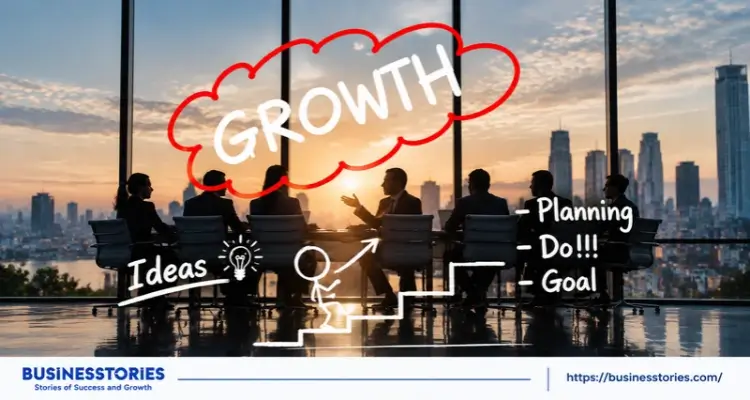
Every business starts with a dream. But dreams fade fast once daily work takes over. Bills pile up, customers call, and the team gets busy. Soon, nobody remembers where the company was supposed to go. That is why you need a vision for future growth.
Simply put, it is a clear picture of what your business will look like in three, five, or even ten years. In short, it tells everyone where you are going and why the trip is worth it.
In this listicle, you will discover what a growth vision really is. You will also see why it matters, with real data to back it up. Then, we will walk through five simple steps to build your own. These steps will assist you in planning with purpose, regardless of whether you own a small store or a rapidly expanding startup.
What Is a Vision for Future Growth in Business?
A vision for future growth is a short, clear picture of where your business wants to be in the future. In other words, it shows what success looks like. For example, it may describe the markets you will serve, the products you will sell, or the changes you will make in people’s lives.
Think of it like a lighthouse. It does not row the boat for you; rather, it guides you in the right direction. However, it shows you which way to steer when the sea gets rough.
The Business Queensland guide, provided by the Australian state government, explains this concept clearly. It calls a business vision your goal for what your business will become. It also says the vision should be the starting point for all business planning.
Vision vs. Mission vs. Growth Plan
These three terms are often confused. So, here is a quick way to tell them apart:
- Vision = where you want to go (the future).
- Mission = what you do every day, and for whom (the present).
- Growth plan = the steps, budgets, and dates that get you there.
In other words, the vision is the dream, while the mission is the daily job. The business growth strategy then turns both into a clear to-do list.
Why It Matters More Than You Think
A clear vision is more than just a useful poster. The data clearly indicates that it is beneficial. In their book Built to Last, Jim Collins and Jerry Porras studied 18 long-lasting “visionary” companies.
From 1926 to 1990, these firms beat the general stock market by 15 times. Meanwhile, their close rivals only outperformed the general stock market by a factor of two.
A vision also keeps people engaged at work. Yet Gallup’s 2026 report found that only 20% of employees worldwide feel engaged. That gap is a big chance for leaders who share a strong vision.
Unique insight: Most listicles treat vision as a statement. Instead, treat it as a decision filter. If a new idea does not move you toward your vision, the answer is “no,” even if it looks profitable today.
Step 1: Know Where You Stand Today
You cannot plan a trip without knowing your starting point. So, the first step is an honest check of your business as it is today.
- First, start with your numbers. Look at sales, profit, cash flow, and customer growth over the last two or three years.
- Next, look at your people, tools, and systems.
- Then ask yourself two simple questions. What are we particularly good at? And where do we continue to struggle?
One classic tip from U.S. Small Business Administration advisers is to look at your business through an outsider’s eyes. After all, owners often get too close to see the cracks.
After that, run a quick SWOT analysis. It covers your strengths, weaknesses, opportunities, and threats. Keep it brief and sincere. For example, a local bakery might list “loyal regulars” as a strength and “no online orders” as a weakness.
Talk to the People Who Know You Best
Your team and your customers see things you miss. So, ask them a few simple questions:
- Why do you buy from us (or work here)?
- What would make you leave?
- What should we be famous for in five years?
Your Action Step
This week, block two hours on your calendar. Then write down three strengths, three gaps, and three trends you see in your market. Consequently, you will possess the foundational elements for your long-term business vision.
Unique insight: Don’t just ask customers what they like. Instead, ask what they would miss if you closed tomorrow. That answer often shows your true strength. Over time, it can become the heart of your whole vision.
Step 2: Choose Your Time Horizon and Study the Future
Next, decide how far ahead you want to look. Most small businesses pick three to five years. On the other hand, larger firms may look ten years or more.
In the book Lead From the Future, Mark Johnson and Josh Suskewicz say that picking a time horizon is the very first task. Once you have selected a time horizon, you should study how your market might change by that future date.
Collins and Porras go further with an idea called the BHAG, or “Big Hairy Audacious Goal.” A true BHAG looks 10 to 30 years ahead. In other words, it is bold enough to excite people, yet clear enough to measure.
Spot the Trends That Will Shape Your Market
Now, look at the forces that could change your industry. For instance, think about:
- New technology, like AI tools and automation
- Shifts in what customers want and how they buy
- New rules, laws, or taxes
- Changes in prices, supply, or competition
For example, think of a travel agency in 2010. If it ignored booking apps, it likely lost most of its walk-in trade within a few years. Agencies that recognized the change early, on the other hand, transitioned to custom trips and group tours.
Then, for each trend, ask one question: “If this happens, what does it mean for us?” Finally, write down both the threats and the new openings. This is the core of effective strategic planning for small businesses.
Your Action Step
List your top five trends. Next to each one, write one risk and one chance. Then circle the two that matter most. As a result, you will know where to aim your vision.
Unique insight: Use two horizons, not one. Set a bold 10-year “north star” and a practical 3-year target. That way, you get both inspiration and focus. The 10-year view keeps you dreaming. Meanwhile, the three-year view keeps you honest.
Step 3: Write a Clear and Inspiring Vision Statement
Now is the moment to articulate your vision for future growth. A positive vision statement is short, clear, and inspiring. Ideally, it fits in one or two sentences.
For instance, look at these well-known examples:
- IKEA: “To create a better everyday life for the many people.”
- LinkedIn: “Create economic opportunity for every member of the global workforce.”
Notice what they share. Both are simple. Both focus on people, not profit. And both are big enough to guide decades of growth.
A Simple Template to Get Started
Try filling in this sentence:
“In [timeframe], we will be [what you want to become] for [who you serve] by [how you create value].”
For example, a fitness studio might write: “In five years, we will be the go-to wellness hub for busy parents in our city, by making healthy living simple and fun.”
Next, share your draft with a few people you trust. Ask if it excites them. If they shrug, keep on editing.
Learn From Microsoft’s Big Lesson
Microsoft once had a famous goal: a computer on every desk and in every home. However, by the late 1990s, it had largely met that goal in rich countries. Later, CEO Satya Nadella said the issue always bothered him.
In his view, the company had mixed up a lasting mission with a short-term goal. So, Microsoft moved to a bigger idea: to empower every person and every organization on the planet to achieve more.
Unique insight: Run the “finish-line test.” Ask: If we hit this vision tomorrow, would we still have a reason to exist? If the answer is no, you have written a goal, not a vision.
Step 4: Turn Your Vision Into Goals and a Growth Roadmap
A vision without a plan is just a wish. So, the fourth step is to break your vision into clear goals.
First, work backwards. Ask: “What must be true in three years for us to be on track?” Then set three to five big goals. Furthermore, make each one SMART: specific, measurable, achievable, relevant, and time-bound.
For example, say your vision is to become the top eco-friendly cleaning brand in your region. Your goals might then look like this:
- Grow online sales by 40% in two years
- Launch three refill products by next spring.
- Win 50 new business clients by year-end
Plan Long, Act Short
Many business coaches suggest a rough plan for three to five years, plus a detailed plan for the next 12 months. This keeps you flexible. After all, the market will change, and so should your plan.
Next, give each goal an owner, a budget, and a deadline. Then track progress every month with a few key numbers, such as revenue, customer count, or repeat sales.
Find Your Growth Gap
Lead From the Future also suggests that you measure your “growth gap.” Simply put, it is the gap between where your current business will take you and where your vision needs you to be. Once you know the size of this gap, you know how big and how fast your new ideas must be.
Unique insight: Make a “stop-doing list,” too. Every new goal needs time and money. So, list two or three things you will stop doing, such as a slow product line or a draining client. As a result, you free up room to grow.
Step 5: Share the Vision, Live It, and Review It Often
A vision locked in a drawer helps no one. Therefore, the last step is to share it widely and bring it to life every day.
Research backs this up. A 2023 University of Florida study looked at how CEOs talk about vision. It found that when leaders share a clear vision, staff find their work more meaningful. As a result, they feel more connected to the company and more engaged.
According to Gallup, global engagement fell to just 20% in 2025. In fact, Gallup puts the cost of this low engagement at about $10 trillion in lost output each year.
How to Bring Your Vision to Life
Here are a few simple ways to keep your vision alive:
- Talk about it often. Mention it in team meetings, onboarding, and reviews.
- Link it to daily work. Show each person how their job helps reach the vision.
- Celebrate wins. Praise team members who act on the vision.
- Make it visible. Put it on your website, office walls, and slide decks.
Review It Every Year
Your vision should be steady, but not frozen. So, review it once a year. Ask: Is it still bold? Does it still fit our market? Are we closer than last year? Also, if big changes happen, like new tech or a new market, update it sooner.
Unique insight: Try the “hallway test.” Every few months, ask a random team member to explain the vision in their own words. If they can’t, the problem is not them. Instead, it means you need to share it more clearly.
Conclusion: Your Vision for Future Growth Starts Today
A strong vision for future growth gives your business direction, focus, and energy. It tells your team where you are going. Plus, it helps you say yes to the right ideas and no to the wrong ones.
To recap, here are the five steps:
- Know where you stand today.
- Choose your time horizon and study the future.
- Write a clear, inspiring vision statement.
- Turn your vision into goals and a roadmap.
- Share it, live it, and review it often.
Remember, you don’t need a perfect vision on day one. In fact, most great visions start as rough ideas and get better over time. What matters is that you start, stay honest, and keep moving forward.
So, here is your next move. Set aside one hour this week. Then answer one question: “What do we want this business to look like in five years?” Write the answer down, share it with one person you trust, and build from there.
Your future business won’t build itself. But with a clear vision, every step you take will count.
Frequently Asked Questions
1. What is the real difference between a business vision and a mission?
A vision shows where your business wants to be in the future. By contrast, a mission explains what you do today and for whom. Together, they guide your long-term business growth strategy and daily choices.
2. How long should a vision for future growth cover for a small business?
Most small businesses choose a three-to-five-year horizon. However, you can also set a bold 10-year goal. Using both gives you a long-term north star and a practical target for your growth roadmap.
3. How often should a company review its long-term business vision plan?
Review your vision at least once a year. Also, revisit it after big changes, such as new technology, a new market, or a merger. This keeps your business vision relevant without losing its core purpose.
4. Can a small startup benefit from writing a clear vision statement?
Yes, it can. In fact, a clear vision statement helps startups focus their limited time and money. It also attracts talent, guides hiring, and helps founders explain their future growth plans to investors.
5. What makes a strong vision statement for business growth and success?
A strong vision statement is short, simple, and inspiring. It focuses on people, not just profit. Also, it should stay meaningful even after you hit a goal, so it can guide growth for many years.

Tabassum Shaik is an Author, Researcher, and SEO Specialist with over 8 years of experience creating informative content on business, startups, entrepreneurship, marketing, technology, and digital trends. She specializes in researching industry trends and transforming complex topics into practical, easy-to-understand insights. Her goal is to help readers stay informed, learn new ideas, and make better business decisions.