Introduction
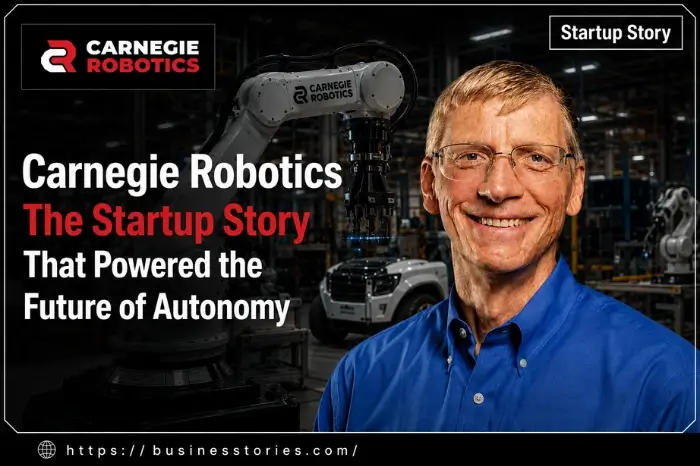
Pittsburgh is not typically associated with robots. But Carnegie Robotics has changed that. The company started in 2010. It grew out of a top robotics research center. Today, it builds tough sensors, self-driving vehicles, and defense systems. These products support farming, mining, and military operations.
This article tells the full story of Carnegie Robotics. First, we will look at how it started. Then, we will cover its big products and key partners. Finally, we will share lessons for other founders. So, whether you run a startup or just love robots, you will learn how Carnegie Robotics became a leader in this field.
The Origins of Carnegie Robotics
Every outstanding company has a backstory. Carnegie Robotics is no different. So, let’s look at where it began.
In 1996, Carnegie Mellon University teamed up with NASA. Together, they created the National Robotics Engineering Center, or NREC. This center was based in Lawrenceville, a Pittsburgh neighborhood. At the time, the area had old steel mill buildings sitting empty. It turned into a fantastic location for robotics research because the rent was inexpensive.
NREC grew fast. Soon, it became a world leader in autonomous systems. Dr. John Bares led this growth as the center’s director. Under him, NREC built tech for farms, factories, and the military. In fact, its work was so important that President Obama picked NREC to announce the National Robotics Initiative.
By 2010, Dr. Bares saw a gap in the market. He believed robots would not reach their full potential without better hardware. So, he left NREC with a few colleagues. Together, they founded Carnegie Robotics LLC (CRL).
Here is something most articles miss. The choice of Lawrenceville was not random. Old steel buildings gave the team cheap space and a skilled local workforce. As a result, Pittsburgh’s industrial past helped shape its robotic future. This connection still shows up in CRL’s tough, “built to last” designs today.
For founders, the lesson is simple. Search for places where old skills meet new ideas. Often, the cheapest spaces hide the biggest advantages.
Building Products That Survive the Real World
Once the team was in place, the next step became evident. They needed to build tools tough enough for the real world. Unlike many startups, CRL focused on hardware first. Specifically, they wanted gear that could survive harsh conditions.
One early product was the MultiSense camera line. These are 3D cameras built for robots. The MultiSense S7 and SL models became popular fast. Why? Because they worked well in mud, dust, rain, and extreme heat or cold.
Next, CRL teamed up with Swift Navigation. Together, they built the Duro and Duro Inertial systems. These devices track location with incredible accuracy. Even in areas with weak GPS signals, they stay precise. For a robot tractor, this accuracy matters a lot. Without it, the machine could drift and damage crops.
In 2013, CRL also teamed up with AutonomouStuff. This company helps sell autonomy tools worldwide. Thanks to this deal, CRL’s sensors reached far more customers. AutonomouStuff’s CEO said the goal was to bring together the world’s best tech under one roof.
Here’s a view you won’t find elsewhere. CRL’s true edge was not the speed of innovation. Instead, it was reliability. Many startups rush to add new features. But CRL made sure old features worked perfectly first. This “rugged-first” mindset became its biggest strength, especially for military deals where failure is not an option.
If you are developing hardware, it is important to consider one key question early on: where will people actually use it? Planning for real-world conditions from day one can save you huge costs later.
Carnegie Robotics and the Rise of Self-Driving Technology
One of the most exciting parts of this story involves self-driving cars. In 2015, CRL got deeply involved with Uber’s Advanced Technologies Center. This center was also based in Pittsburgh.
During this time, Dr. Bares became director of Uber’s center. His colleague, Dan Beaven, became director of finance. Along with other CRL engineers, they built the core self-driving team. Together, this group helped push self-driving cars past one million autonomous miles. This was a giant milestone for the industry.
This moment changed CRL forever. Before, the company mainly built sensors and parts. But now, its team had hands-on experience building whole self-driving systems. As a result, this knowledge flowed back into CRL’s products. It sharpened their skills in navigation, vision, and real-time decision-making.
Around this same time, CRL earned ISO 9001 certification. This is a global standard for quality control. For hardware makers, it sends a clear signal. It tells customers, especially the government, that products meet strict quality rules. Because of this, CRL gained access to bigger contracts.
Here’s an angle most articles skip. The Uber partnership taught CRL more than just tech skills. It also showed them how big companies test and scale self-driving systems. This view likely shaped CRL’s next move: focusing on defense and industrial markets. These markets need the same reliability as self-driving cars. However, they face far less competition.
If you work in autonomous tech, this part of the story holds a key lesson. Working with bigger players, even for a short time, can shape your company’s path for years.
Powering Defense Innovation Through Autonomy
While many think of autonomy as just self-driving cars, CRL found giant chances in defense tech. In fact, this shift became one of its smartest moves.
One standout project is CardShark. CRL built this with Booz Allen. It is a powerful, wearable computer made for war zones. Soldiers need gear that is both light and tough. So, CardShark had to pack serious power into a small, rugged design.
CRL also joined DARPA’s RACER program. The name stands for “Robotic Autonomy in Complex Environments with Resiliency.” For this program, CRL built over 20 self-driving Polaris RZR vehicles. They also upgraded 4 Textron Ripsaws, which are small, tank-like vehicles. These machines traveled from Pittsburgh to teams across the country for testing.
More recently, in October 2025, CRL partnered with Textron Systems and AM General. Together, they built a new control system for self-driving military vehicles. According to Textron VP Sara Willett, this system connects human intent to robot action. The goal is reliable performance in tough environments. This project may even help power future Humvee models.
The Department of Defense now ranks CRL as a top contractor. This status has enabled CRL to undertake significant projects. Records show CRL received support from the U.S. Army, the Paycheck Protection Program, the Army Capability Accelerator, and the xTech Accelerator.
Here’s a fresh point worth noting. Defense work gave CRL something rare: patient money and long contracts. Unlike consumer trends, which shift fast, defense projects often last for years. This stability allowed CRL to improve its hardware slowly and carefully. Founders in fast-moving consumer markets rarely get this chance.
Lessons Entrepreneurs Can Learn from Carnegie Robotics
By now, one thing is clear. Carnegie Robotics did not become excellent overnight. Instead, it gradually expanded. It used research skills, smart partners, and a focus on reliability. So, what can other founders learn from CRL?
- First, use your roots. CRL never hid its ties to a university lab. Instead, it used that history to build trust with customers and investors. If your startup has a strong origin story, share it. It can set you apart from the crowd.
- Second, solve the boring problems well. Self-driving cars dominate the headlines. But CRL focused on the sensors and parts that make those cars work. These “background” parts face less competition. Yet, they remain just as important.
- Third, spread across industries. CRL works in farming, mining, defense, and logistics. This spread protects the company. If one industry slows down, others can pick up the slack. So, try to design your tech in a way that fits multiple markets.
- Fourth, partner with purpose. From AutonomouStuff to Uber to Textron, CRL always teamed up with strong allies. Each partner helped CRL grow without doing everything alone.
- Finally, build for real conditions. Many startups create perfect prototypes that fail outside the lab. CRL was built for mud, heat, and chaos from day one. That choice still pays off across every market it serves.
Conclusion
The story of Carnegie Robotics shows what happens when research, partnerships, and tough design come together. The company started at Carnegie Mellon’s robotics center. Now, it works with the U.S. Army, Textron Systems, and DARPA. Through it all, CRL chose substance over hype.
What stands out most is patience. While others chased trends, Carnegie Robotics built rugged sensors and reliable systems. These tools quietly became essential in farming, mining, defense, and logistics. This steady approach is why Carnegie Robotics continues to power the future of autonomy.
If you’re a founder, take a moment to think. Does your startup use its own unique story? Are you solving a problem others ignore because it isn’t flashy? Carnegie Robotics proves that solid, dependable work can be just as exciting as the latest headline.
If this story inspired you, explore more startup journeys on Businesstories. See how founders around the world are shaping tomorrow’s technology.

Tabassum Shaik is an Author, Researcher, and SEO Specialist with over 8 years of experience creating informative content on business, startups, entrepreneurship, marketing, technology, and digital trends. She specializes in researching industry trends and transforming complex topics into practical, easy-to-understand insights. Her goal is to help readers stay informed, learn new ideas, and make better business decisions.